46 Best Burst Fade Mullet Styles for Men in 2026

A burst fade mullet combines shorter sides with a longer back, while the fade curves around the ear instead of running straight across the sides. The result is a defined shape with plenty of room for texture, layers, curls, waves, or a cleaner finish. This guide covers 46 burst fade mullet styles, along with styling tips, guard sizes, barber instructions, product suggestions, and common mistakes to avoid.
What Is a Burst Fade Mullet?

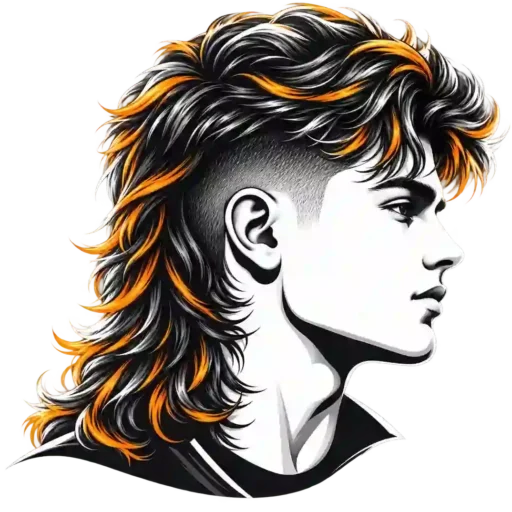
A modern mullet with a burst fade keeps the sides shorter while leaving more length through the top and back. The burst fade curves around the ear in a semicircle, creating a clean transition between the shorter sides and longer neckline. Unlike a traditional mullet, modern versions often use softer blending, layers, and controlled texture for a more wearable finish.
The key difference is simple: the mullet defines the overall length and shape, while the burst fade defines how the sides are tapered around the ear.
Why Choose a Burst Fade Mullet?
A burst fade mullet can be adjusted from subtle to high contrast by changing the fade height, back length, and styling. You can keep the back subtle or grow it out over time.
Here are some of the main features:
- Clean structure. The curved fade creates a defined shape around the ear and side profile.
- Room to grow. The back and top can gain length while the fade stays neat.
- Hair type flexibility. Straight, wavy, curly, and coily hair can all work with this cut when the shape is adjusted to the hair’s texture and density.
- Easy styling range. You can wear it messy, slicked, textured, or polished.
- Low daily effort. Many versions are easy to style once the haircut is shaped correctly.
The cut can also be adjusted through fade height, top volume, fringe, and back length. These details let your barber change the overall proportions to work with your hair texture, density, and preferred level of contrast.
46 Modern Burst Fade Mullet Styles and Variations
Each variation below changes one or more details of the basic burst fade mullet, such as fade height, back length, texture, hair type, or styling finish. Use the descriptions to narrow down the shape you want before showing your barber a reference photo.
Burst Fade Mullet Height & Finish Variations
Fade height and finish set the tone for the entire cut. These seven options cover the full range, from subtle to dramatic.
1. Classic Burst Fade Mullet

The classic burst fade mullet uses a medium-height fade curving around the ear. The top stays textured, and the back reaches the collar. Every other variation builds on this balanced foundation.
Best for: First-time mullet wearers who want a safe starting point.
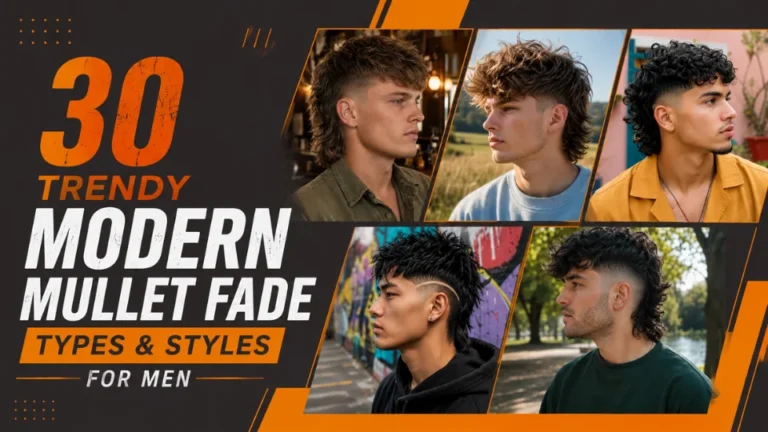
Related Article: 30 Trendy Modern Mullet Fade Types & Styles for Men
2. Low Burst Fade Mullet

A low burst fade starts just above the ear and stays close to the hairline. It keeps more hair on the sides, which softens the contrast with the back.
Best for: Men who want a softer version of the cut with less contrast.
3. Mid Burst Fade Mullet

The mid burst fade begins around the temple and creates a visible curve without going extreme. It gives the mullet a defined edge while keeping the sides proportionate.
Best for: Men who want clear structure with everyday wearability.
4. High Burst Fade Mullet

A high burst fade climbs toward the crown, leaving a short section above the ear. The higher fade creates stronger contrast between the shorter sides and longer back.
Best for: Anyone who wants a sharper silhouette with more contrast around the sides.
5. Shadow Burst Fade Mullet

The shadow burst fade leaves a faint layer of stubble at the base instead of bare skin. It looks softer and lasts longer between visits.
Best for: Men who dislike harsh skin lines and grow hair quickly.
6. Skin Burst Fade Mullet

A skin burst fade takes the base down to bare skin with a razor or foil shaver. The result creates a strong contrast between the bare base and longer hair above.
Best for: Men who want maximum contrast and a very clean finish.
7. Tapered Burst Fade Mullet

This variation keeps the burst shape around the ear but uses a softer transition into the surrounding hair. The result is less contrast than a skin or high burst fade.
Best for: Men who want a softer burst shape without a very sharp fade.
Different Mullet Lengths
Length controls how loud the mullet feels. The burst fade stays the same while the back and top change.
8. Short Mullet with Burst Fade

The back stays only slightly longer than the top, creating a compact mullet shape that is easy to manage.
Best for: Men starting with short hair or working in conservative fields.
Related Article: 36 Cool Short Modern Mullet Haircuts for Men
9. Medium-Length Mullet with Burst Fade

The medium version leaves the back around collar length and the top around three to four inches. It offers enough length to style while staying manageable.
Best for: Most men and most hair types.
10. Long Mullet with Burst Fade

The long version drops past the shoulders in the back and keeps a full top. The tight burst fade keeps it from looking untidy.
Best for: Men who want noticeably more length through the back and are comfortable with a longer grow-out.
Textured & Layered Looks
Texture gives the burst fade mullet movement. Layers and cutting techniques decide how that movement looks.
11. Textured Mullet with Burst Fade

Point cutting and razor work add separation on top and through the back. Hair looks lived-in and holds shape without heavy products.
Best for: Men with medium-thickness, straight or wavy hair.
12. Messy Mullet with Burst Fade

Messy styling leaves the top loose and the back uneven on purpose. The clean burst fade keeps the chaos looking intentional.
Best for: Men who want a loose, undone finish with minimal styling.
13. Shaggy Mullet with Burst Fade

Shaggy cuts use heavy layering to build volume and a wild outline. The fade tightens the sides so the shag stays centered on top and back.
Best for: Men with thick or wavy hair who want heavy layers and a fuller outline.
14. Layered Mullet with Burst Fade

Layers stack from the crown to the nape and create a smooth, flowing shape. This option looks softer than the shaggy version.
Best for: Fine to medium hair that needs lift.
15. Choppy Mullet with Burst Fade

Choppy cuts use bold, uneven sections to create an edgy outline. Strong texture paste holds the pieces in place.
Best for: Men who want strong separation and a noticeably choppy texture.
16. Fluffy Mullet with Burst Fade

Fluffy styling relies on blow-drying and light product to build airy volume. The burst fade keeps the fluff contained.
Best for: Men with fine or straight hair who want body.
17. Natural-Texture Mullet with Burst Fade

This style works with your hair’s natural pattern and skips heavy styling. The barber cuts around your growth pattern so the shape holds without effort.
Best for: Men who prefer wash-and-go routines.
Styles for Different Hair Types
The burst fade mullet adapts to every hair type when the barber adjusts the cut. These six options match the cut to your natural texture.
18. Curly Mullet with Burst Fade

Curls stack naturally into a rounded top and a spiral-filled back. The burst fade clears the sides so curls stand out. Moisture keeps the pattern defined.
Best for: Men with 2C to 3B curls.
Related Article: Modern Curly Mullet: 50 Best Styles, Fades, Tapers & Styling Tips for Men
19. Coily Mullet with Burst Fade

Coily hair builds impressive volume on top and back. A sharp burst fade contrasts with dense, springy texture and gives the cut a striking outline.
Best for: Men with 4A to 4C hair.
20. Wavy Mullet with Burst Fade

Waves give the mullet natural movement without much effort. Sea salt spray or light cream enhances the shape.
Best for: Men with loose to medium waves.
21. Straight Hair Mullet with Burst Fade

Straight hair can benefit from texture cuts that add separation and prevent the shape from looking too flat.
Best for: Men with thick straight hair.
Related Article: 32 Best Straight Hair Mullet Styles for Men
22. Burst Fade Mullet for Thick Hair

Thick hair benefits from thinning and layering to remove bulk. The burst fade removes weight from the sides and keeps the shape balanced.
Best for: Men with dense hair who want a shape that sits well.
23. Burst Fade Mullet for Fine Hair

Fine hair looks fuller with shorter layers and volume-boosting products. Keep the back moderate so the mullet does not look thin.
Best for: Men with fine hair who want a lighter shape with more visible volume.
Asian & Korean-Inspired Mullets
Straight, dense hair can hold clean mullet shapes particularly well, although hair texture and density vary from person to person. These variations focus on the softer layers and polished finishes often associated with contemporary Asian-inspired styling.
24. Asian Modern Mullet with Burst Fade

This variation combines clean sides with longer, airy layers through the top and back. The burst fade removes bulk around the ear while leaving enough length for a sleek, textured silhouette.
Best for: Men with straight or dense hair who want a clean, layered finish.
25. Korean Mullet with Burst Fade

A Korean-inspired version uses softer layers, airy volume, and a lighter fringe with a subtle burst fade. The overall shape stays relaxed rather than heavily disconnected.
Best for: Men who prefer a softer, layered finish with moderate contrast.
Modern & Trendy Variations
These styles push the burst fade mullet toward bolder territory. Each one borrows from another haircut trend.
26. Wolf Mullet with Burst Fade

The wolf cut adds heavy layering and a jagged outline. Combined with a burst fade, it creates heavy volume and layers on top with tightly tapered sides.
Best for: Men who want heavy layers, noticeable volume, and a jagged outline.
27. Edgar Mullet with Burst Fade

The Edgar cut features a blunt, straight-across fringe. Paired with a burst fade and a longer back, it creates a distinctive shape that stands apart.
Best for: Men with thick, straight hair who want a blunt fringe and strong contrast.
28. Mullet Mohawk with Burst Fade

This style narrows the top into a mohawk strip and keeps the back long. Tight burst fades on both sides create strong contrast between the central top section and the sides.
Best for: Men who want a bold style with a strong contrast between the sides and top.
29. Mullet Faux Hawk with Burst Fade

A faux hawk pushes the center forward and up without shaving the sides fully. The burst fade adds crisp definition to the sides.
Best for: Men who want a mohawk feel with easier upkeep.
30. Undercut Mullet with Burst Fade

An undercut disconnects the sides from the top for maximum contrast. The burst fade smooths that disconnect into a curve.
Best for: Men who want sharp geometry with movement in the back.
Fringe, Part & Styling Options
The front of the burst fade mullet controls how formal or casual it looks. These six options change the mood without changing the base cut.
31. Mullet with Burst Fade and Fringe

A fringe brings hair forward over the forehead and changes the overall front profile. It pairs well with a longer back and adds a defined shape to the front.
Best for: Men who want more coverage across the forehead.
32. Textured Fringe Burst Fade Mullet

A textured fringe uses choppy, separated pieces across the forehead. Matte clay keeps the edges broken up and modern.
Best for: Men with straight to wavy hair.
33. Side-Parted Mullet with Burst Fade

A deep side part sweeps the top across the head and balances the longer back. It reads as neat and professional.
Best for: Men who need an office-friendly mullet.
34. Slicked-Back Burst Fade Mullet

Slicking the top back links it to the back length and creates a smooth, continuous line. Pomade adds shine and hold.
Best for: Formal events and men who like a polished look.
35. Quiff Mullet with Burst Fade

A quiff lifts the front into a rounded peak while the back stays long. The burst fade adds contrast that makes the volume pop.
Best for: Men with medium to thick hair who want extra height at the front.
36. Hard-Part Mullet with Burst Fade

A hard part uses a razor-shaved line to divide the top. The straight line contrasts with the curve of the burst fade.
Best for: Men who enjoy sharp details and strong visual lines.
Sharp & Detailed Finishes
Small details separate a good burst fade mullet from a great one. These five finishes add precision.
37. V-Cut Mullet with Burst Fade

The back of the mullet gets cut into a V shape that points down the neck. It draws the eye down and gives the cut a signature look.
Best for: Men who want a defined V-shaped finish through the neckline.
38. Burst Fade Mullet with a Hair Design

A barber shaves a pattern, such as lines, stripes, or shapes, into the sides. The burst fade gives the design a clean canvas.
Best for: Men who want a shaved design that adds detail to the sides.
39. Burst Fade Mullet with a Line Up

A line up sharpens the hairline across the forehead and temples. It keeps the front crisp while the back grows.
Best for: Men who want a crisp, defined finish around the forehead and temples.
40. Spiky Mullet with Burst Fade

Spiky tops use strong gel or wax to stand upright. Paired with a burst fade, it creates a more defined and textured silhouette.
Best for: Men who want a more pronounced, upright texture on top.
41. Burst Fade Mullet with a Tapered Neckline

A tapered neckline fades the back edge instead of squaring it off. It grows out cleanly and keeps the mullet looking fresh for weeks.
Best for: Men who want a natural finish at the nape.
Beard, Blonde & Highlighted Looks
Facial hair and color add another layer of personality. Both pair naturally with a burst fade mullet.
42. Mullet with Burst Fade and Beard

A beard can be faded into the sideburn area to create a continuous transition between the facial hair and haircut. The beard length can then be kept short, medium, or full depending on personal preference.
Best for: Men who want the beard and sideburn area to connect visually with the haircut.
43. Blonde Mullet with Burst Fade

Platinum or golden blonde hair creates stronger contrast with the darker areas of the fade and highlights the haircut’s shape.
Best for: Men who want a high-contrast color change that makes the haircut more noticeable.
44. Highlighted Mullet with Burst Fade

Highlights add depth without requiring a full color change. Subtle caramel tones can work well with brown hair, while lighter pieces create more visible contrast.
Best for: Men who want added dimension without coloring the entire head.
Braided & Twisted Styles
Braids and twists can be combined with a burst fade mullet to add structure and texture while keeping the sides clean.
45. Mullet with Burst Fade and Braids

Braids run along the top or through the long back section. The burst fade gives them a sharp base and showcases the pattern.
Best for: Men who want structured braids combined with a clean burst fade.
46. Mullet with Burst Fade and Twists

Twists add definition and hold moisture in coily hair. A burst fade tightens the sides and keeps twists as the focal point.
Best for: Men with coily hair who want defined twists with clean sides.
Burst Fade Mullet vs Other Popular Mullet Haircuts
Many mullet cuts look similar at first glance. The differences lie in the fade shape, the length, and the blend.
Burst Fade Mullet vs Modern Mullet

A burst fade mullet can be considered one modern interpretation of the mullet, while modern mullets can also use tapers, scissor-cut sides, or other fade styles.
Related Article: 55 Modern Mullet Haircut Ideas for Men to Try in 2026
Burst Fade Mullet vs Taper Mullet

A taper creates a gradual transition along the natural hairline, while a burst fade creates a curved transition around the ear.
Related Article: 25 Best Modern Mullet Taper Styles for Men (2026)
Burst Fade Mullet vs Burst Fade Mohawk

The mullet keeps more length through the back, while the mohawk concentrates the longer hair into a central strip. A lower fade, moderate back length, and restrained styling can give the mullet a more understated finish.
Burst Fade Mullet vs Drop Fade Mullet

A drop fade follows the curve behind the ear and drops lower at the back. A burst fade wraps around the front and side of the ear. The drop fade lengthens the neckline, and the burst fade emphasizes the ear.
Burst Fade Mullet vs Skin Fade Mullet

A skin fade describes the finish, which reaches bare skin. A burst fade describes the shape. You can combine both and request a skin burst fade mullet for maximum contrast.
How to Style a Burst Fade Mullet
Styling takes about five minutes once you learn the routine. Follow these steps for a reliable result:
- Wash and condition. Use a shampoo suited to your hair type and condition the lengths.
- Towel dry. Press the towel against your hair and skip the rubbing to limit frizz.
- Apply a prep product. Work sea salt spray or a light cream through damp hair.
- Blow dry. Lift the top with a brush for volume, then direct the airflow according to the finish you want. Use downward airflow for a smoother back or a diffuser for curls and waves.
- Add styling product. Warm a pea-sized amount in your palms and work it through the top first.
- Shape the back. Comb the back downward or tousle it for a looser feel.
- Finish with spray. A light mist of hairspray locks the shape in place.
Curly and coily hair benefits from a leave-in conditioner and finger coils in place of blow drying. Fine hair prefers a light mousse.
Products That Work Best for a Burst Fade Mullet
The right product depends on your hair type and desired finish. Use this table as a quick reference.
| Product | Best For | Finish | Hold |
| Sea salt spray | Straight and wavy hair | Matte, textured | Light |
| Matte clay | Thick hair, messy looks | Matte | Strong |
| Texture paste | Choppy and layered styles | Natural | Medium |
| Pomade | Slicked-back and side-parted looks | Polished | Medium to strong |
| Curl cream | Curly and coily hair | Soft, defined | Light to medium |
| Volumizing mousse | Fine hair | Airy | Light |
| Hairspray | All styles | Flexible | Adjustable |
Start with less than you think you need. You can add product, but removing it requires a re-wash.
How to Ask Your Barber for a Burst Fade Mullet

Clear communication prevents most haircut disasters. Bring two or three photos that show the front, side, and back of the cut.
Then use this simple script:
- Name the cut: “I want a burst fade mullet.”
- Set the fade height: “Low,” “mid,” or “high” around the ear.
- Set the bottom finish: “Skin” or “shadow.”
- Give the top length: “Three inches, textured.”
- Give the back length: “Collar length, tapered neckline.”
- Mention your hair type and how you style it.
Ask the barber to explain the plan before cutting. A good barber confirms your choices and points out anything that may not suit your hair.
Modern Burst Fade Mullet Guard Sizes

Guard numbers control how much hair stays after the clippers pass. Barbers usually start with a longer guard and step down toward the ear. Here are the four most common sizes.
Guard 1
A guard 1 leaves about one-eighth of an inch (3 mm). It works for the shortest part of the fade near the ear and creates a tight, clean base.
Guard 2
A guard 2 leaves about one-quarter of an inch (6 mm). It gives a short but visible layer of hair and suits shadow fades.
Guard 3
A guard 3 leaves about three-eighths of an inch (10 mm). Barbers use it in the middle of the fade to blend the transition upward.
Guard 4
A guard 4 leaves about half an inch (13 mm). It works for the upper section of the fade, where the sides meet the longer top.
A barber may use guards 1 through 4 as a starting range, but the exact guard sequence can vary based on the desired fade, hair density, and head shape. The top and back are usually shaped separately with scissors or longer clipper settings.
Common Mistakes When Getting a Burst Fade Mullet
A few common mistakes can affect the shape, balance, and grow-out of a burst fade mullet.
- Taking the fade too high. A higher fade increases the contrast between the sides and longer back, which can make the back appear more prominent.
- Cutting the back too short. A short back loses the mullet shape entirely.
- Ignoring hair type. Fine hair needs different layering than thick or curly hair.
- Skipping reference photos. Words leave room for misinterpretation.
- Overusing product. Heavy product weighs down the top and dulls the texture.
- Neglecting maintenance. The fade gradually loses its definition as the hair grows, so many people refresh it every two to four weeks.
- Choosing the wrong barber. Fades require skill, so check portfolios before booking.
Avoiding these mistakes helps preserve the shape and makes the haircut easier to maintain.
Frequently Asked Questions
Is a burst fade mullet hard to maintain?
The daily routine is usually simple once the haircut is shaped correctly. The main commitment is keeping the fade maintained with regular barber visits.
Does a burst fade mullet work for office jobs?
It depends on the workplace dress code and how the haircut is shaped. A low burst fade, moderate back length, tapered neckline, and restrained styling create a less dramatic version of the cut. A shadow finish can also reduce the sharp contrast of a skin fade.
How long does hair need to be for a mullet?
There is no fixed minimum length for every mullet. Around three inches on top and four to five inches in the back gives enough length for a more noticeable shape, while shorter hair can still create a subtle mini mullet.
Is a modern mullet with burst fade the same as a regular mullet?
No. A regular mullet keeps the sides and top short and leaves a long back with little blending. The modern version adds a burst fade, textured layers, and smooth transitions for a cleaner result.
How long should the back of a burst fade mullet be?
A burst fade mullet can range from a short nape to collar or shoulder length, depending on the desired shape and grow-out.
Your hair density, texture, routine, and preferred length can all affect the ideal back length.
Can I grow a burst fade mullet from short hair?
Scalp hair grows roughly half an inch per month on average, although growth rates vary. Depending on your starting length, it can take several months to build enough length for a noticeable mullet shape. During the grow-out period, your barber can maintain the burst fade while leaving the back length mostly untouched.
Can a burst fade mullet be subtle?
Absolutely. A low burst fade, a short back, and a tapered neckline create a refined version. Natural styling and matte products keep the finish understated.
What happens if the burst fade is taken too high?
A high fade removes weight from the sides and can make the top look oversized. It also shortens the time before regrowth becomes obvious. Discuss the height with your barber before the clippers start.
Is a burst fade mullet good for all face shapes?
A burst fade mullet can be adjusted for different face proportions by changing the fade height, top volume, fringe, and back length. For example, a fringe can reduce the visual height of the forehead, while moderate top volume can help balance the overall shape. Hair texture and density also affect which variation is practical.
How often does a burst fade mullet need a haircut?
Most people need a fade touch-up about every two to four weeks to keep the area around the ear clean. The longer top and back can usually go longer between trims, depending on the desired length and shape.
Takeaway
A burst fade mullet combines a curved fade around the ear with extra length through the back, giving you plenty of options for texture, length, and styling. Start by choosing the fade height and back length that fit your routine, then show your barber clear side and rear references. With 46 variations covering different hair types, lengths, textures, and finishes, you can narrow down the shape that matches your preferred style and maintenance level.

Randy Cox
Randy Cox is a men’s hairstyling writer and grooming enthusiast sharing expert inspired guides on modern mullets, styling tips, and the latest men’s haircut trends.