34 Popular Middle Part Mullet Styles for Men in 2026
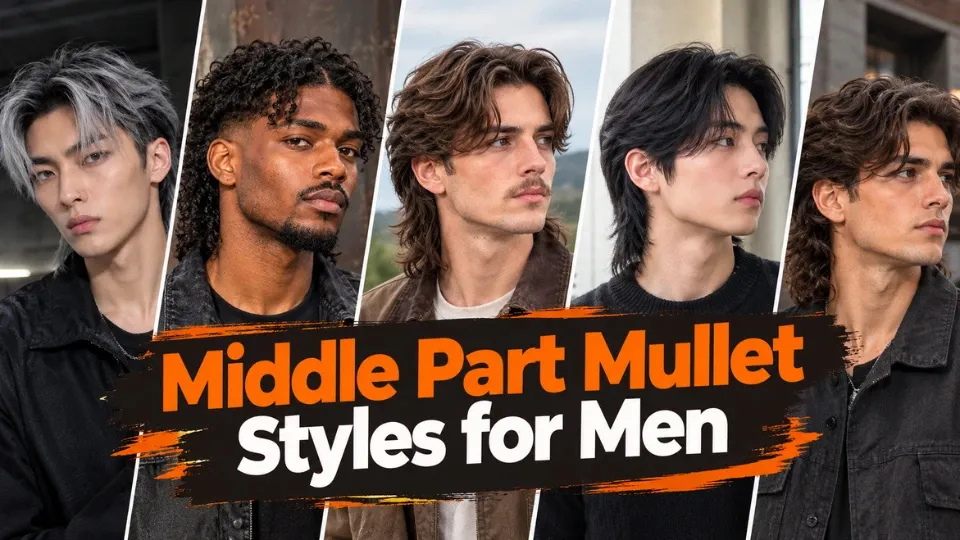
Quick answer: A middle part mullet has short sides, a longer back, and a center part that frames the face. Pick a short or baby version for work, a taper or fade for a sharper finish, and layers or texture for a relaxed look. Expect a trim every 3 to 5 weeks.
The middle part mullet is a popular men’s haircut right now, and for good reason. It keeps the sides short, lets the back grow longer, and uses a center part to frame the face with soft curtains. The result looks relaxed but intentional.
Below you’ll find 34 styles, from subtle baby mullets to bold wolf-cut hybrids, plus a face shape guide, a hair type guide, a barber script, and styling steps. Use the tables to find your match fast, then read the style details.
What Is a Middle Part Mullet?
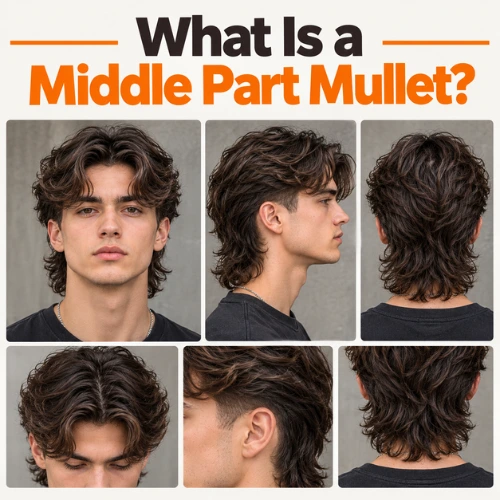
A middle part mullet is a haircut with shorter hair on the sides and top, a longer back, and a center part that splits the front into soft curtains. Back length can range from just past the collar to well below the shoulders.
Key Takeaways
- Start with a short or baby version if you’re unsure.
- Tapers are subtle; skin fades are bold but need trims every 2 to 3 weeks.
- Match the cut to your hair type, because straight, wavy, and curly hair each need a different approach.
- Ask for extra length at first. You can always cut more later.
Best Middle Part Mullet Styles by Face Shape
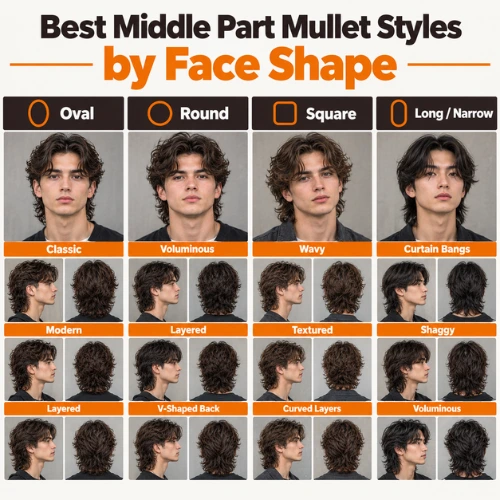
| Face shape | What works | Try these styles |
| Oval | Almost any version | Classic, Modern, Layered |
| Round | Longer layers, height at the crown | Voluminous, Layered, V-Shaped Back |
| Square | Soft, wavy texture | Wavy, Textured, Curved Layers |
| Long / narrow | Curtain bangs, volume at the sides | Curtain Bangs, Shaggy, Voluminous |
Best Middle Part Mullet Styles by Hair Type
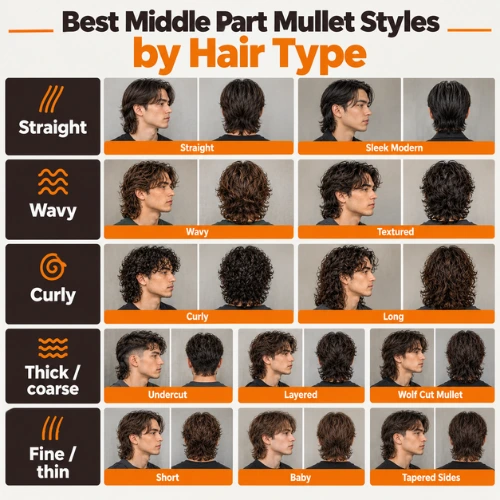
| Hair type | What to ask for | Try these styles |
| Straight | Precise cut, crisp part | Straight, Sleek Modern |
| Wavy | Light layers, minimal product | Wavy, Textured |
| Curly | Volume in the back, no dry brushing | Curly, Long |
| Thick / coarse | Thinning, undercut to remove bulk | Undercut, Layered, Wolf Cut Mullet |
| Fine / thin | Light layers, shorter and tidy | Short, Baby, Tapered Sides |
34 Popular Middle Part Mullet Styles
Here are 34 ways to wear it. Pick the ones that match your hair type, face shape, and how much effort you want to put in each morning.
1. Redneck Middle Part Mullet
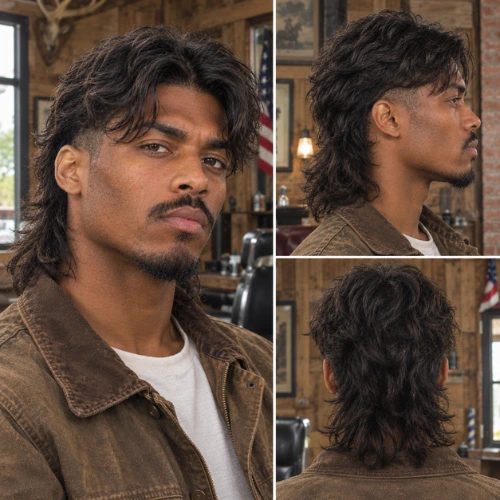
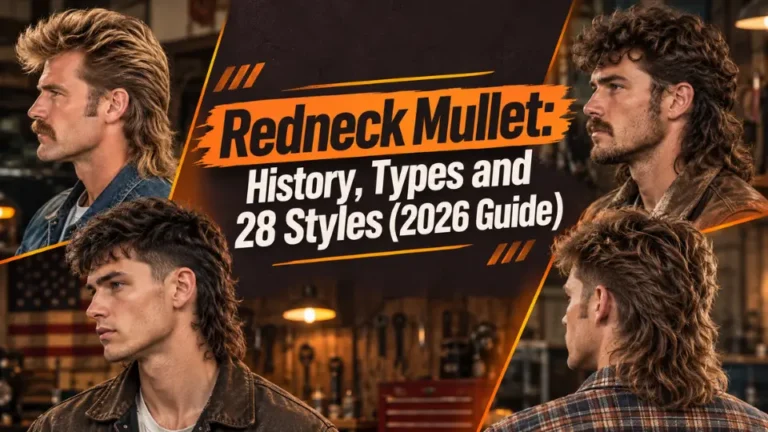
The redneck middle part mullet has a clear part in the middle. The hair falls to both sides of the face, giving it a cool look. The sides stay short, while the back is left long. This style mixes a classic country look with a fun, retro feel. To learn more about its roots and popular variations, read Redneck Mullet: History, Types and 28 Styles (2026 Guide).
2. Modern Middle Part Mullet
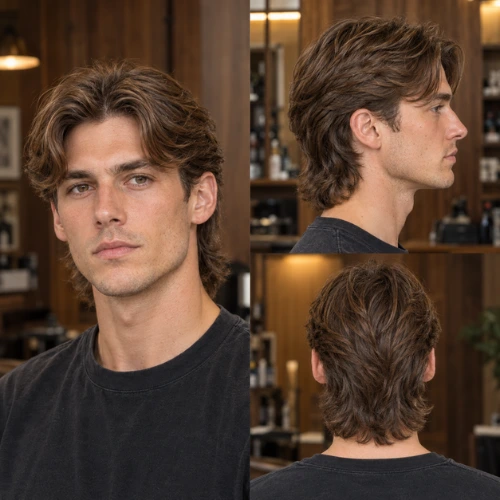
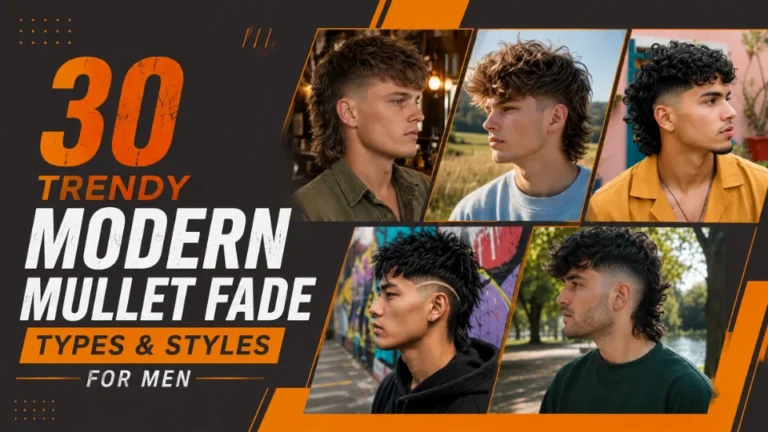
The modern version softens the contrast between the top and the back, so the layers flow together rather than sitting in two separate blocks. It feels more current and less costume-like, which is why many barbers suggest this version when someone asks for a first mullet. For more inspiration, explore 56 Modern Mullet Haircut Ideas for Men to Try in 2026.
3. Short Middle Part Mullet
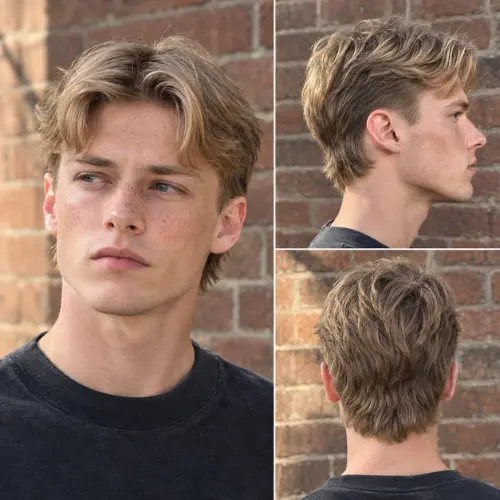
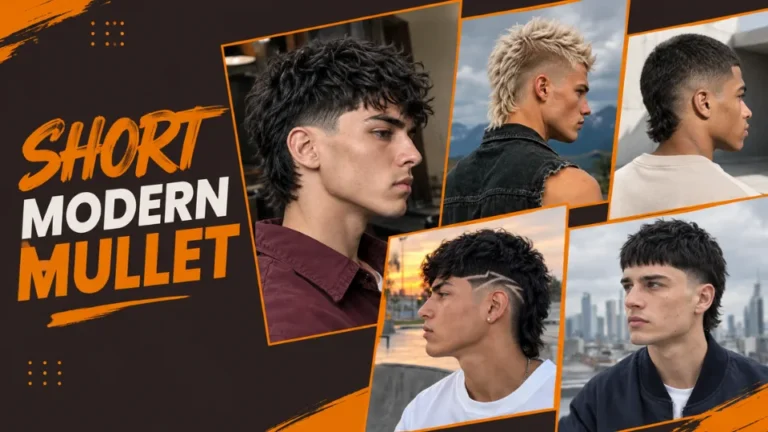
If you’re nervous about going long, start here. The back only reaches the nape or just over the collar, which makes it an easy entry point that fits nicely in offices or schools. You still get the shape of a mullet without the commitment of a long tail. If you prefer a shorter look, check out 36 Cool Short Modern Mullet Haircuts for Men to find a style that suits you.
4. Baby Middle Part Mullet
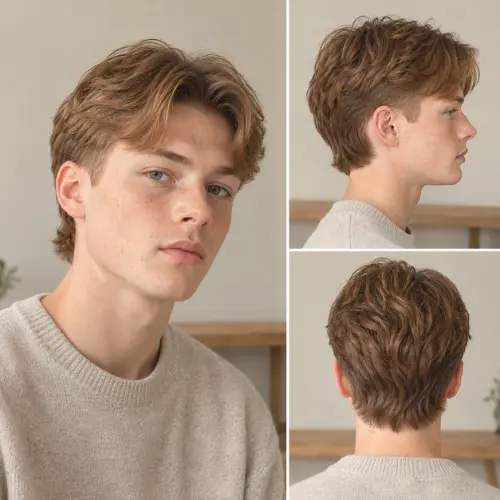
The baby mullet is a small, subtle version where the back is only slightly longer than the sides, so it reads as a hint rather than a statement. It’s ideal for men who like the idea but don’t want strangers staring, and a middle part keeps it looking fresh.
5. Long Middle Part Mullet
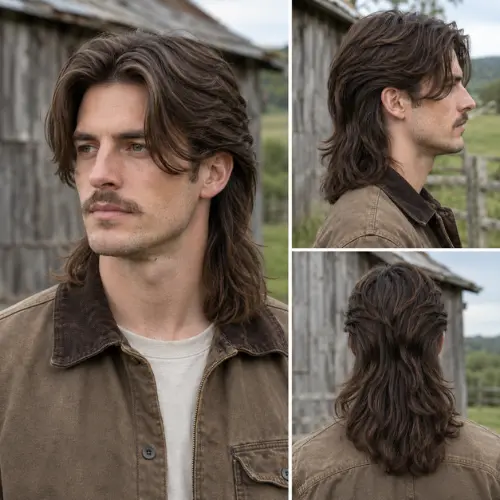
Here, the back grows past the shoulders while the front stays framed by the part. It’s dramatic and takes patience to grow. This style needs regular conditioning, because long hair that’s dry or frayed at the ends can ruin the whole look. Explore these 35+ long modern mullet hairstyles, styling ideas, and expert tips for men for more inspiration.
6. Middle Part Mullet With Curtain Bangs
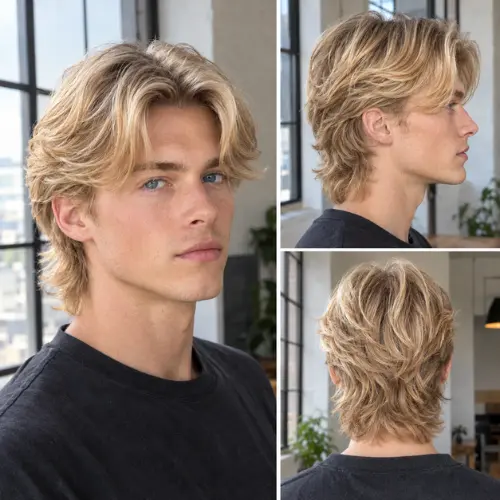
Curtain bangs sweep away from the center and brush past the cheekbones, adding a soft, 90s feel to the cut while the longer back keeps the mullet shape intact. This one flatters most face shapes and is especially good at softening a strong forehead or sharp jawline.
7. Straight Middle Part Mullet
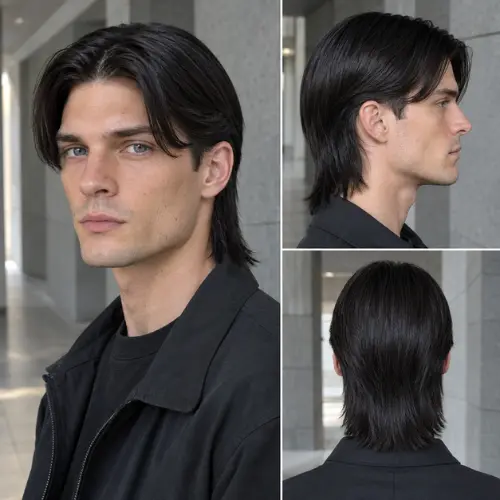
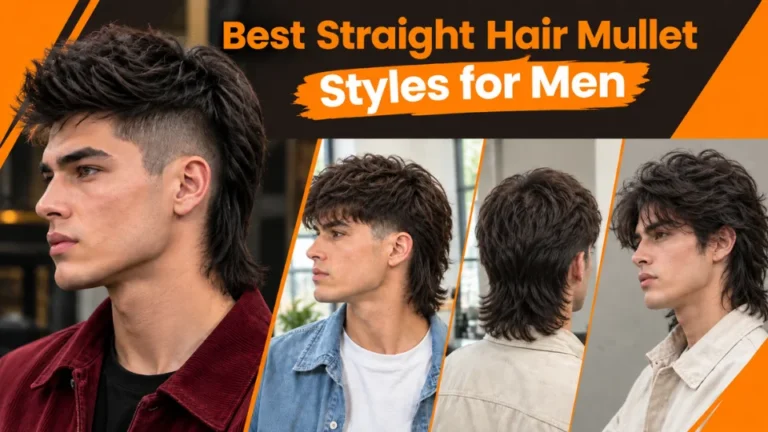
Straight hair gives this style a sleek, polished look. The part stays crisp, and the back falls in a smooth line. Because there’s no natural wave to hide mistakes, the cut needs to be precise, so a good barber makes a big difference here. If you have naturally straight hair, explore 32 Best Straight Hair Mullet Styles for Men for more cuts suited to your hair type.
8. Wavy Middle Part Mullet
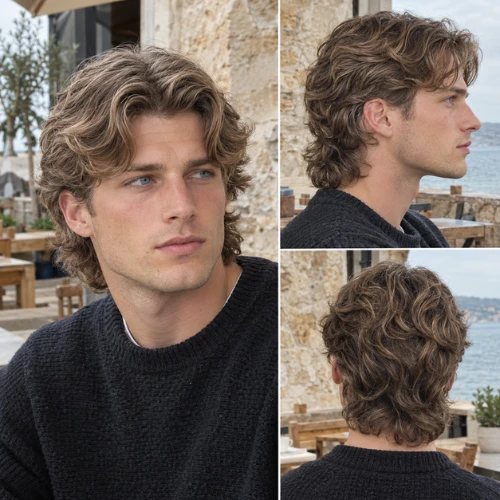
Waves add movement without much work. The hair bends around the part and gives the back a loose, lived-in shape. A light sea salt spray or a bit of cream is usually enough, so let the waves do their own thing.
9. Curly Middle Part Mullet
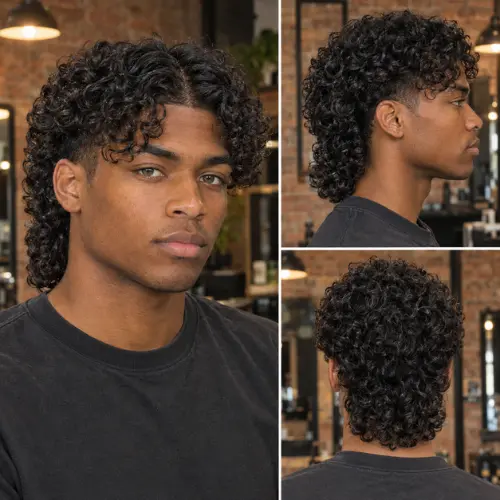
Curls and mullets are a great pairing. The curls add volume in the back, and the center part keeps the front from getting too bulky. Use a curl cream, avoid brushing it dry, and diffuse on low heat to keep the shape defined. For more options suited to different curl patterns, check out Modern Curly Mullet: 50 Styles, Fades, Tapers & Tips.
10. Textured Middle Part Mullet
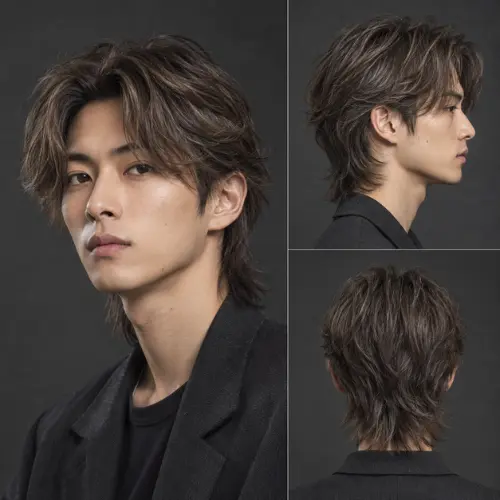
Texture is created by cutting the hair at different lengths, usually with a razor or thinning shears. It makes the style look relaxed and slightly messy on purpose. Finish with a matte paste, since shiny products tend to flatten the effect.
11. Heavily Textured Middle Part Mullet
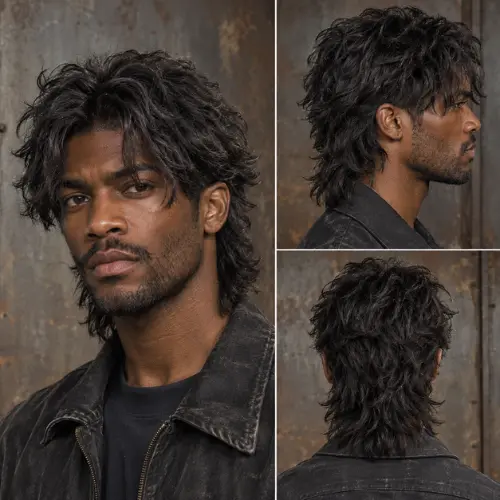
This takes texture further, with choppy sections and visible separation. It’s louder, grittier, and better suited to a casual or creative setting. It works best on medium to thick hair, because very fine hair can look thin when cut this aggressively.
12. Layered Middle Part Mullet
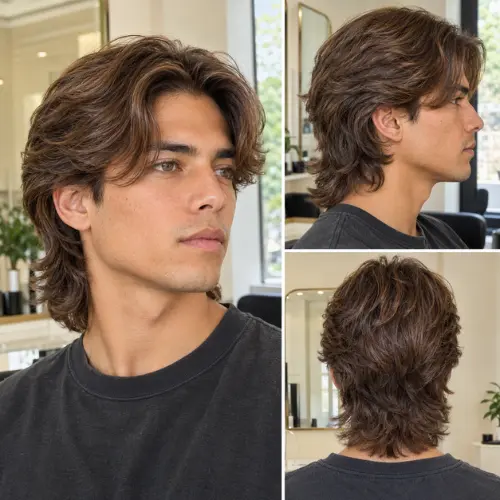
Layers help the hair move and remove extra weight. Each section sits a little higher or lower than the next, which creates natural flow. This is one of the safest ways to wear the cut, since it looks balanced from every angle.
13. Shaggy Middle Part Mullet
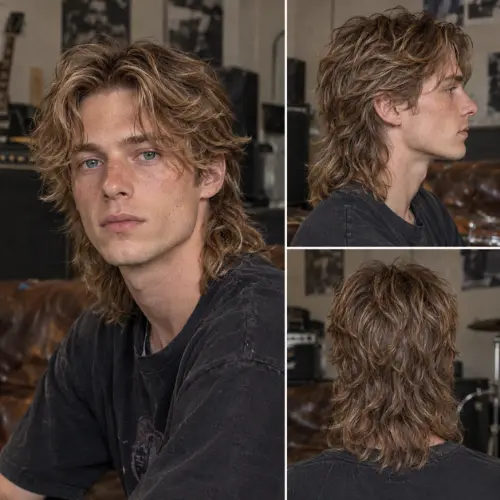
The shaggy version is wild and carefree. The ends are uneven, the layers are visible, and nothing looks perfectly combed. It suits men who don’t want a high-maintenance routine, because a bit of air drying and some paste is often all it needs.
14. Middle Part Wolf Cut Mullet
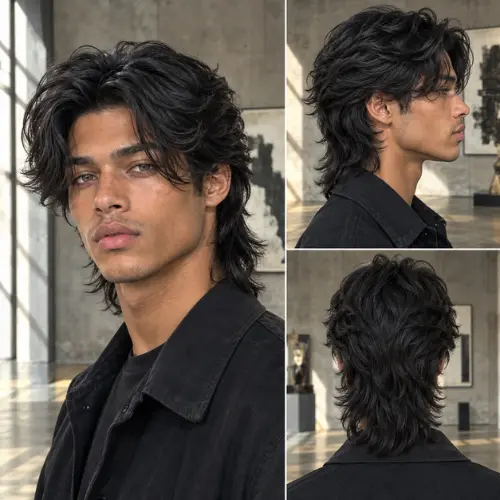
This blends the wolf cut with a mullet shape. You get heavy layers around the crown and a tapered, wispy back. It’s bold and a little theatrical, and it suits thick hair that can carry the weight. If you want attention, this one earns it.
15. Korean Middle Part Mullet
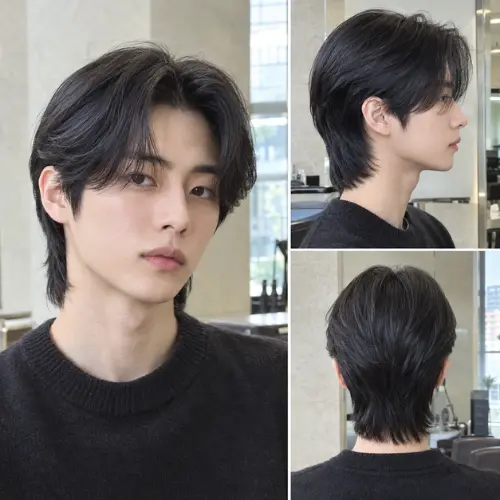
The Korean take is softer and lighter. The hair is thinned out, the part is gentle, and the back is usually kept short to medium. It pairs well with a clean, polished wardrobe, and lots of men choose it for a neat, youthful finish.
16. Middle Part Mullet for Thick, Straight Hair
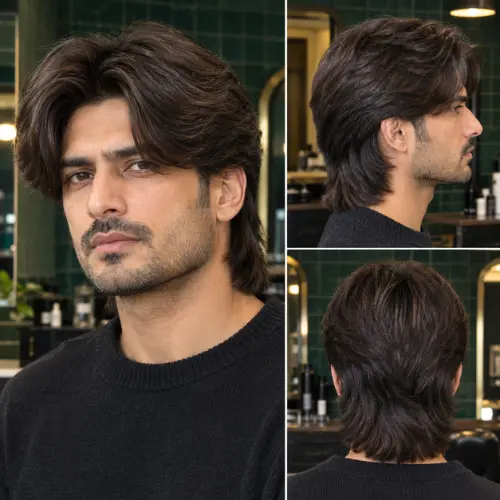
Thick, straight hair can stand up or flare out if it isn’t cut well. Thinning and layering help it lie flat and move naturally. A soft taper at the sides works nicely, and a light texture cream keeps the part in place all day.
17. Middle Part Mullet With Flipped Ends
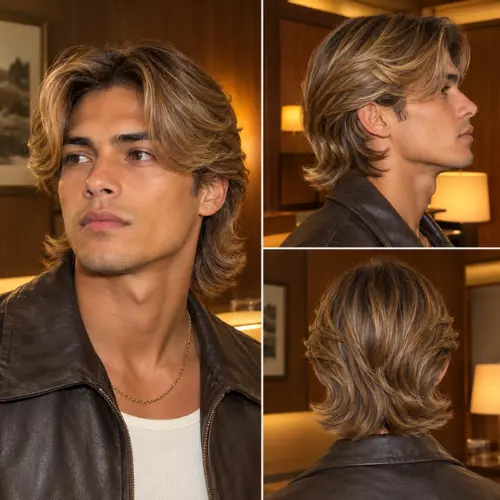
Here the ends of the back flick outward, usually thanks to cutting angles and a bit of heat styling, which gives the shape a playful, retro look. A small round brush and a blow dryer will do the trick, and a light hairspray helps it last.
18. Middle Part Mullet With a Long Tail
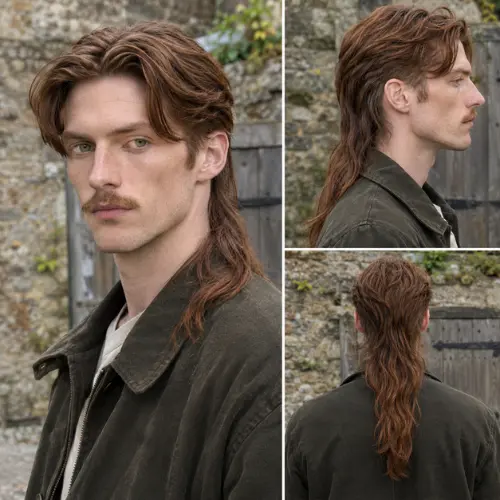
The tail is a thin strip of extra length at the very back, a nod to the true 80s mullet with a cleaner finish. This one is a statement, so keep the rest of the cut neat to make the tail look intentional.
19. Middle Part Mullet With Tapered Sides
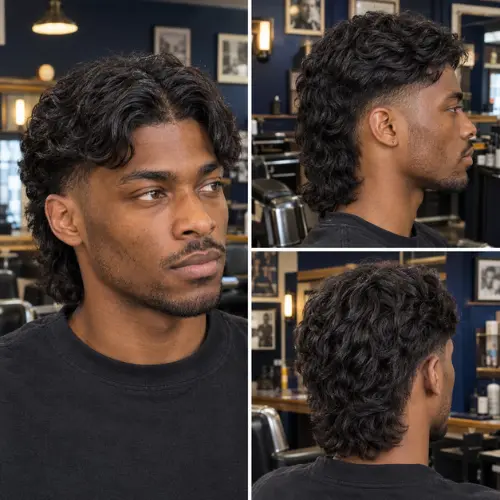
Tapered sides gradually shorten from the top down to the ears and neckline, giving the haircut a tidy, structured frame while the length at the back keeps the mullet shape. It’s a good option for the office or any place that prefers a sharper look. If you want to compare different taper finishes, explore 25 Best Modern Mullet Taper Styles for Men (2026).
20. Middle Part Mullet With Low Taper
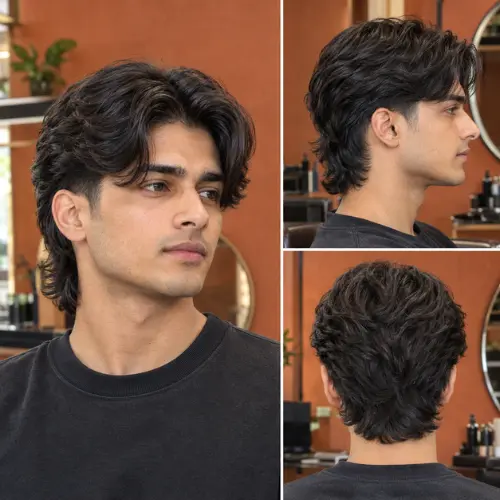
A low taper starts just above the ear and follows the hairline. It’s subtle and clean, and it grows out gracefully. If you like a more natural look, this is a smart pick because it keeps the contrast low between the sides and the longer back. . To compare more variations of this clean, low-maintenance finish, explore Low Taper Mullet: 48 Best Styles & Barber Tips for 2026.
21. Middle Part Mullet With Low Fade
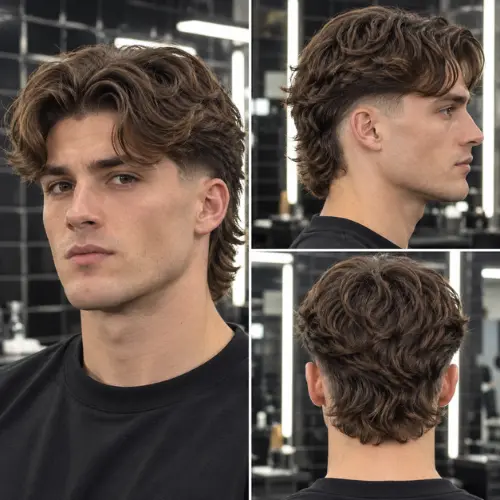
A low fade shortens quickly near the ears and neckline, often down to the skin, so it’s a bit sharper than a taper. The contrast with the long hair on top makes the mullet look more intentional and modern, with a clean, crisp outline.
22. Middle Part Mullet With Drop Fade
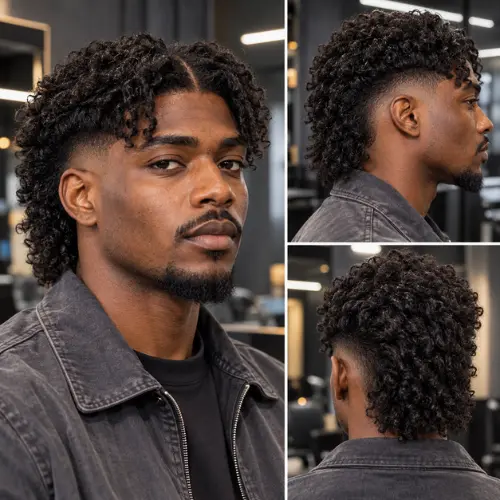
A drop fade curves down behind the ear, following the shape of the head. It leads the eye toward the longer hair in the back and gives the profile a smooth line, so it looks especially good with a pronounced tail or flowing layers.
23. Middle Part Mullet With Skin Fade
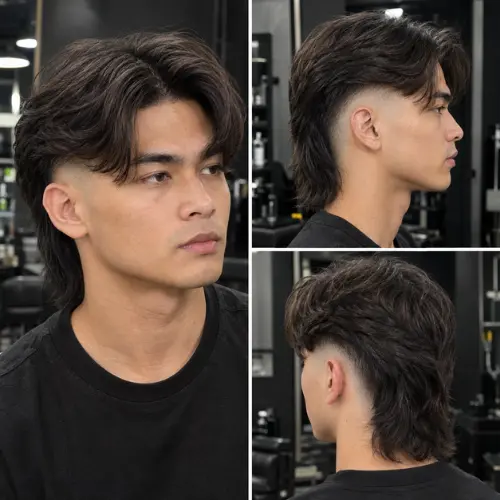
A skin fade takes the sides down to bare skin before blending upward, and the result is bold and high-contrast. With a long back, that contrast really stands out. Expect to visit the barber every two to three weeks, because skin fades lose their sharpness quickly.
24. Middle Part Mullet With Taper Fade
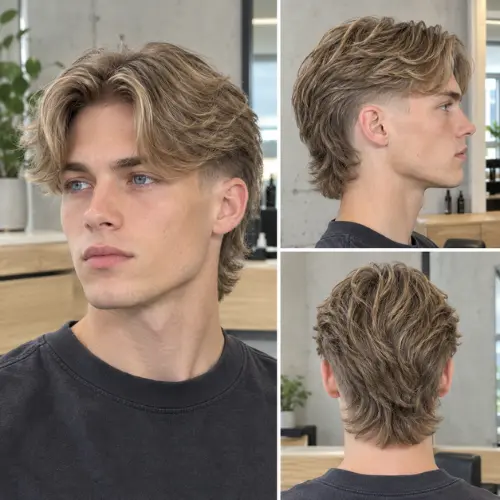
This combines the neat edges of a taper with the gradual blend of a fade, making it a balanced choice between soft and sharp. It suits nearly any hair type, and barbers are generally familiar with it, so it’s easy to request without confusion.
25. Middle Part Mullet With Undercut
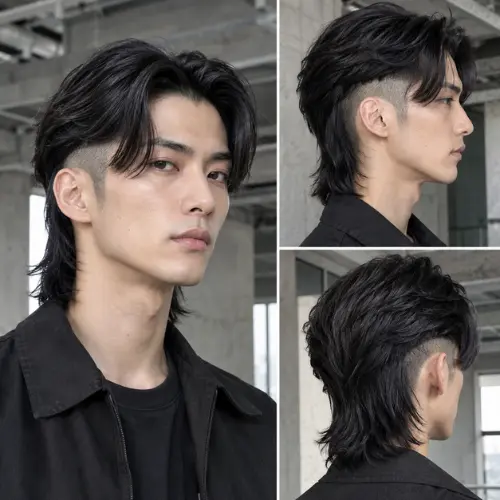
An undercut removes the hair underneath, leaving longer hair on top to fall over it. You can wear it down for a subtle look or tie it back for a sharper one. It cuts down on bulk, which helps if your hair is thick and tends to puff outward.
26. Middle Part Mullet With a V-Shaped Back
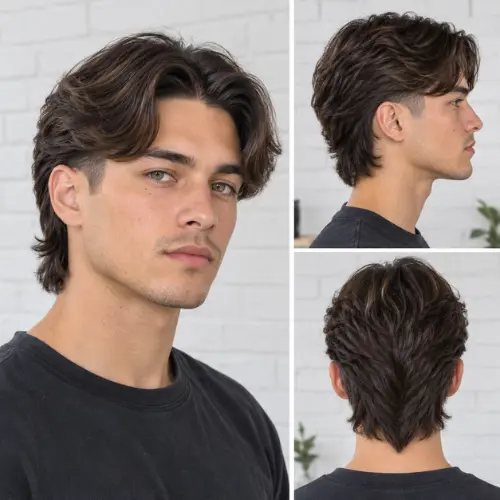
The V-shape tapers the back hair to a point at the center. It looks neat and draws attention to the length. This works well on straight or wavy hair, while curly hair can hide the shape. It needs a steady hand, so choose a barber who has done it before.
27. Middle Part Mullet With Sideburns
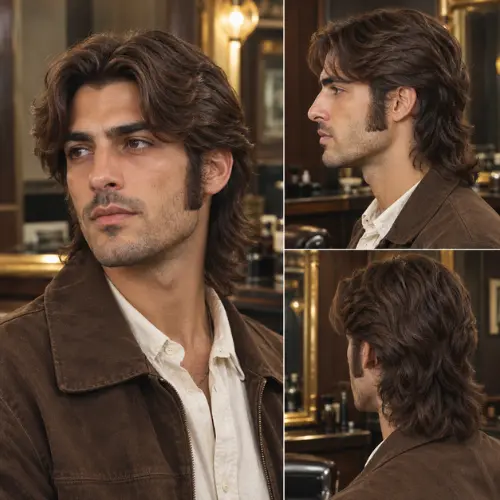
Long sideburns bring a rock-and-roll edge, connecting the face to the hair and balancing the length at the back. Medium thickness usually looks best. Keep them trimmed and even, because messy sideburns can pull the whole look off course.
28. Middle Part Mullet With a Beard
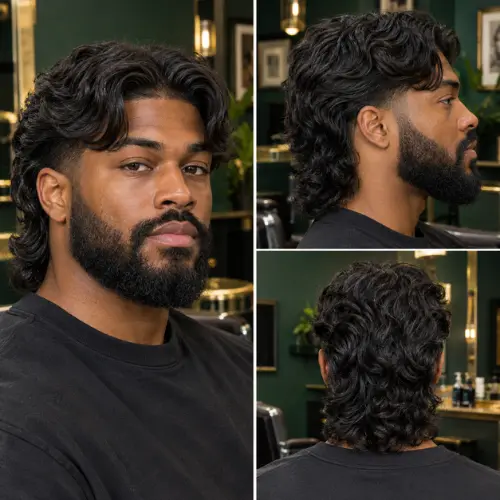
A beard gives the face more structure, which can balance the volume of the mullet, and a short, well-groomed beard usually looks best. If both are overgrown, the look can turn heavy, so keep the edges around the beard sharp.
29. Voluminous Middle Part Mullet
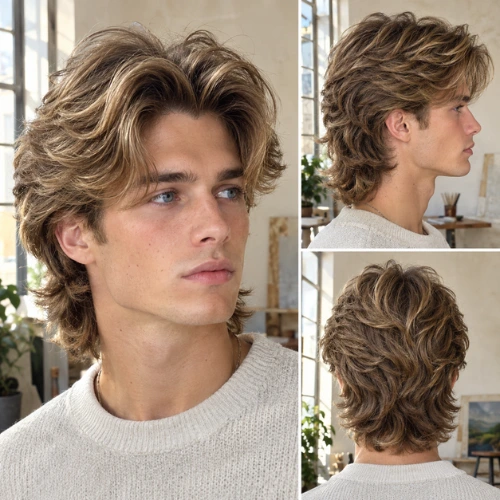
This style leans on lift and body. The hair around the crown is cut to stand out, and the back adds extra fullness. A blow dryer and a light mousse do most of the work, and it suits men with thick, strong hair.
30. Messy Middle Part Mullet
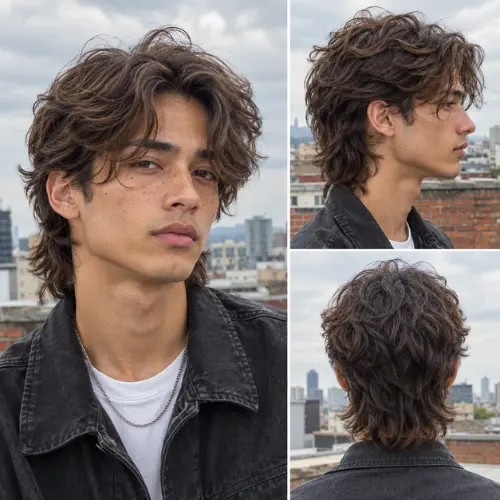
Messy doesn’t mean neglected. The look is rough around the edges by design, with loose pieces and uneven ends. Run your fingers through it, add a bit of clay, and leave it alone, because overstyling ruins the charm. It’s also quick in the morning.
31. Edgy Middle Part Mullet
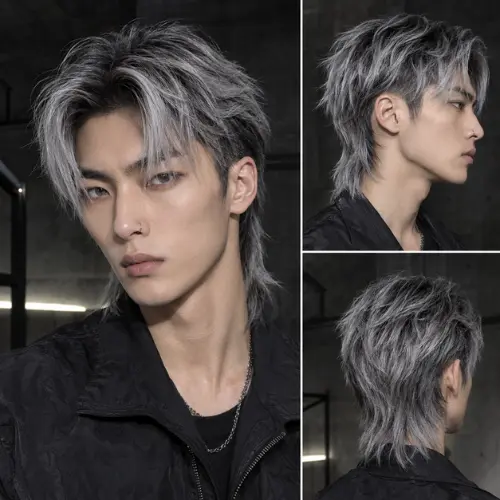
Sharp contrast, heavy texture, and a dramatic length difference give this version its attitude, and some men add dye or highlights to push it further. It works best with confident clothing choices, so pair it with dark jackets, boots, or band tees.
32. Sleek Middle Part Modern Mullet
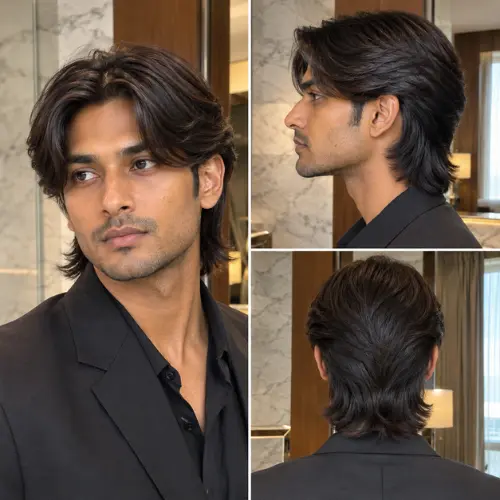
This is the polished side of the trend. The hair is smooth, the part is sharp, and the back is carefully shaped. A touch of light pomade or serum gives it shine without making it greasy, and it feels at home in a smart casual setting.
33. Middle Part Mullet With Curved Layers
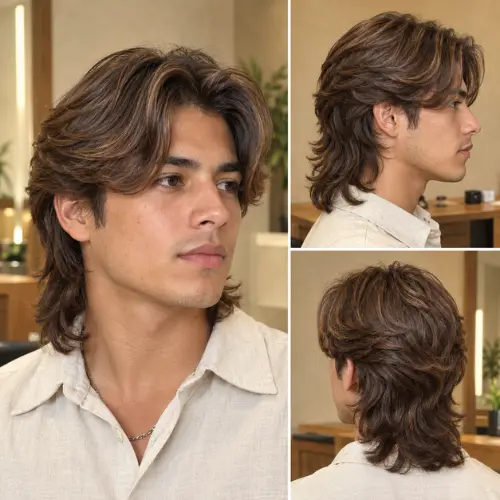
Curved layers follow the shape of the head, creating a soft, rounded flow. The hair seems to wrap around the face and fall gently at the back. It’s graceful and easy to style, and it also grows out without looking awkward.
34. Modern Middle Part Mullet With Defined Edges
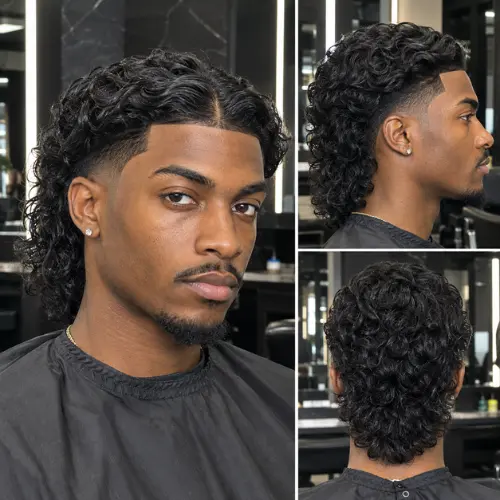
This one pairs a clean neckline and crisp edges with a flowing center-parted top, and the contrast makes the cut look sharp and deliberate. It needs regular trims to stay neat, but if you enjoy a groomed finish, it’s worth the effort.
Middle Part Mullet vs Similar Haircuts
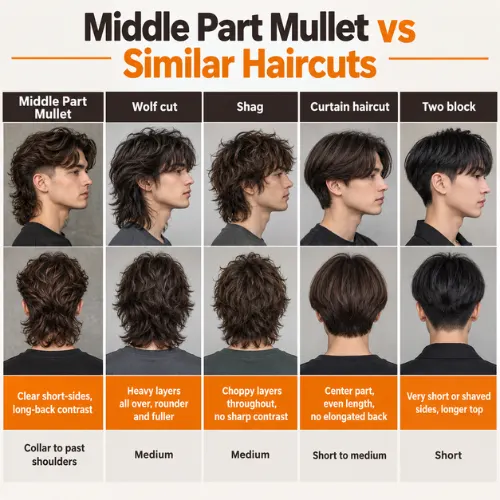
| Haircut | Key difference | Back length |
| Middle part mullet | Clear short-sides, long-back contrast | Collar to past shoulders |
| Wolf cut | Heavy layers all over, rounder and fuller | Medium |
| Shag | Choppy layers throughout, no sharp contrast | Medium |
| Curtain haircut | Center part, even length, no elongated back | Short to medium |
| Two block | Very short or shaved sides, longer top | Short |
How to Choose the Right Length for a Middle Part Mullet
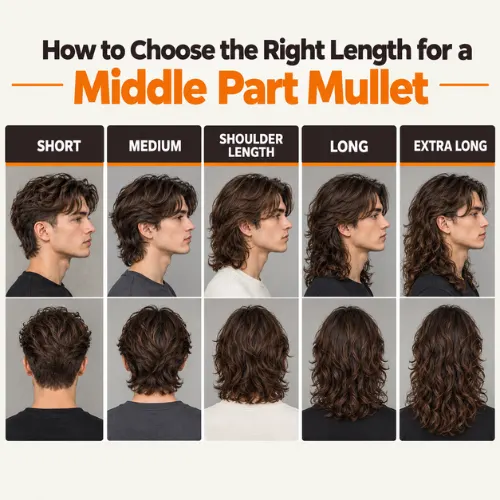
The ideal middle part mullet length depends on your hair type, lifestyle, and comfort level, as straight hair appears longer while curly hair shrinks when dry and may need extra length. For formal settings, keep the back near the collar, while more flexible environments allow shoulder length or longer; starting with a medium length gives you room to grow or trim it later.
Is the Middle Part Mullet Appropriate for Work?
It depends on the workplace. In creative fields, tech, and casual offices, the cut is usually fine. In stricter environments, choose a subtle version, such as a short or baby middle part mullet with a taper, to keep things neat. You can also tie the back hair or tuck it behind your collar on formal days. Clean edges and healthy hair go a long way toward looking professional.
How to Ask Your Barber for a Middle Part Mullet

What to say to your barber:
- “I want a middle part mullet. Here are 2 to 3 reference photos (front, side, back).”
- Sides: short taper / low fade / natural (choose one)
- Back: collar length / mid-neck / shoulder (choose one)
- Top: layered with a center part, light texture
- “Please leave extra length for now. I’ll decide on more off next visit.”
- “How should I style it at home?”
How to Style a Middle Part Mullet: Step by Step
Styling takes about five to ten minutes once you get used to it, so follow these steps for a reliable result. If your hair is curly, skip the brush, scrunch in cream, and let it air dry or use a diffuser instead.
- Start with damp hair. Towel dry until it’s no longer dripping. Soaking wet hair is hard to shape.
- Apply a prep product. Use a sea salt spray for texture or a mousse for volume. A pea-sized amount is plenty.
- Find your part. Use a comb to draw a line from the center of your forehead back toward the crown.
- Blow dry. Use medium heat and dry the front sections away from the part. Lift the roots with your fingers.
- Shape the back. Let the longer hair fall naturally. If you want flipped ends, use a round brush.
- Add finishing product. Rub a small amount of matte paste or clay between your palms and work it through.
- Set it. A light hairspray locks everything in without making it stiff.
Maintenance and Growing Out: What to Expect
Plan a trim every 3 to 5 weeks, or every 2 to 3 weeks if you have a skin fade. Wash two or three times a week with a gentle shampoo to prevent dryness.
Growing a middle part mullet from a regular haircut usually takes 4 to 6 months to reach a workable length, and 6 to 12 months for shoulder length or longer, since hair grows about half an inch per month. Ask your barber for light shaping trims to keep the sides neat while the back grows.
Common Mistakes to Avoid
Most bad mullets come down to a few avoidable errors.
- Going too short in the back. Without enough length, the cut just looks like a layered haircut.
- Ignoring your hair type. Fine, flat hair needs a different approach than thick, wavy hair.
- Using heavy products. Greasy gels weigh the hair down and kill the natural movement.
- Skipping trims. Split ends and uneven lines show quickly on longer hair.
- Choosing a part that fights your growth. If your hair resists a center split, work with your cowlicks instead of against them.
- Copying a photo without context. What looks great on a model with thick hair may not suit your own.
Clothing and Style Pairings
The middle part mullet has a relaxed, vintage feel that pairs well with different outfits, from oversized tees, denim jackets, sneakers, and flannel for a casual 90s look to tailored blazers, crisp shirts, and leather shoes for a sharper style. For a streetwear vibe, cargo pants, graphic hoodies, and chunky trainers complement the haircut’s bold, laid-back attitude.
Why Is the Middle Part Mullet Popular in 2026?
The middle part mullet’s popularity comes from nostalgia, social media transformations, and changing grooming trends that make longer hair, soft parts, and visible texture more acceptable. Its versatility also adds to its appeal, as the cut can look neat or messy, subtle or bold, allowing men to choose a style that suits their preferences.
Search data shows the same steady demand. According to Google Trends, worldwide interest in “middle part mullet” stayed at 79 or higher on its 0 to 100 scale every month from September 2025 to September 2026, peaking in December 2025 and March 2026 (Google Trends, worldwide, monthly data pulled October 2026).

A Short History of the Mullet
The mullet is older than its name. Homer’s Iliad describes a group of Greek spearmen, the Abantes, with their forelocks cropped and their hair grown long at the back, which may be the earliest written mention of the style. It became a pop-culture look in the early 1970s through David Bowie’s Ziggy Stardust persona, and it peaked in the 1980s. The word “mullet” itself only entered use for the haircut in 1994, thanks to the Beastie Boys’ song “Mullet Head.” After falling out of favor, the cut came back in mid-2020, when it became a popular lockdown haircut, and today’s versions are softer and more textured.
The middle part mullet is part of that return. It keeps the short-sides, long-back shape but swaps the swept-back front for a center part that falls into soft curtains, which is why it looks more relaxed than the classic mullet.
Sources: HISTORY.com, “The Mullet Wasn’t Just An ’80s Thing” · Dazed, “A brief history of the mullet” · The National, “A brief history of the mullet”
Frequently Asked Questions About the Middle Part Mullet
Here are common questions about the middle part mullet, from face shapes and hair types to products, trims, and growing it out. Each answer below is short and practical.
What Face Shapes Suit a Middle Part Mullet Best?
Oval faces carry nearly any version well. Round faces benefit from longer layers and some height at the crown, while square faces look great with soft, wavy texture. Long or narrow faces can try curtain bangs and extra volume at the sides to add width.
Which Hair Types Work Best With a Middle Part Mullet?
Thick, straight, wavy, and curly hair all work well, and thicker hair holds the shape and adds natural volume. Very coarse hair may need thinning to avoid bulk. Fine hair can work too, but it needs the right cut.
Can You Get a Middle Part Mullet With Thin or Fine Hair?
Yes, but keep the layers light, since heavy cutting can make fine hair look sparse. Volumizing products and a blow dry give it body, and a shorter, tidy version often looks better than a very long one.
How Long Does Your Hair Need to Be for a Middle Part Mullet?
You need at least three to four inches on top to form a visible part, and the back should be a couple of inches longer than the sides. If your hair is shorter than that, your barber may ask you to grow it a few months first.
Should a Middle Part Be Perfectly Centered?
Not always. A slightly off-center part often looks more natural and fits the way your hair grows. If you want a crisp, polished look, aim for the center, and if you want a laid-back feel, let it fall where it wants.
How Do You Keep a Middle Part Mullet From Looking Flat?
Use a bit of volumizing mousse at the roots and blow dry upward, and ask for light layers around the crown. Avoid heavy oils and creams on the top, because they can pull the hair down.
What Products Help Keep a Middle Part Mullet Looking Good?
A sea salt spray, matte paste, and light hairspray cover most needs, while curly hair benefits from a curl cream. For dry ends, a leave-in conditioner or a few drops of hair oil on the tips keeps things healthy.
How Can You Add Texture to a Middle Part Mullet?
Ask your barber for a razor cut or point cutting, since both break up the lines and give the hair more movement. At home, use a texturizing spray or clay, scrunch it through, and let the hair dry naturally.
How Often Should You Trim a Middle Part Mullet?
Every three to five weeks is a good rule, and faded sides need more frequent visits, usually every two to three weeks. If you’re growing the back, you can often skip the trim there and only clean up the sides and neckline.
Can You Grow a Middle Part Mullet From a Regular Haircut?
Yes. Start by letting the top and back grow while keeping the sides tidy. Growing a middle part mullet from a regular haircut usually takes 4 to 6 months to reach a workable length, and 6 to 12 months for shoulder length or longer, since hair grows about half an inch per month. During that time, a barber can shape the cut in stages so it looks deliberate rather than overgrown.
Is a Middle Part Mullet the Same as a Wolf Cut?
No, though they overlap. A wolf cut uses heavy layers across the whole head, while a mullet has a clearer short-sides, long-back structure. Some barbers blend the two, which is why people often mix up the names.
Can You Get a Middle Part Mullet Without a Fade?
Absolutely. You can keep the sides natural, softly layered, or lightly tapered. A fade adds sharpness, but it isn’t required, and plenty of men prefer the relaxed look of a fade-free cut.
Final Thoughts: Is the Middle Part Mullet Right for You?
The middle part mullet has moved far from its joke-worthy past. With so many versions available, there’s likely one that fits your hair, your style, and your daily routine.
Start by thinking about your hair type and how much time you want to spend styling. Then bring clear photos to your barber and ask for a little extra length at first. If you’re curious, give it a try. It’s only hair, and it grows back.

Randy Cox
Randy Cox is a men’s hairstyling writer and grooming enthusiast sharing expert inspired guides on modern mullets, styling tips, and the latest men’s haircut trends.