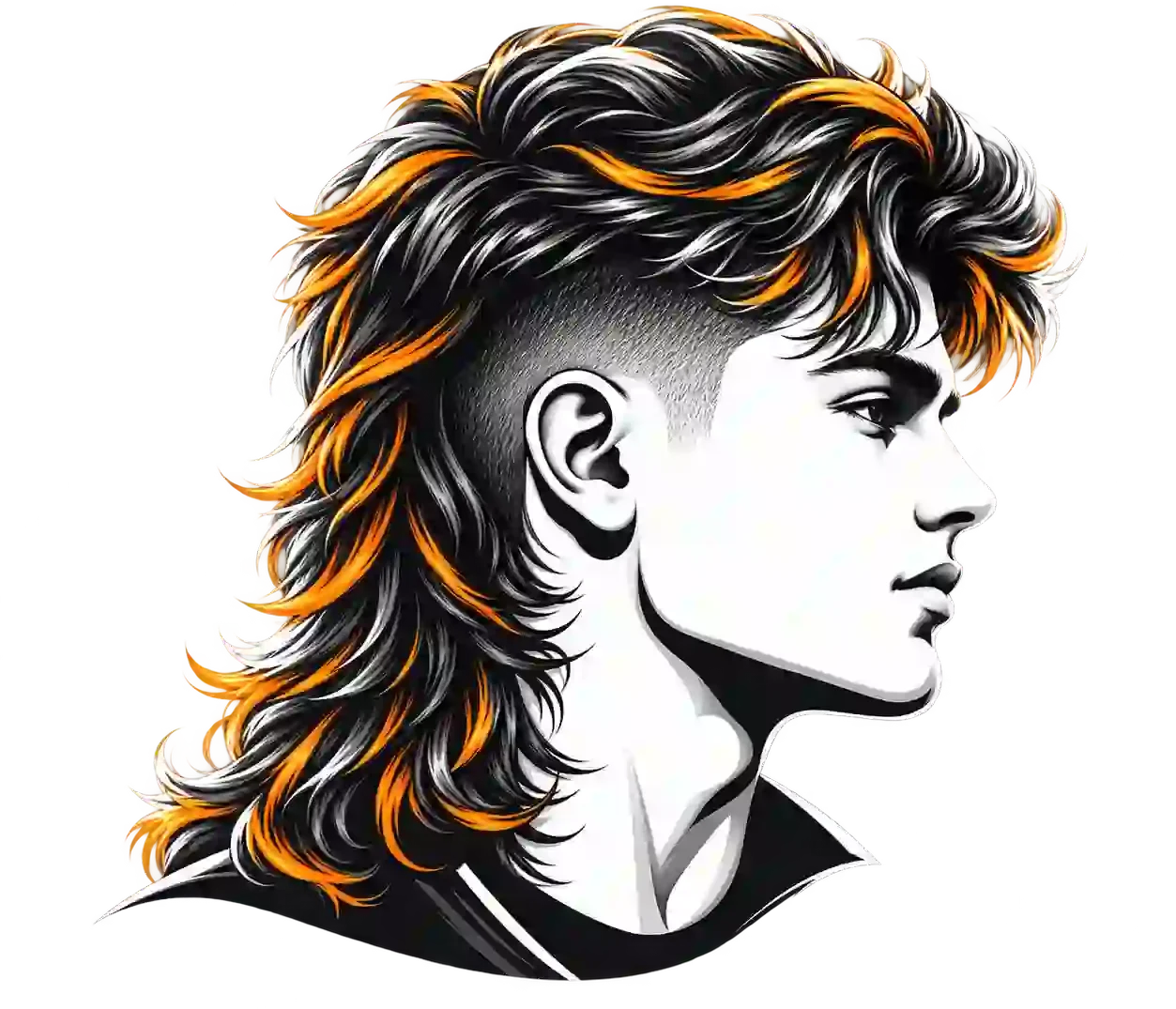
55 Modern Mullet Haircut Ideas for Men to Try in 2026
With over 450,000 monthly searches, the modern mullet haircut is one of 2026’s most requested styles for straight, curly, and wavy hair, but without a clear reference, you risk an overly timid trim or an exaggerated 1980s look that may not suit your face shape.
Explore 55 of the most searched mullet variations, from fades, tapers, curly, wavy, bearded, and wolf cut styles to barber communication, product routines, pricing by tier, and common questions, all in this comprehensive 2026 guide to the modern mullet haircut.
What is a Modern Mullet Haircut?
A modern mullet keeps the classic structure of shorter sides and top with longer hair at the back and nape, but updates the execution with tapers, fades, layering, and texturizing shears to create a deliberate blend; the result can look edgy or polished depending on the side finish and nape length.
Modern Mullet vs Mullet
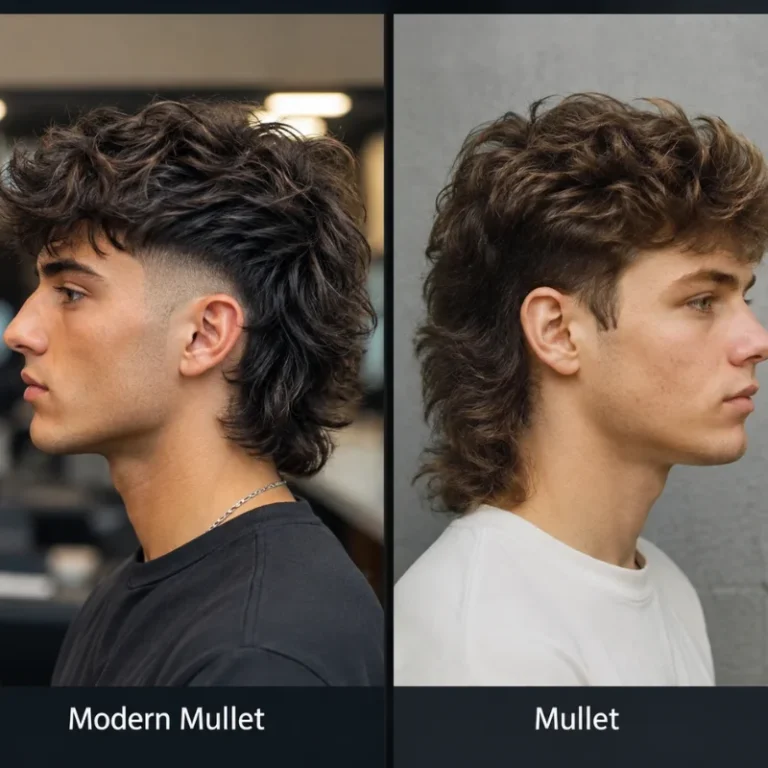
Both cuts share a family tree, but a side-by-side comparison shows how far the modern version has moved from its source.
Modern Mullet
- Tapered or faded sides that blend cleanly into the top, rather than a hard, uneven line
- Textured, layered length at the back instead of one flat, thick chunk of hair
- Styling built around fashion trends: curtain bangs, wolf cut layers, burst fades
- Works across straight, wavy, curly, and coily hair types with adjusted technique
Mullet
- Sides cut short with scissors or clippers, often with minimal blending
- A single long, thick section left at the back with little to no layering
- Rooted in 1970s and 1980s rock, country, and working-class culture
- Limited variation, since the style relied on one basic silhouette
Top 55 Modern Mullet Haircut Styles for Every Hair Type
Modern Mullet
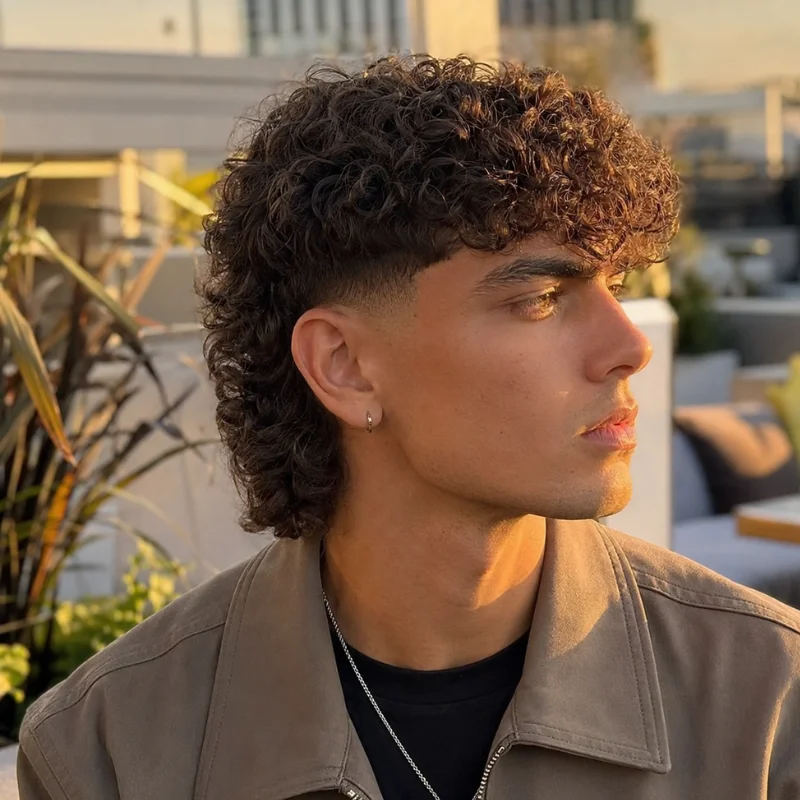
The foundation style: short, tapered sides paired with longer, textured length at the crown and nape.
Modern Mullet Fade
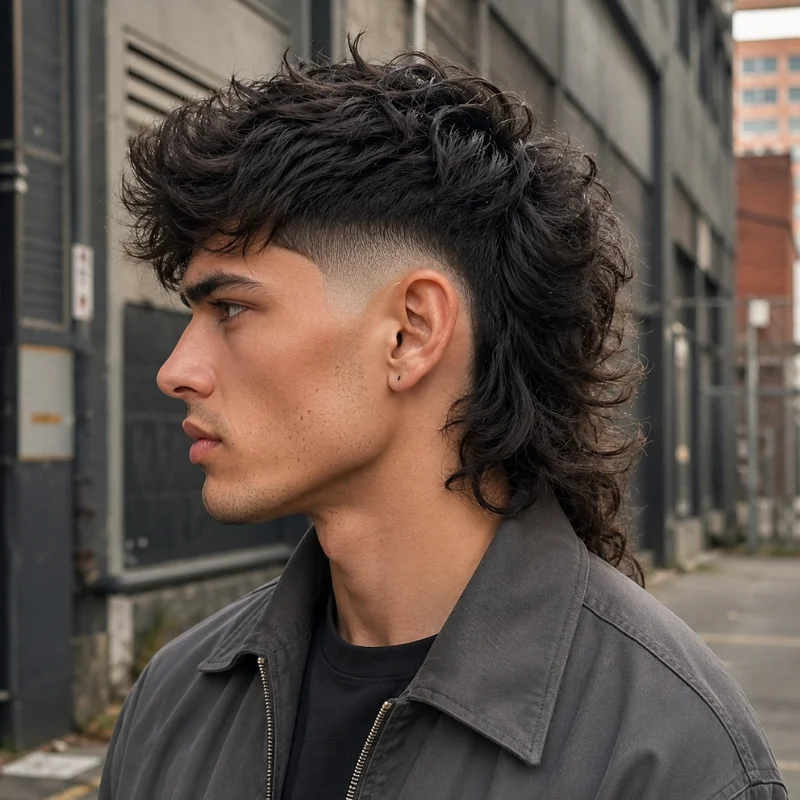
A crisp Modern Mullet Fade replaces the tapered sides, sharpening the contrast against the length on top.
Mullet Fade Straight Hair: Straight strands lie flat against the faded sides, keeping the silhouette clean and graphic.
Mullet Fade Curly Hair: Curls add volume up top that balances the tight fade below, avoiding a flat, weighed down look.
Short Mullet Fade: A tighter overall length keeps the fade the focal point rather than the back hair.
Mullet Fade Long Hair: Extra length at the nape creates a bolder contrast against the shaved sides.
Mullet Fade Wavy Hair: Natural wave adds texture that a fade alone cannot provide, softening the transition.
Mullet Fade With Beard: A full beard grounds the cut, giving the face a framed, deliberate finish.
Mullet Fade Asian Hair: Thicker, straighter hair types hold the fade’s sharp lines especially well.
Mullet Fade Blonde: Lightened strands make the length at the back stand out against the darker faded sides.
Short Modern Mullet.
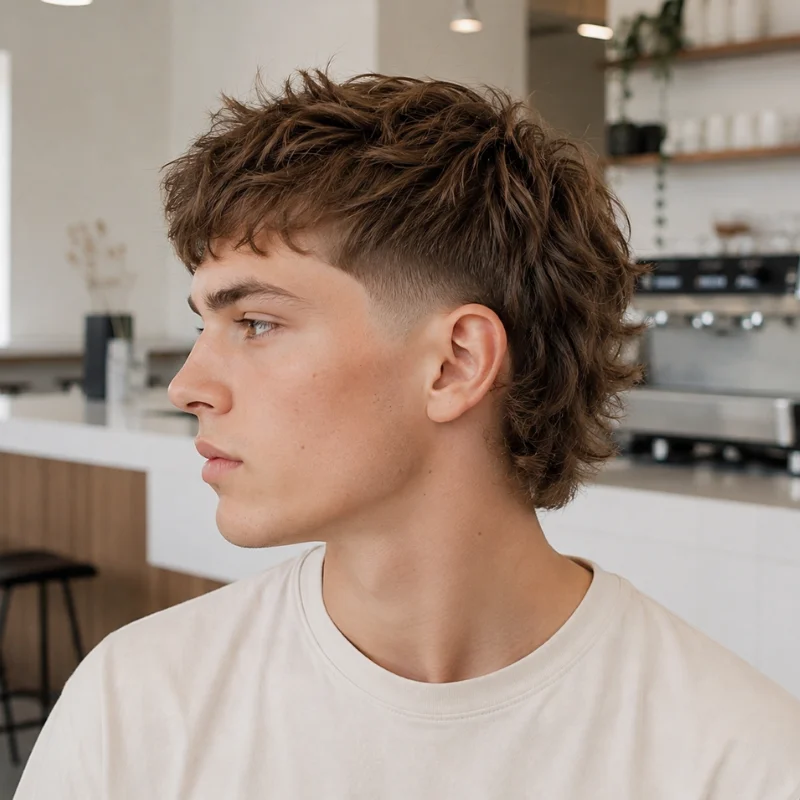
Minimal length at the back keeps this version office-friendly while still nodding to the trend.
Short Mullet blonde: light color draws attention to the cropped length without needing a dramatic cut.
Modern Mullet Curly Hair.
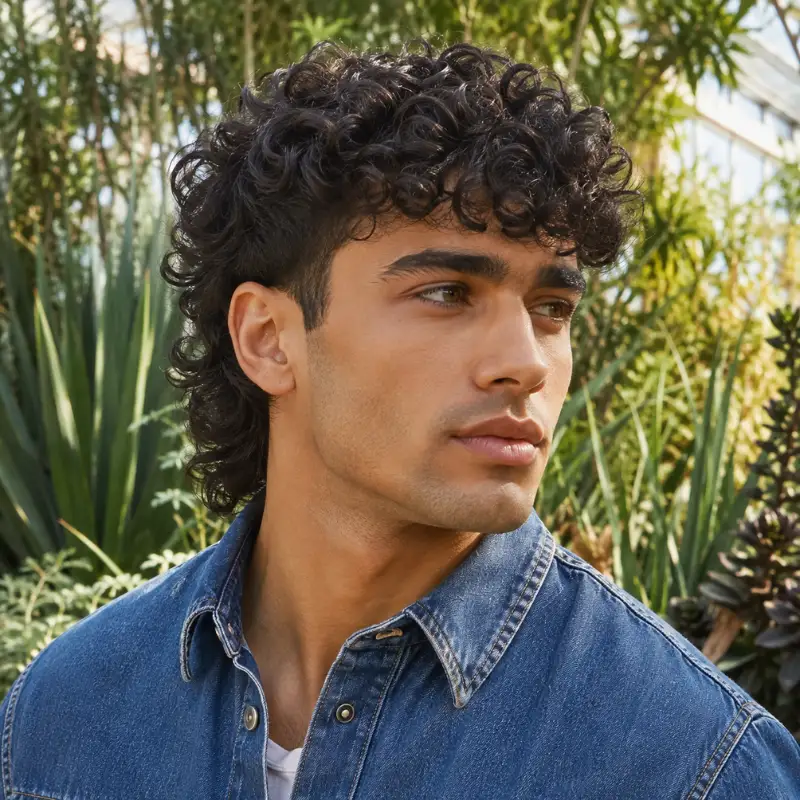
Natural curl pattern replaces the need for heavy styling, since the texture does the work.
Mullet Curly Hair No Fade: A soft taper instead of a fade keeps the curls looking natural rather than sculpted.
Mullet Curly Hair Short: Tighter curls cut close still show clear separation between the sides and the back.
Mullet Curly Hair Blonde: Bleached curls add contrast and make individual ringlets more visible.
Modern Mullet Straight Hair
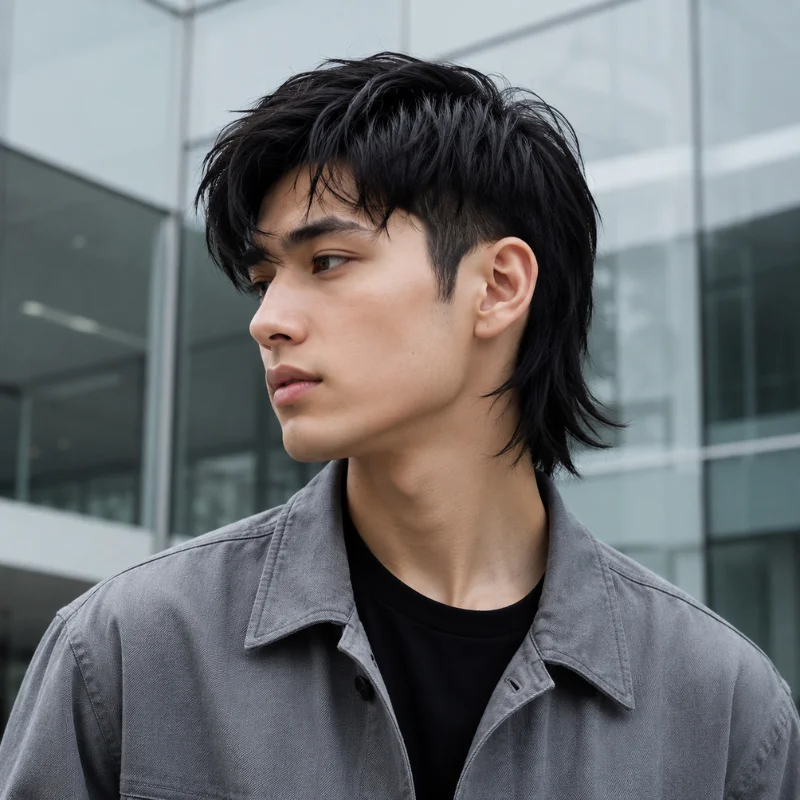
Straight strands show off clean lines at the part and nape, ideal for a sleek finish.
Modern Mullet Taper
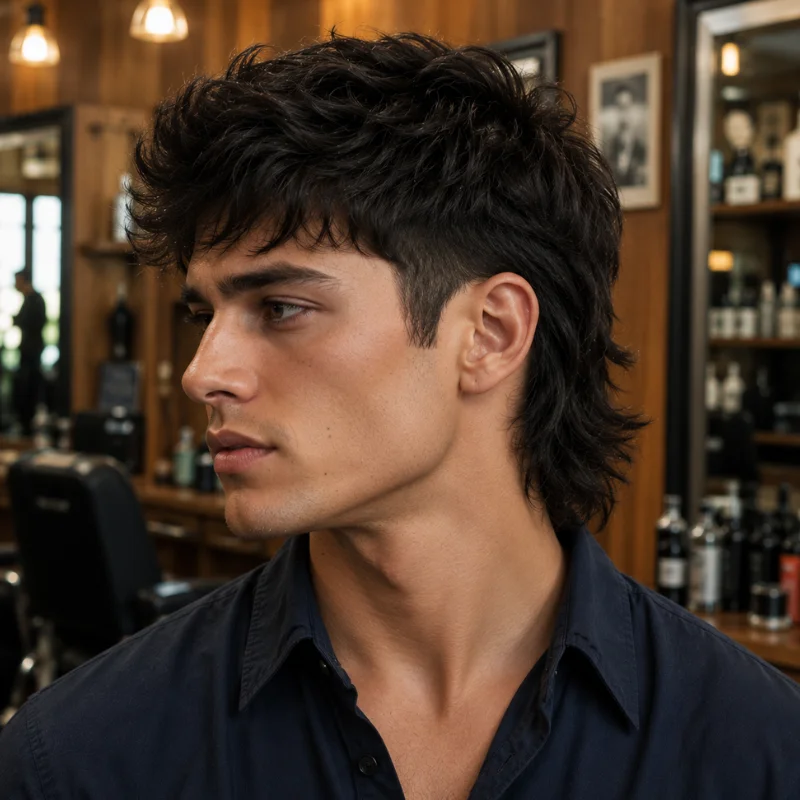
A gradual taper instead of a fade gives a softer, more versatile transition between lengths.
Mullet Taper: Shorter sides paired with a gentle taper suit first timers easing into the cut.
Mullet Taper Curly Hair: The gradual blend works well with curls that need extra volume at the crown.
Mullet Taper Straight Hair: Clean lines along the taper highlight the straight hair’s natural shine.
Mullet Tapered Sides: The phrase describes the technique itself: sides cut in graduating lengths rather than one uniform length.
Modern Mullet Burst Fade
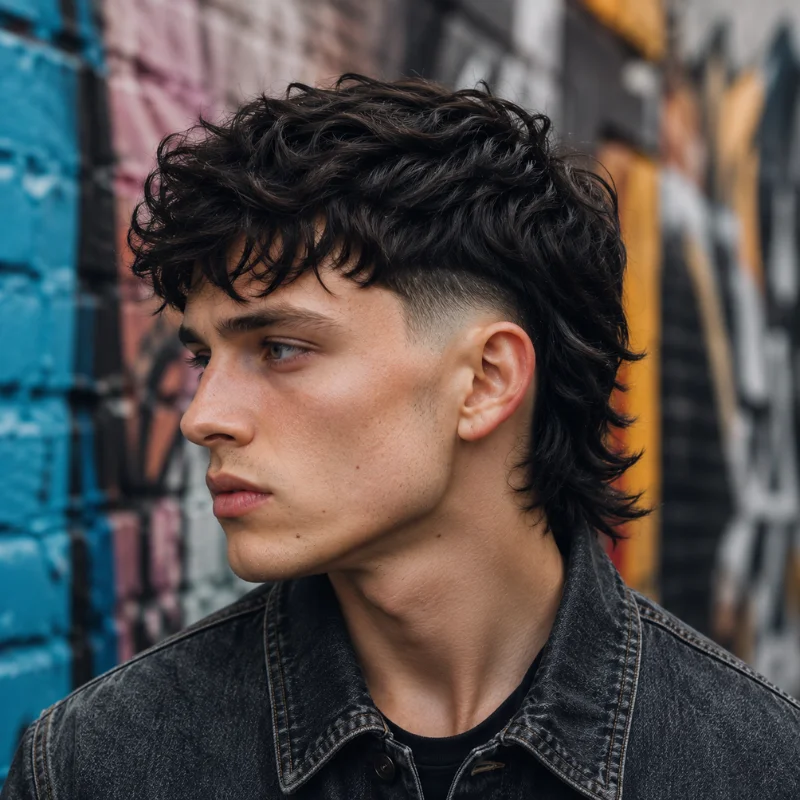
The fade curves around the ear in a burst pattern, adding a sharper, more stylized edge.
Burst fade mullet curly hair: The burst shape frames curly volume on top without flattening it.
Low Taper Modern Mullet
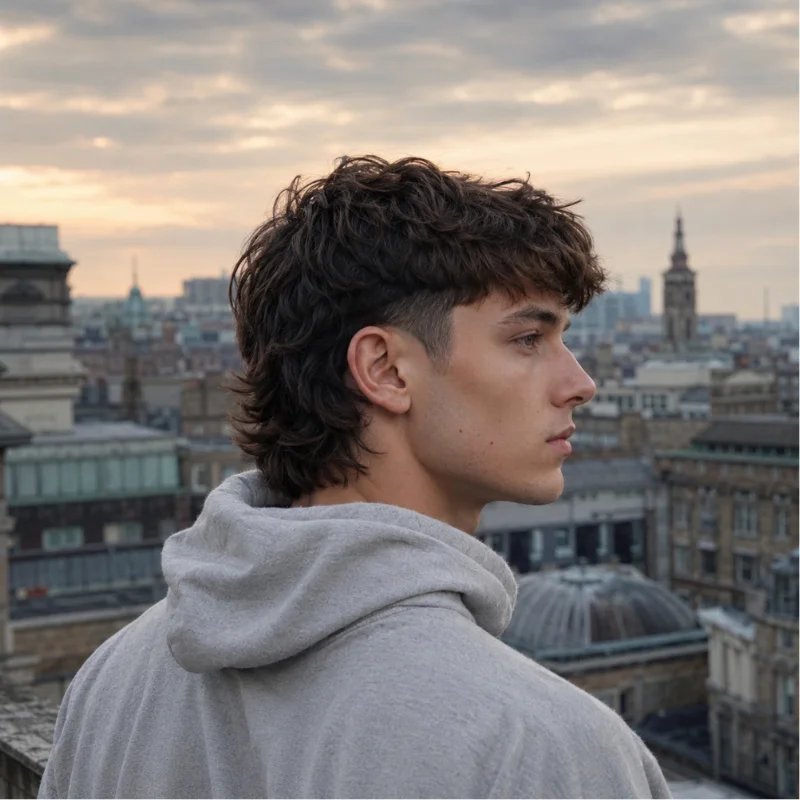
The taper starts low near the ears, keeping more length through the sides for a subtler look.
Low Taper Mullet Curly Hair: Extra length at the sides supports curl volume while still tapering cleanly at the bottom.
Modern Mullet Middle Part
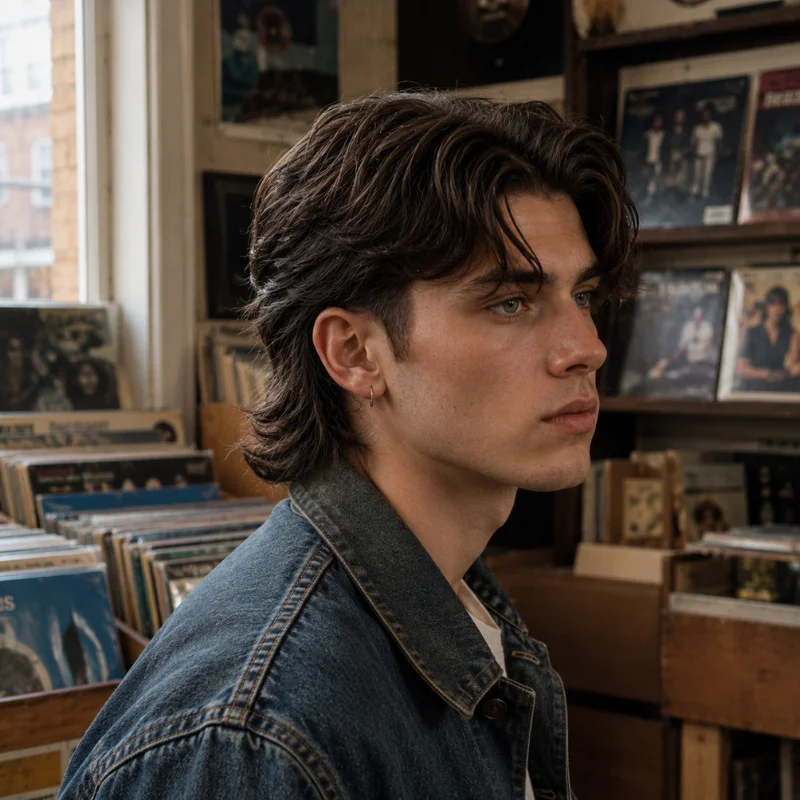
A center part on top adds a retro, skater-inspired edge to the standard mullet shape.
Medium Length Modern Mullet
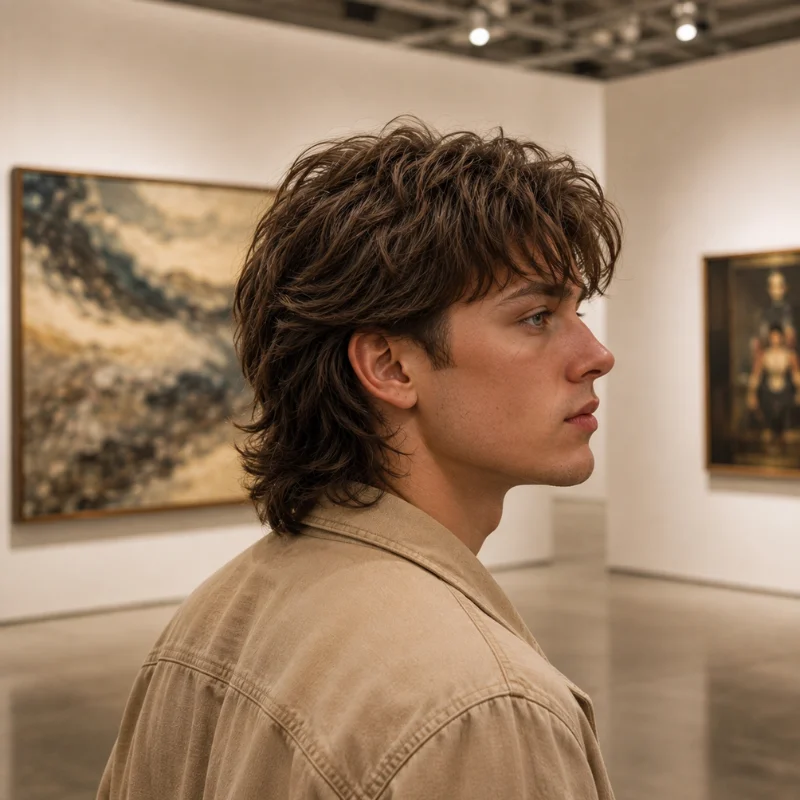
Balanced length throughout avoids the extremes of very short sides or very long backs.
Modern Mullet Low Fade
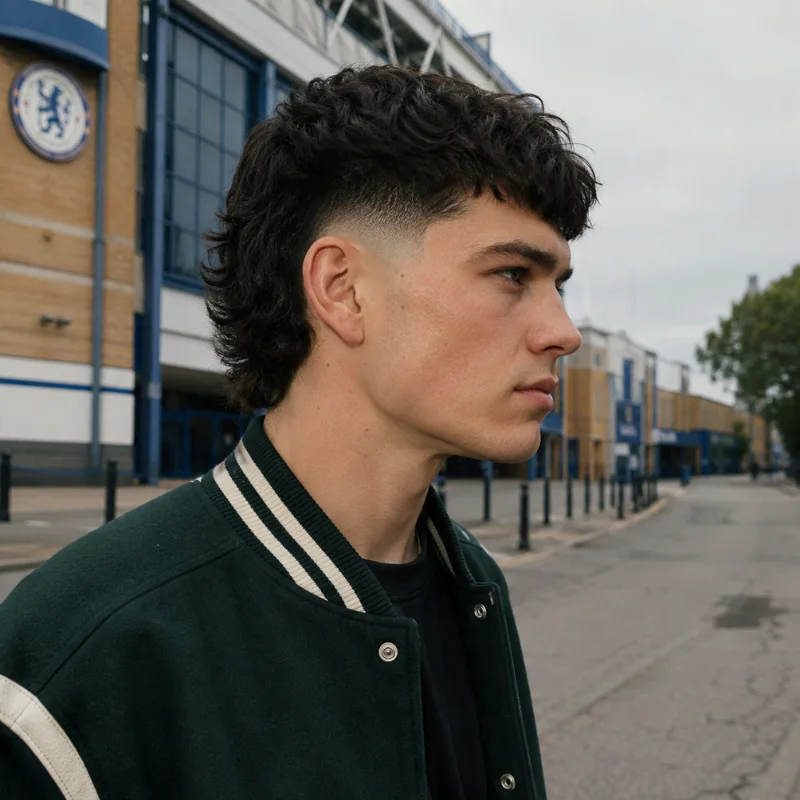
The fade sits close to the hairline, leaving more length above it for styling flexibility.
Long Modern Mullet. Maximum length at the back turns the cut into a statement piece rather than a subtle nod to the trend.
Modern Mullet Wavy Hair
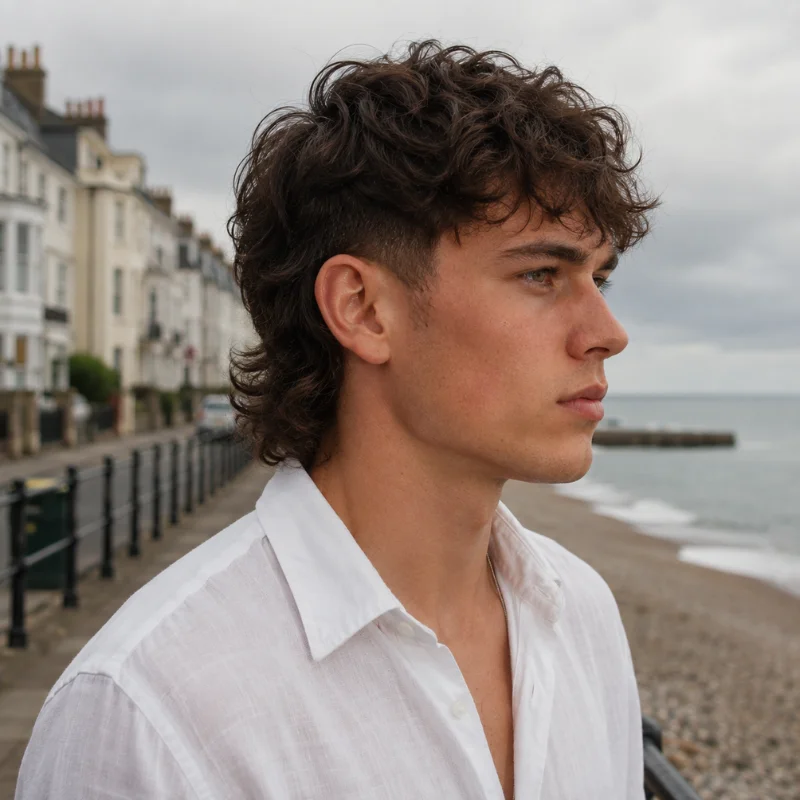
Natural wave gives the back section movement and body without extra product.
Short mullet wavy hair: Cropped length still lets wavy texture show through at the crown and nape.
Textured Modern Mullet
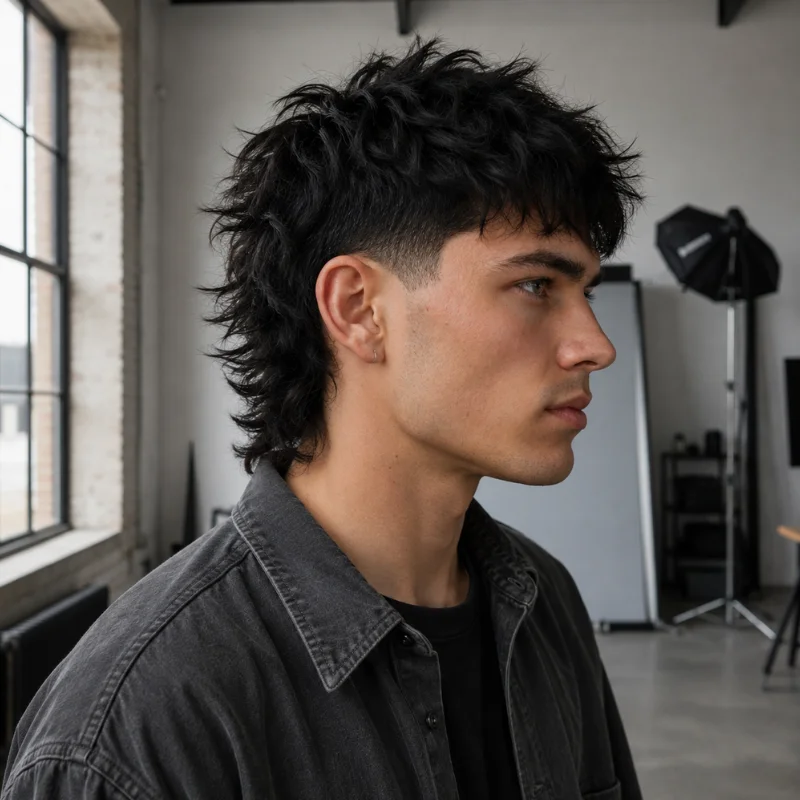
Point-cut layers throughout add texture and break up any heaviness in the length.
Short Textured Mullet: Texturizing on a shorter cut keeps it from looking flat or one dimensional.
Textured Mullet Straight Hair: Layering creates the appearance of movement even without natural wave.
Modern Mullet Taper Fade
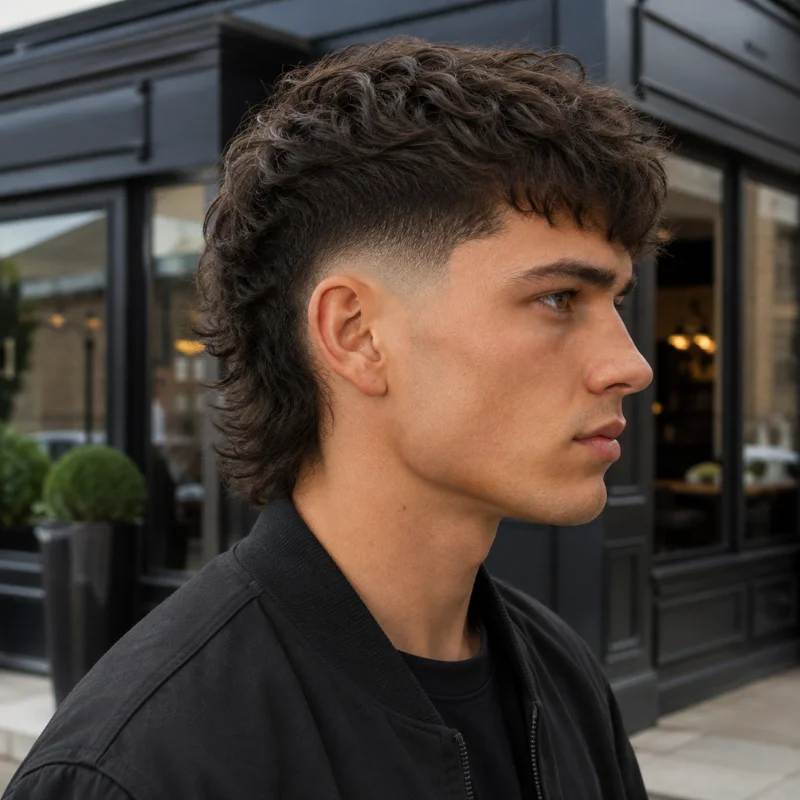
Combines a taper on the upper sides with a tighter fade near the neckline for added contrast.
Mullet Taper Fade Curly Hair: The combination keeps curls full up top while cutting close at the nape.
Modern Mullet Asian
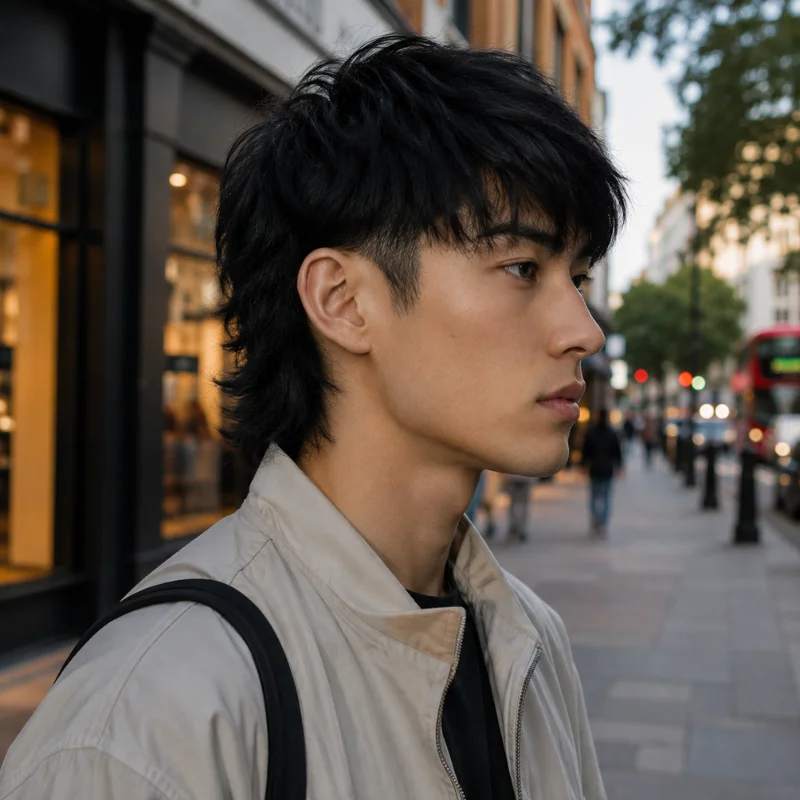
Thicker, straighter Asian hair textures hold shape well, making this a popular request across East Asian barbershops.
Short Mullet Asian: A cropped version suits thicker hair types that hold volume even at shorter lengths.
Modern Mullet Fringe
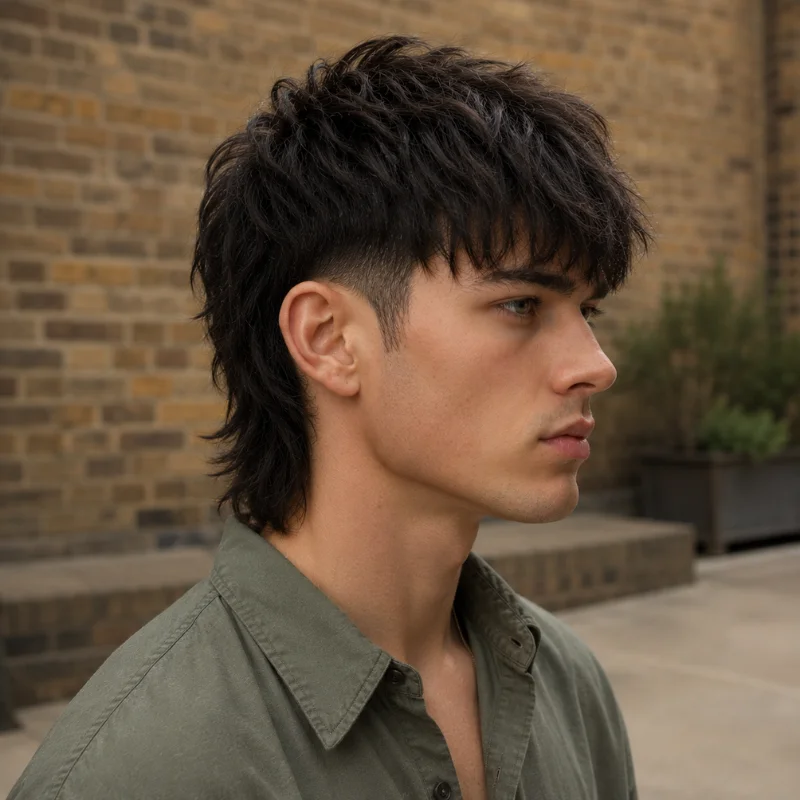
A swept or piece-y fringe at the front adds a soft contrast to the sharper back and sides.
Mullet Fringe Straight Hair: Straight fringe lies flat and defined against the face.
Short Mullet Fringe: A shorter fringe keeps the eyes clear while still framing the forehead.
Mid Taper Modern Mullet
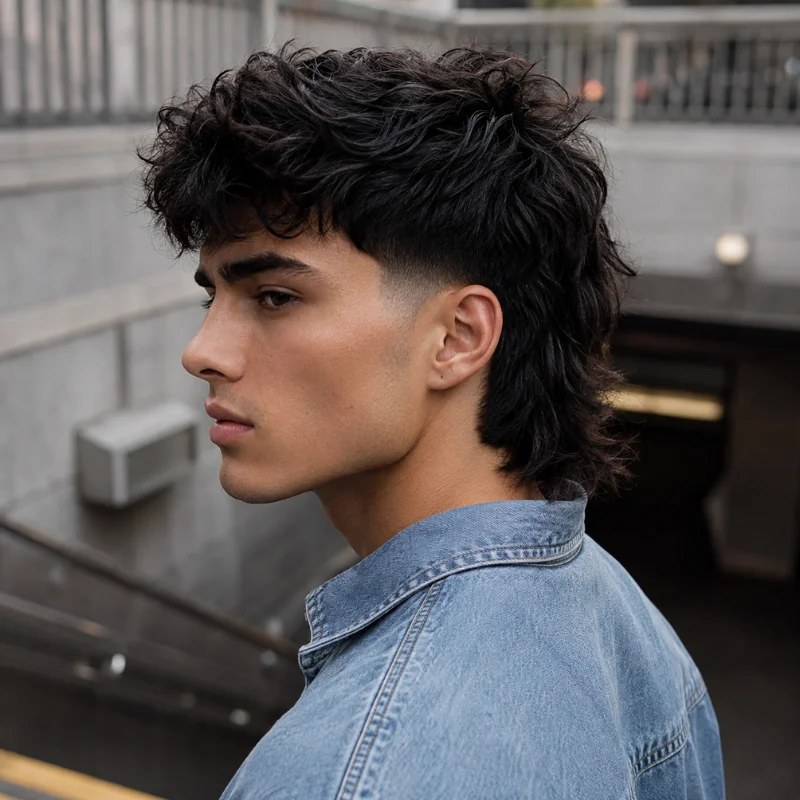
Sits between a low and high taper, offering a middle-ground blend that suits most face shapes.
Mid Taper Mullet Curly Hair: The moderate taper gives curls room to expand without overwhelming the sides.
Modern Mullet with Beard
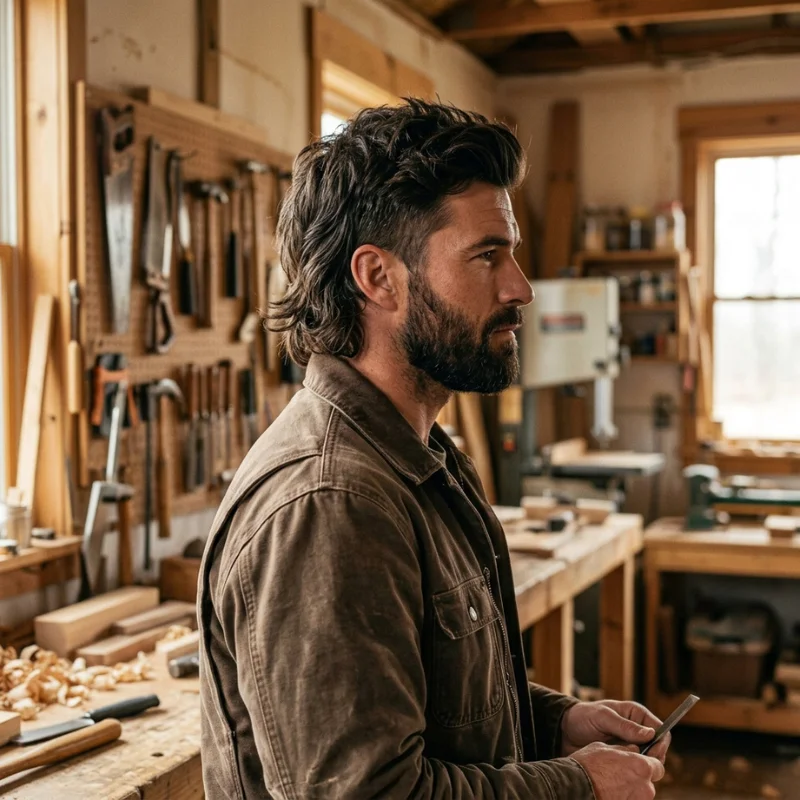
Pairing the cut with facial hair balances a longer back with structure at the jaw.
Modern Mullet Flow
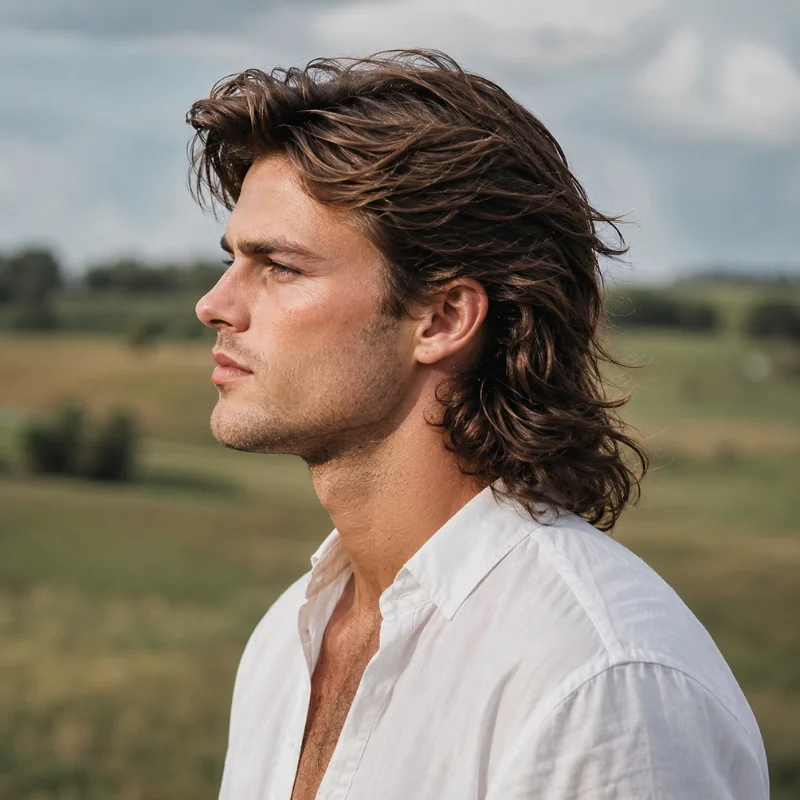
Longer top hair swept back in a natural flow adds movement and an athletic, effortless feel.
Messy Modern Mullet
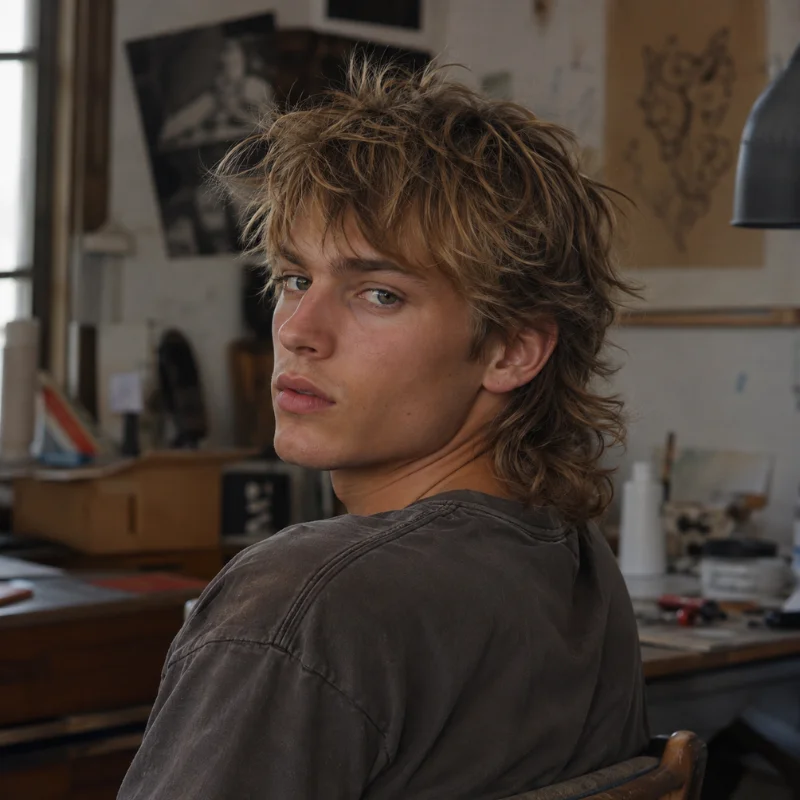
Deliberately undone styling gives the cut a lived-in, low-maintenance appearance.
Modern Mullet Mohawk
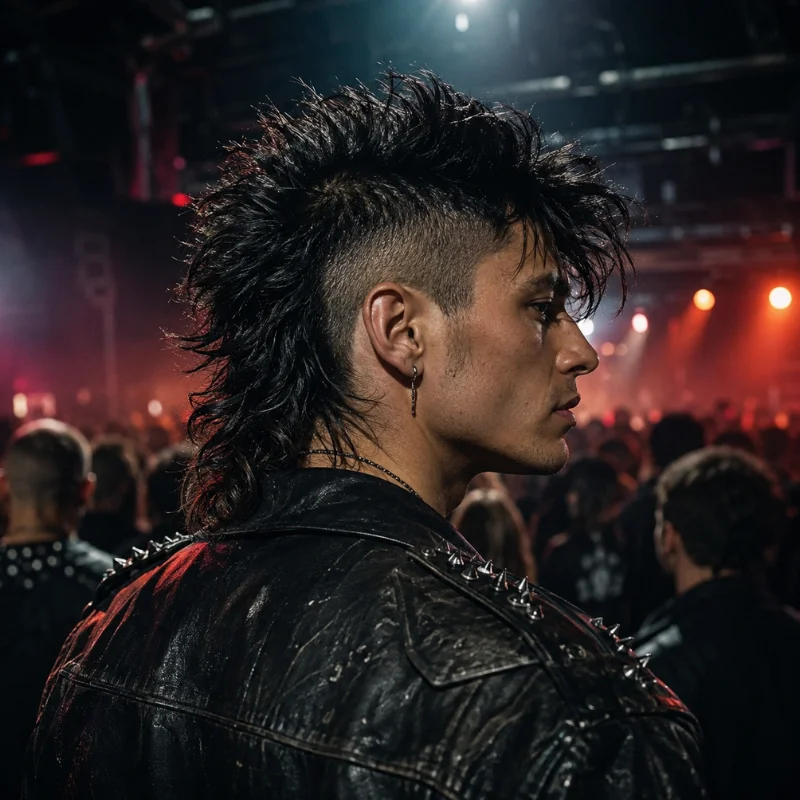
Shaved or faded sides paired with a raised center strip push the cut toward a punk aesthetic.
Modern Mullet Fluffy Hair
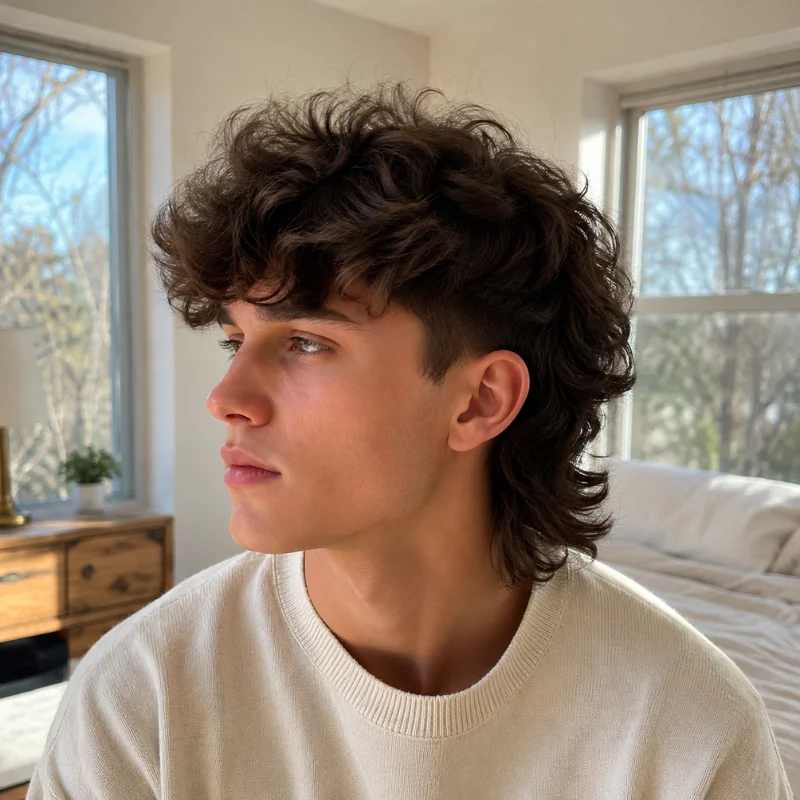
Volume-focused styling at the crown creates a soft, rounded silhouette up top.
Permed Modern Mullet
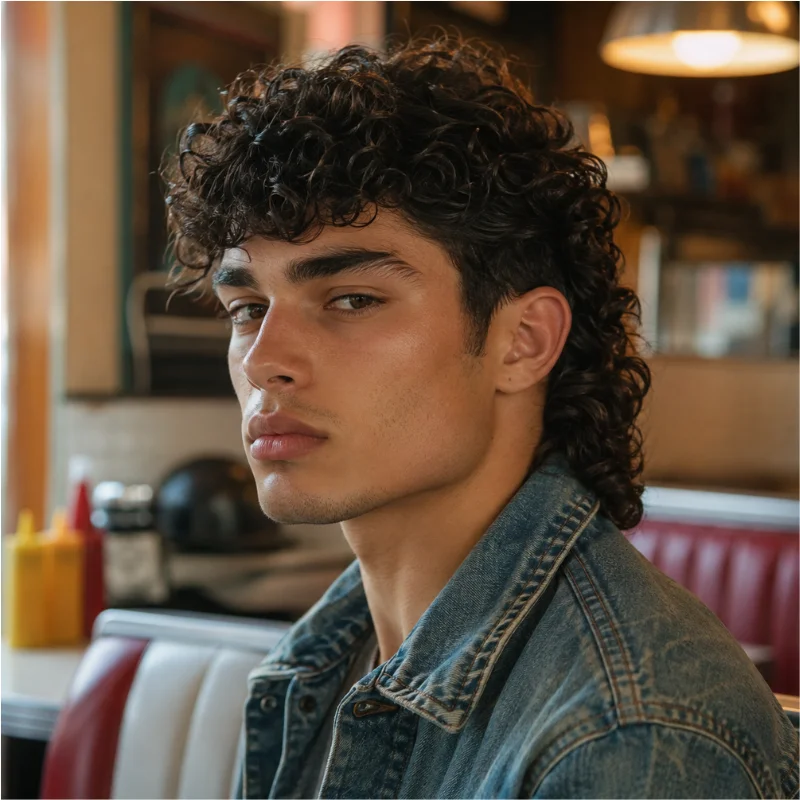
A chemical perm adds curl or wave to naturally straight hair, boosting texture at the back.
Loose perm Mullet: A gentler perm produces soft waves rather than tight curls, keeping the look natural.
Modern Mullet Wolf Cut
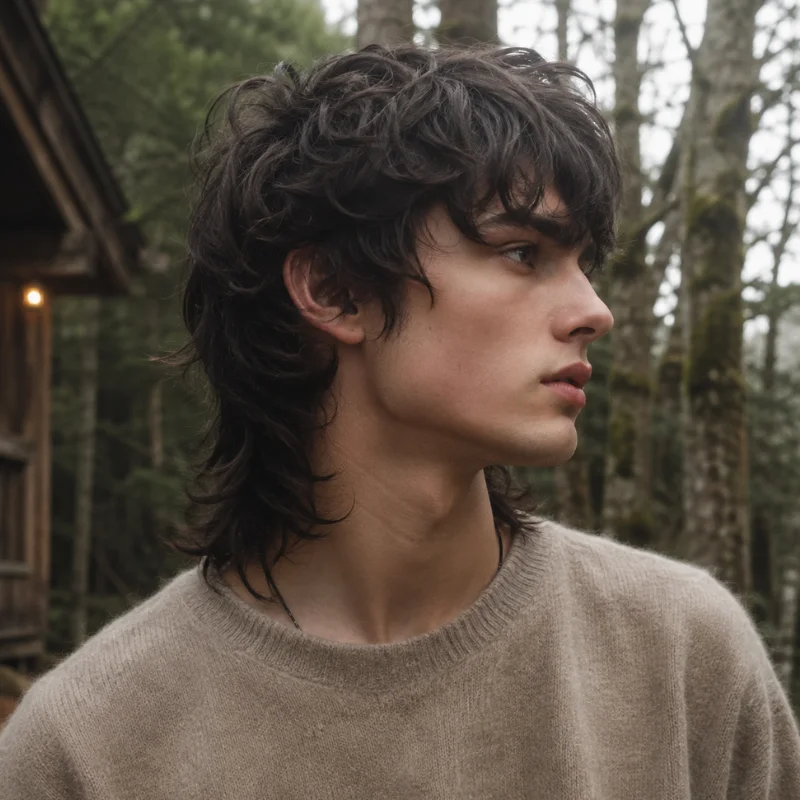
Merges mullet length with wolf cut layering for heavy texture and a shaggy, undone finish.
Mullet Wolf Cut Lite: Fewer, softer layers tone down the shag for a more wearable version.
Mullet Wolf Cut Corto: A shorter overall length keeps the wolf cut’s texture without the dramatic length.
High Taper Modern Mullet
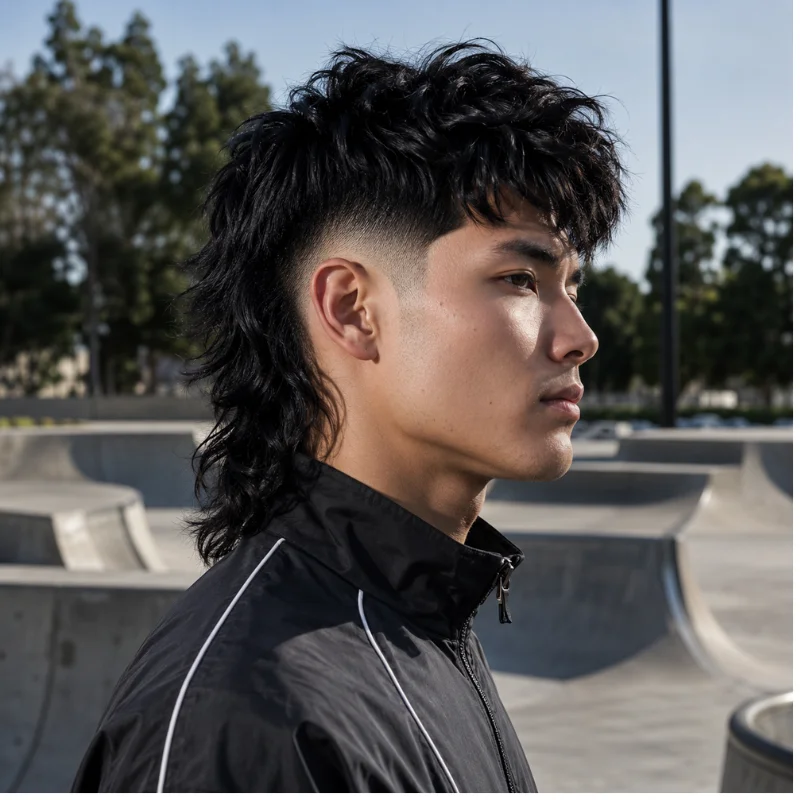
The taper begins higher on the head, creating a bolder contrast with the length above it.
Korean Modern Mullet

Soft, face framing layers and a swept fringe reflect current K-pop and Korean street style trends.
Modern Mullet Skin Fade
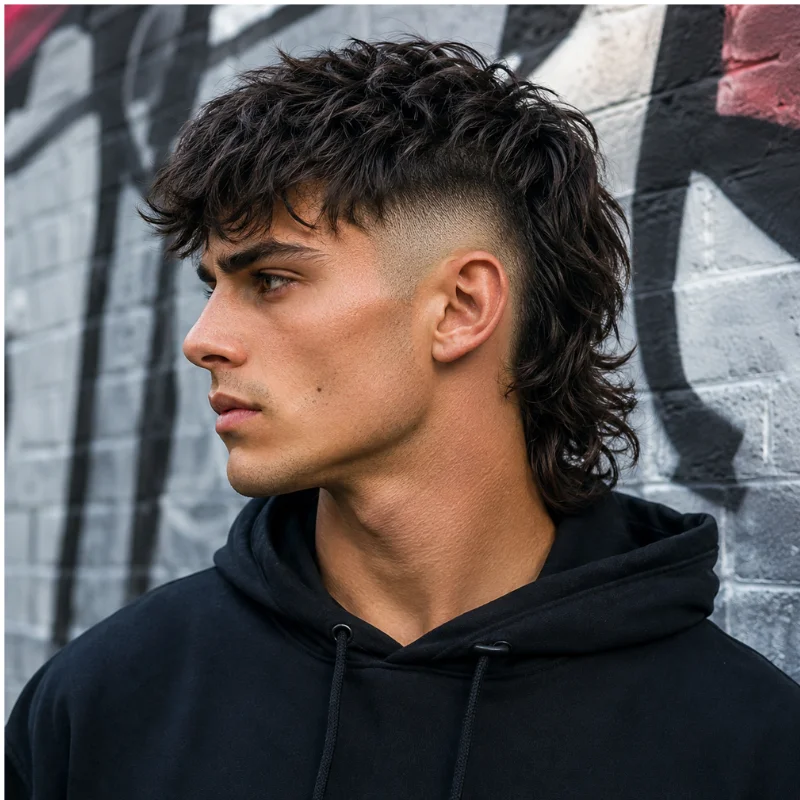
A skin fade takes the sides down to bare skin, maximizing contrast against the length on top.
Short Mullet Skin Fade: A tighter cut keeps the focus on the sharp fade line itself. .
Textured Fringe with Modern Mullet
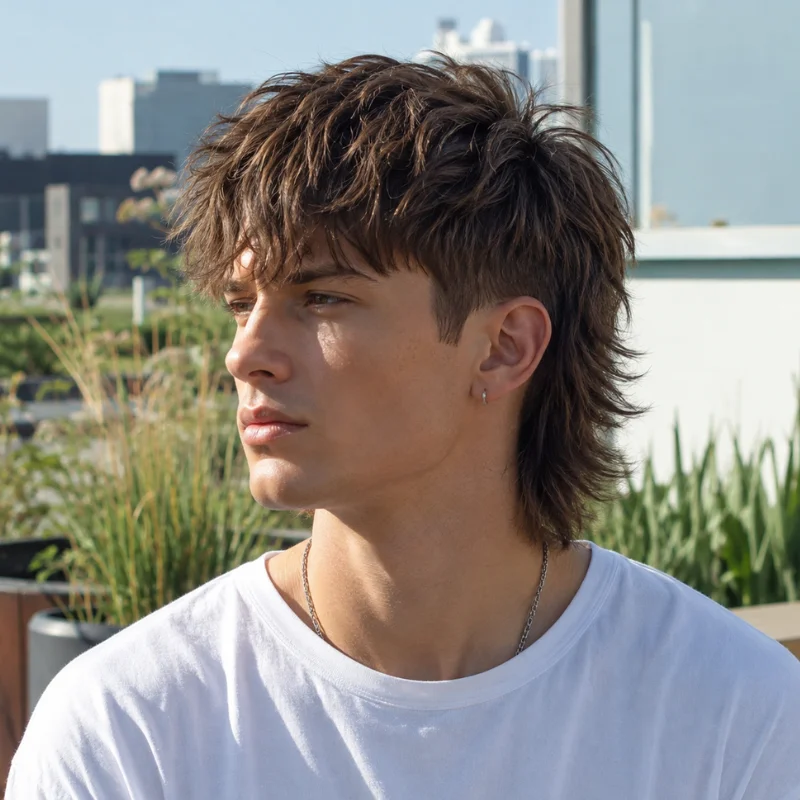
Choppy, textured fringe pairs with mullet length for a rougher, edgier finish.
Modern Mullet Side Part
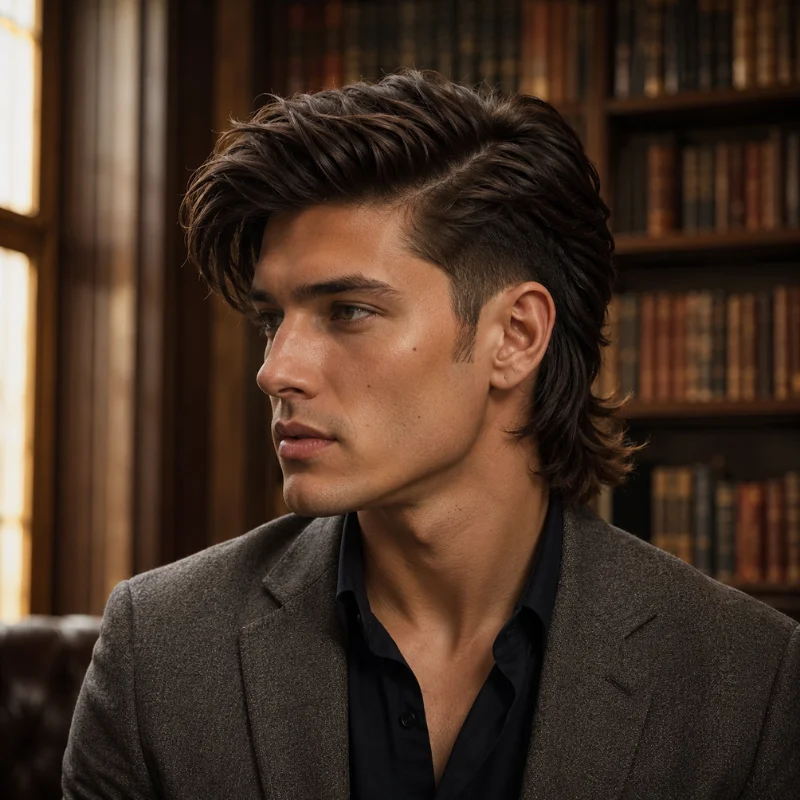
A defined side part adds structure and a slightly more polished, put together look.
Layered Modern Mullet
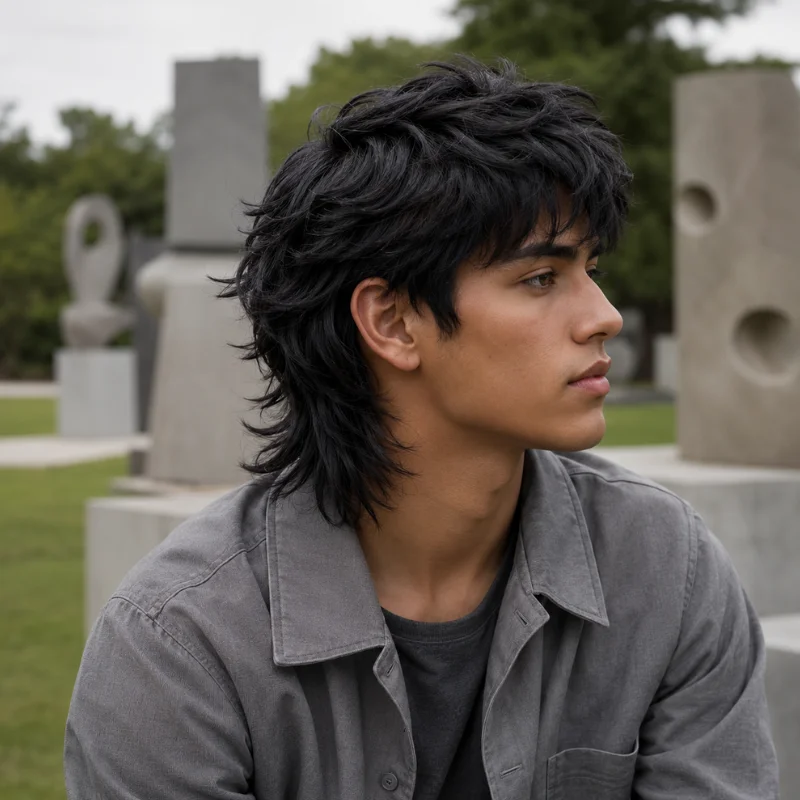
Multiple layers throughout the back reduce bulk and add shape as the hair grows out.
Mullet with Bangs
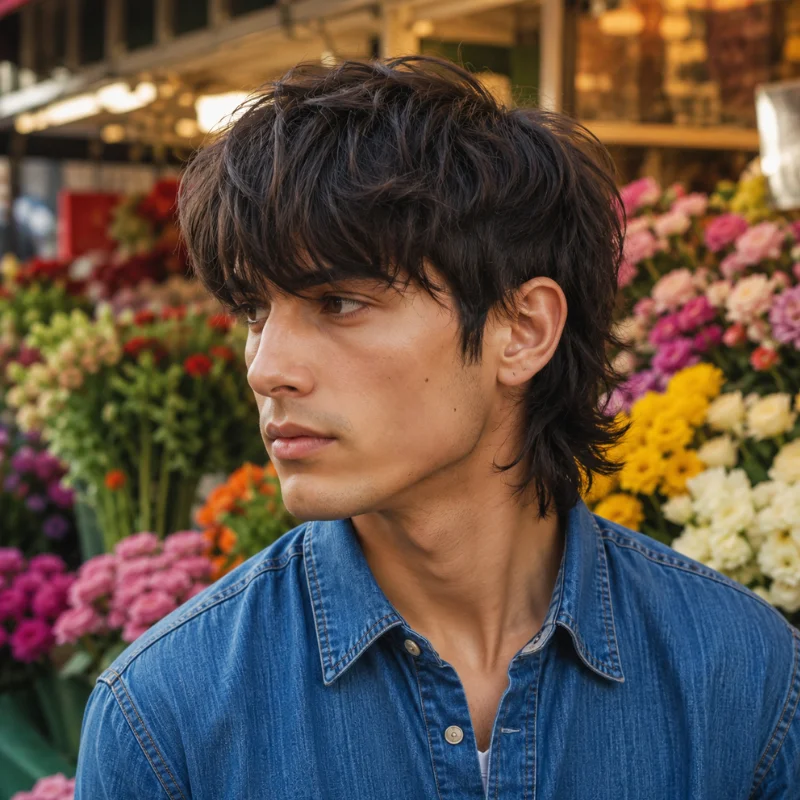
Full bangs across the forehead give the cut a bolder, more fashion-forward silhouette.
Mullet With Curtain Bangs: Bangs parted at the center and swept to each side soften the face shape.
Mullet Shag

Heavy layering throughout, inspired by the classic 1970s shag, adds volume and movement.
Modern Mullet Undercut
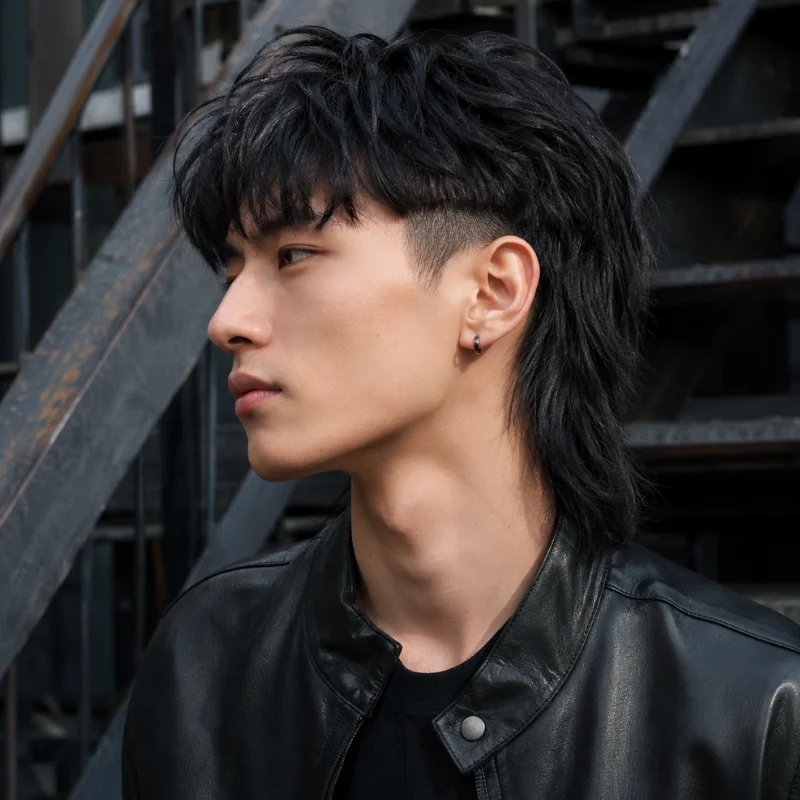
A shaved or closely clipped undercut beneath longer top length sharpens the contrast further.
Mullet with Curtains
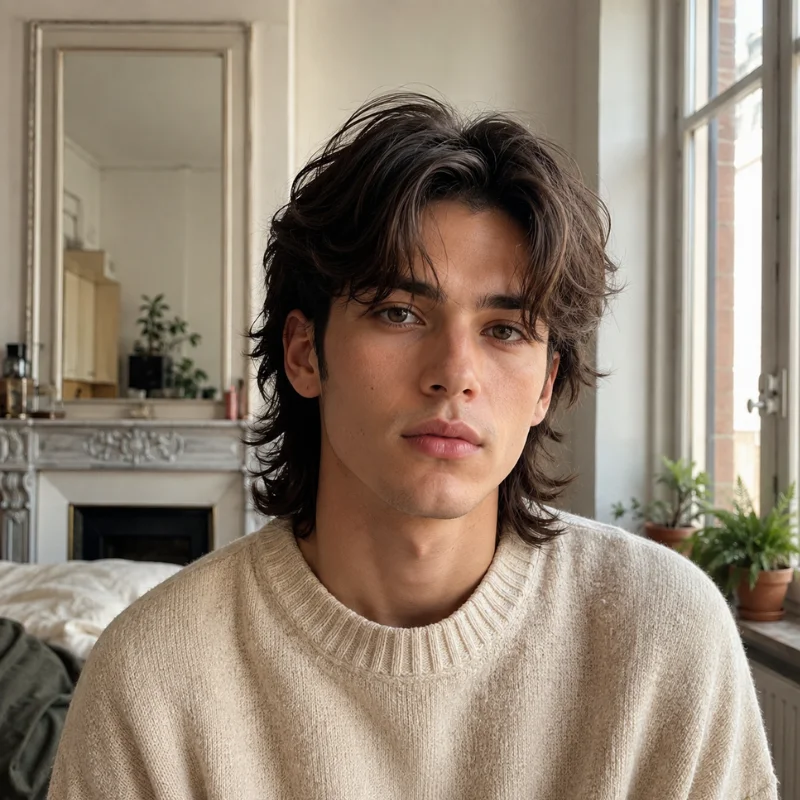
Curtain-style fringe parted down the middle complements the length at the back.
Spiky Mullet

Product-driven styling pushes the top hair into defined spikes for a sharper, edgier finish.
Mullet Slicked Back
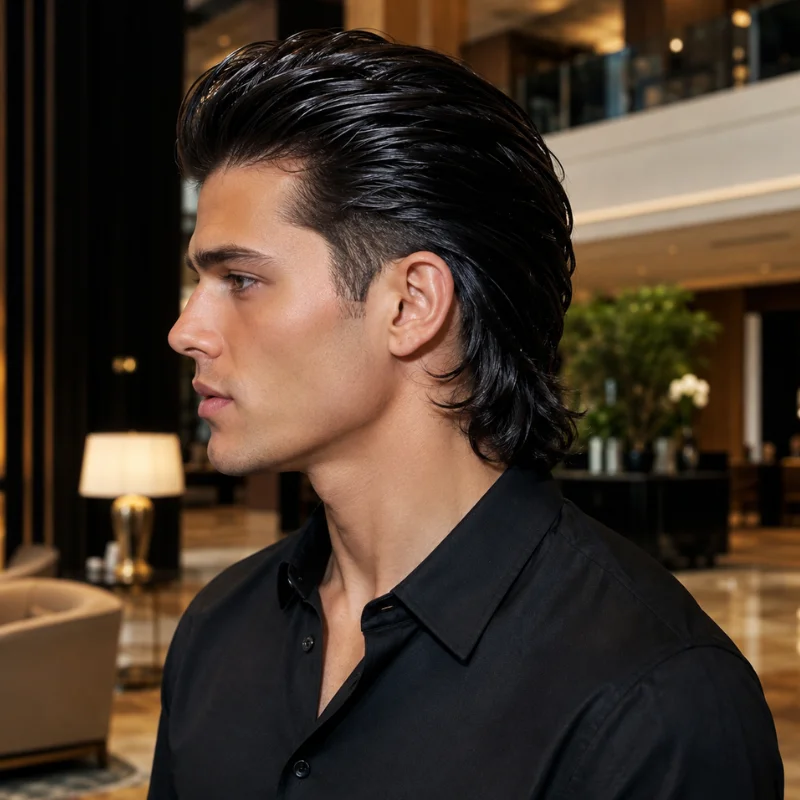
Gel or pomade slicks the top back, contrasting a polished front with a looser back section.
French Crop Mullet
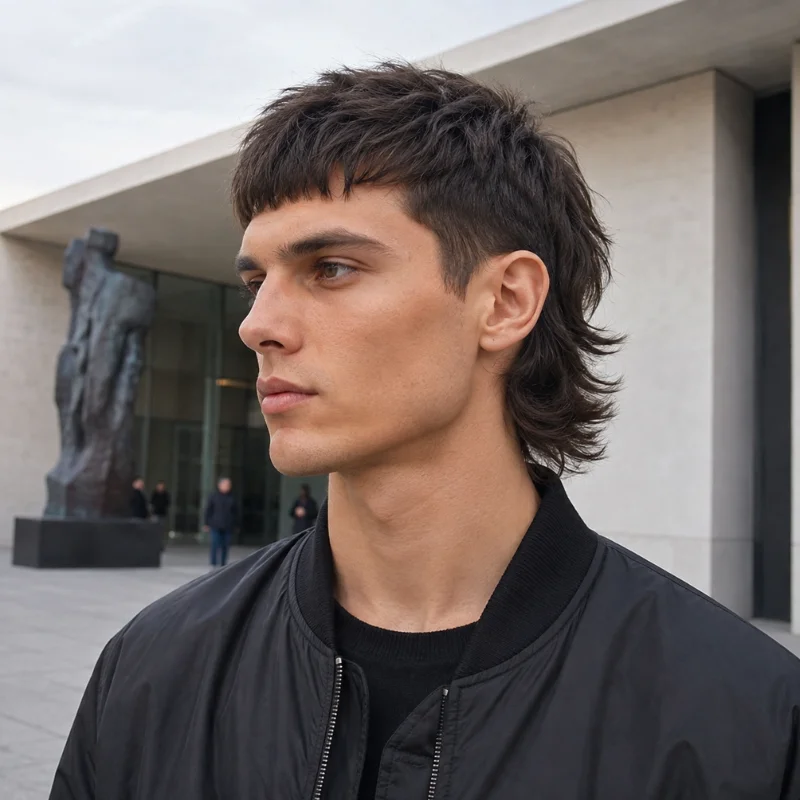
A blunt, textured fringe up front pairs with mullet length behind for a European-inspired shape.
Punk Mullet
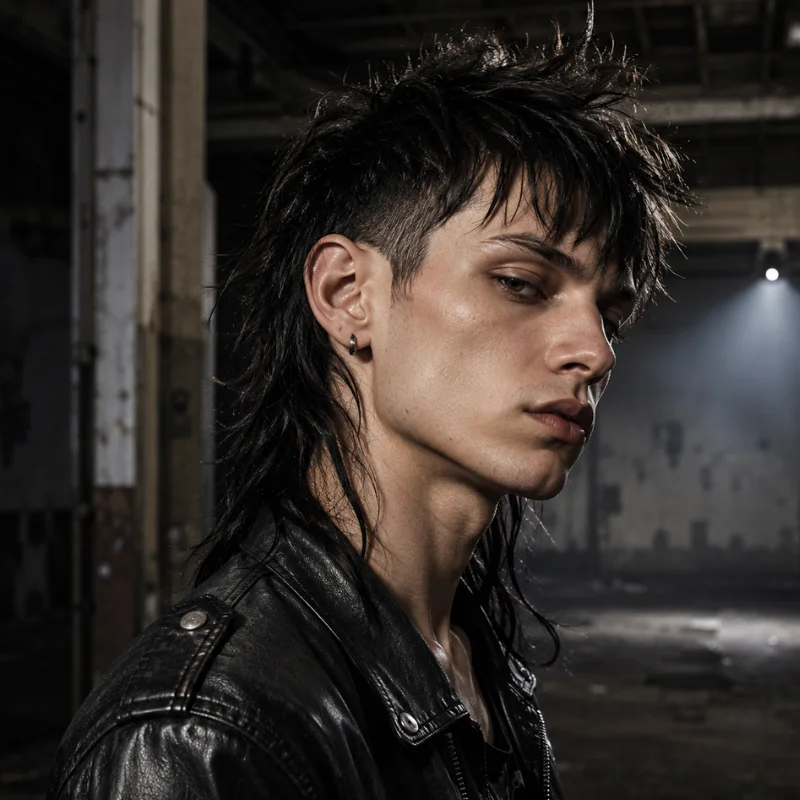
Sharp, uneven cuts and often bold color choices push the mullet toward its punk rock roots.
Mullet Fade Fringe
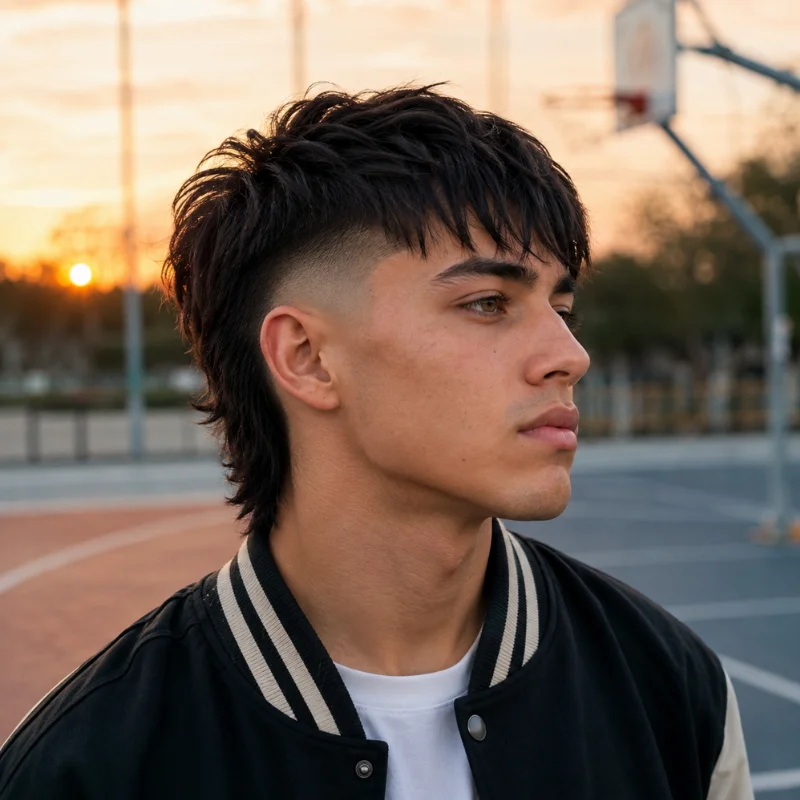
Combines a hard fade on the sides with a heavier fringe up front for maximum contrast.
Edgar Mullet
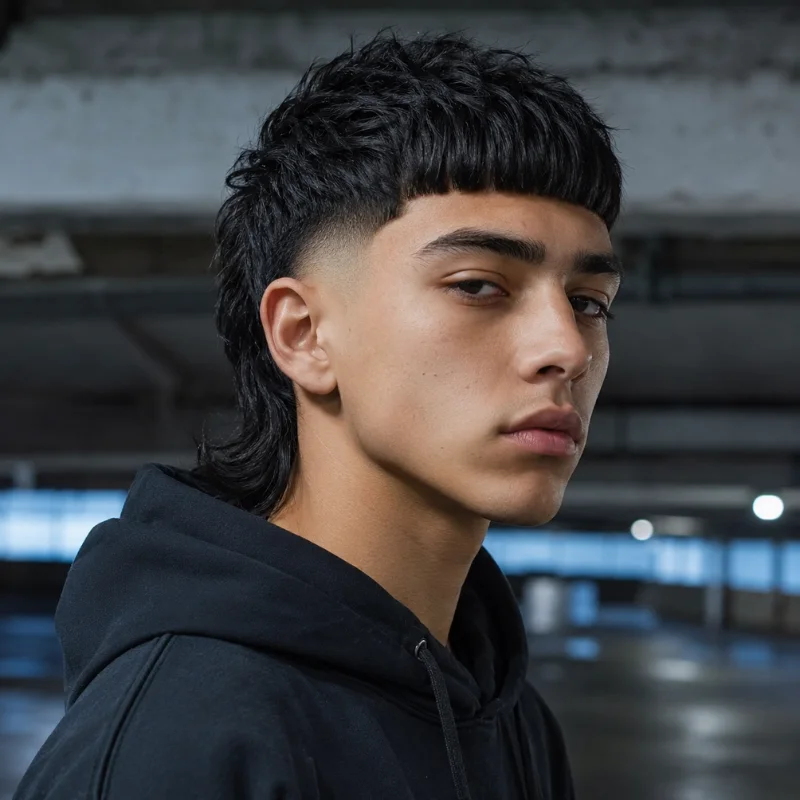
Blends the boxy, straight-across Edgar fringe with mullet length at the back.
Comma Hair Mullet
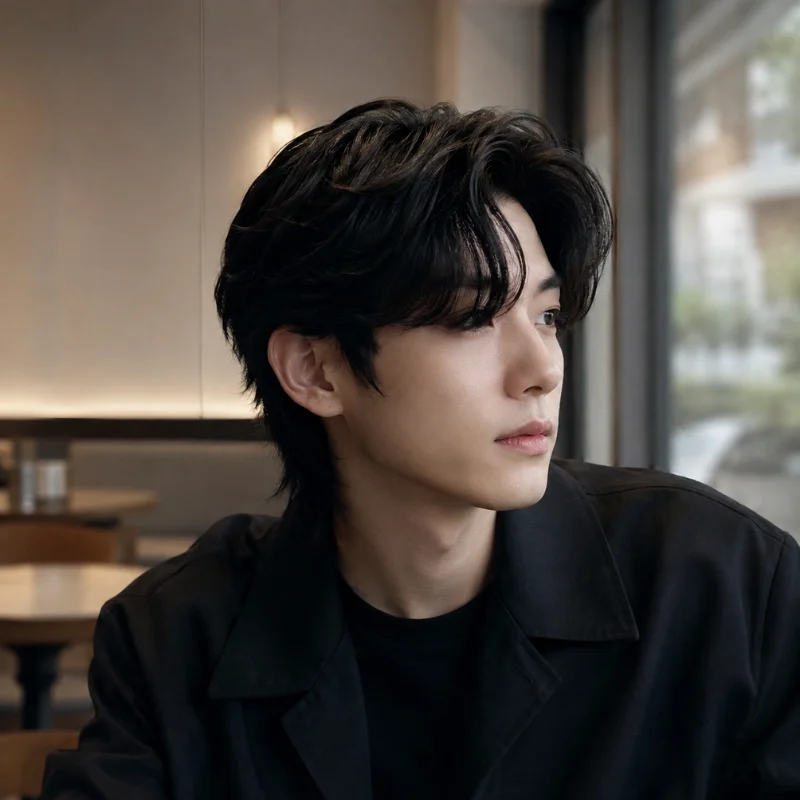
A curved, comma-shaped fringe swept to one side pairs with a shorter mullet length behind.
K-Pop Mullet
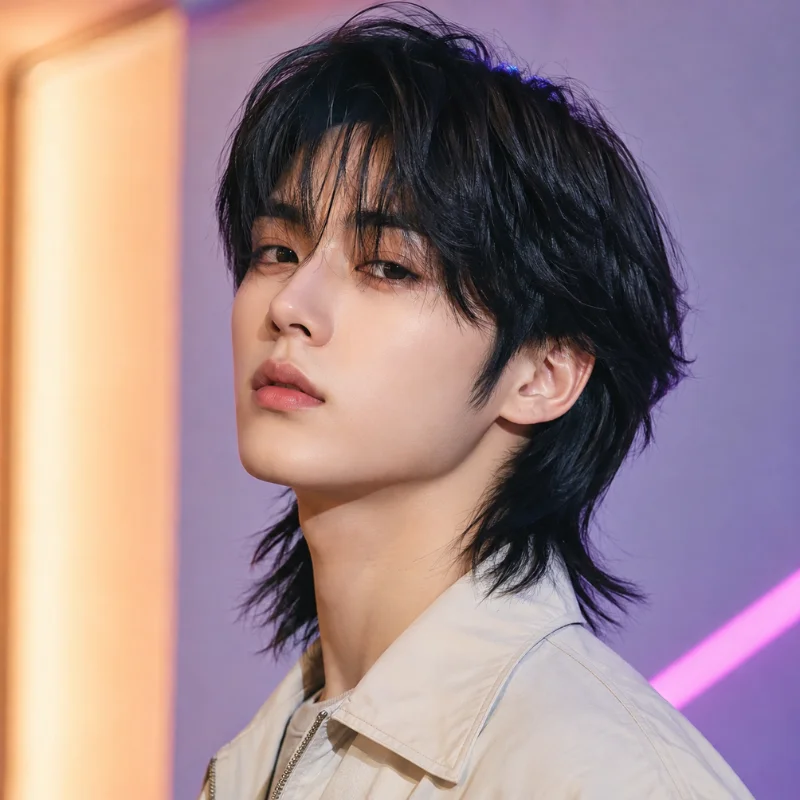
Soft layers, a swept fringe, and subtle color are staples of the idol-inspired version of this cut.
Mullet Haircut Men V Shape
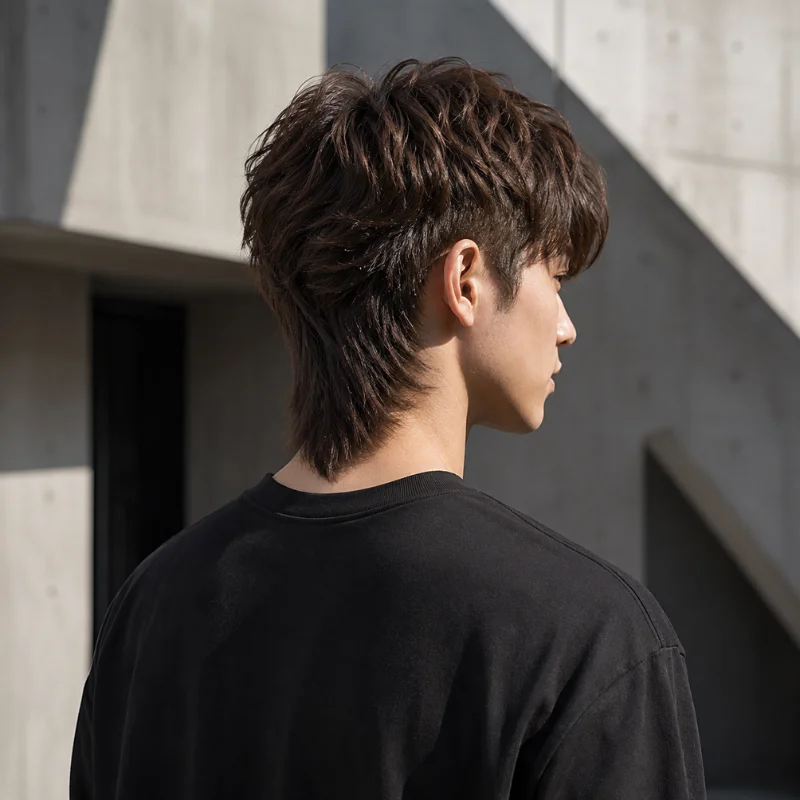
The back is cut into a V shape rather than straight across, adding a sharper point.
Mullet with wings: Flared sections near the temples add width and create a distinct winged silhouette.
Pompadour Mullet
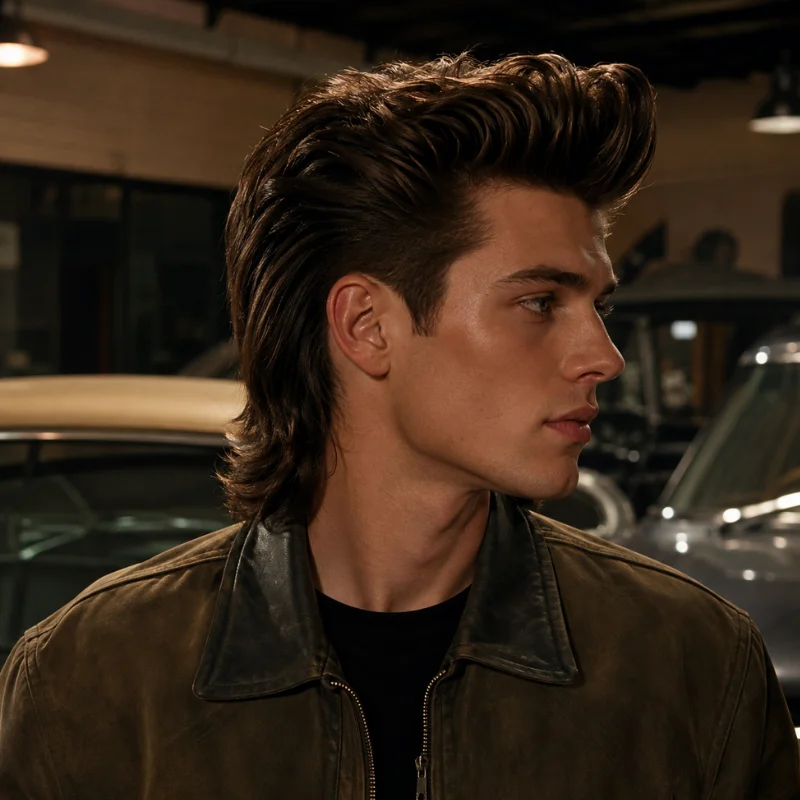
Height and volume at the front pair with mullet length at the back for a retro-modern hybrid.
Quiff Mullet
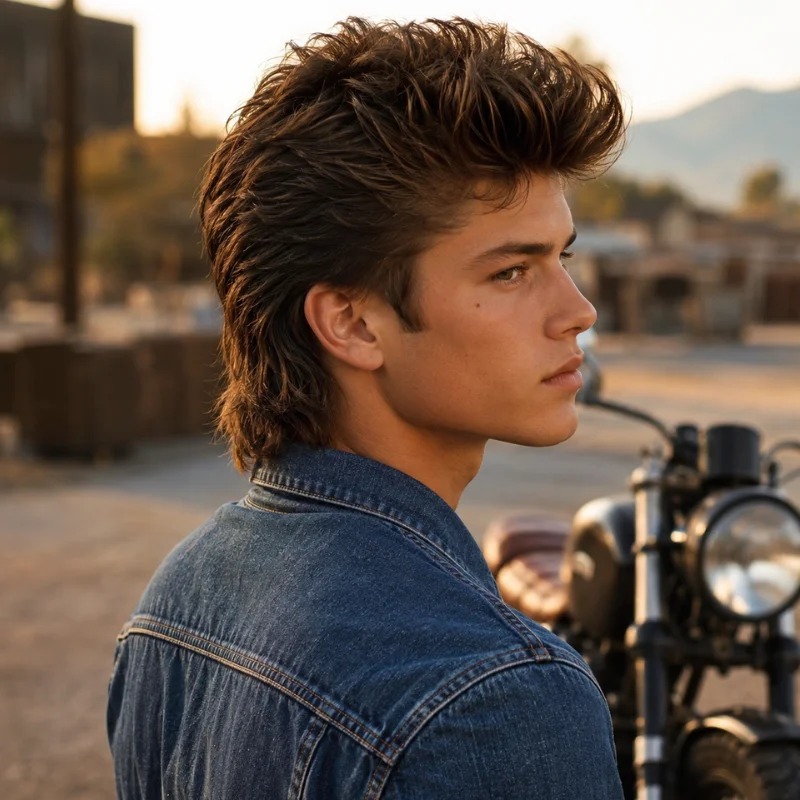
A shorter, textured quiff up front balances the longer length behind.
Mullet Fade Quiff: A fade on the sides sharpens the contrast beneath the textured quiff.
Shaggy Mullet
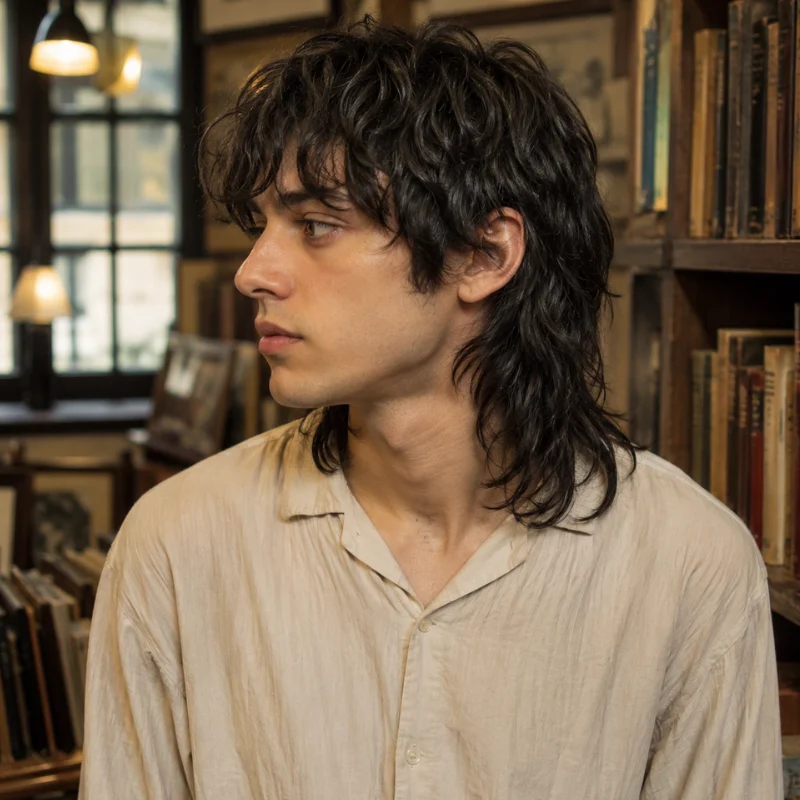
Loose, unstructured layers throughout give this version a relaxed, low-effort finish.
Two Block Mullet
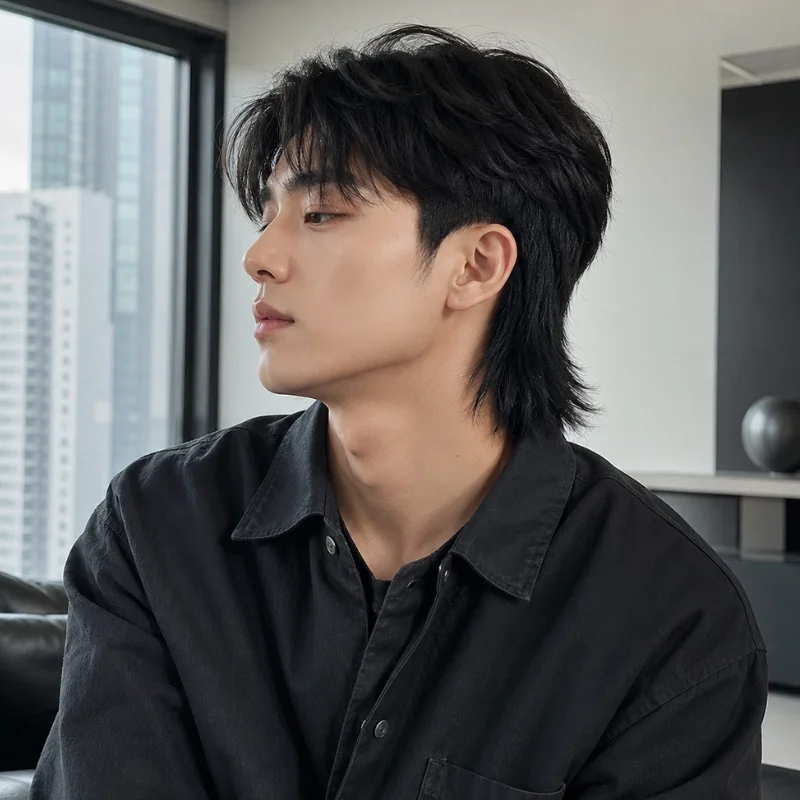
Popular in Korean barbershops, this style uses two distinct length zones split by a hard line.
Classic Mullet
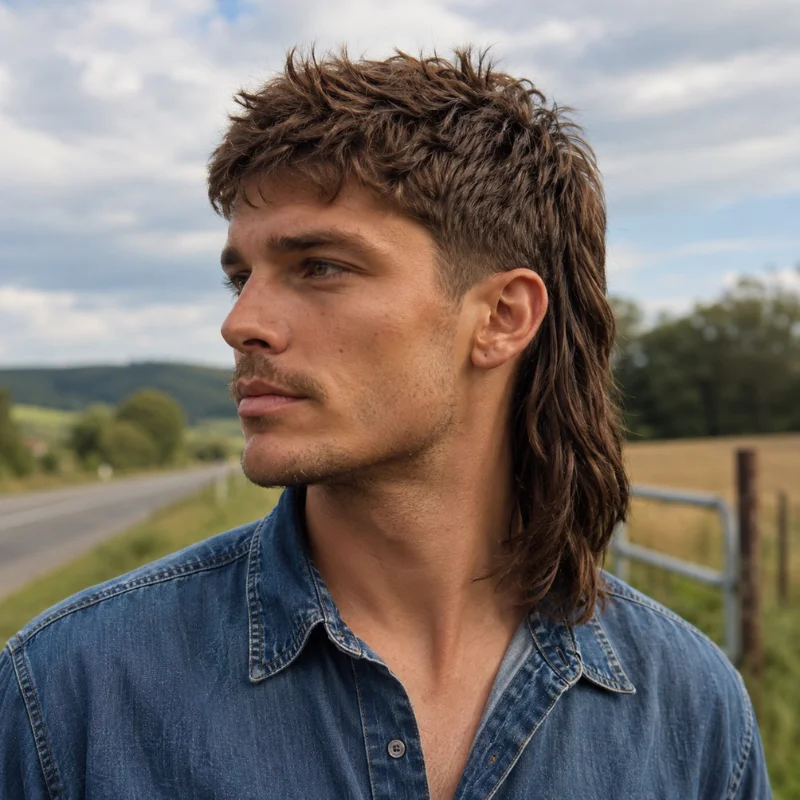
The original silhouette, kept mostly intact but cleaned up with modern cutting tools.
Faux Hawk Mullet
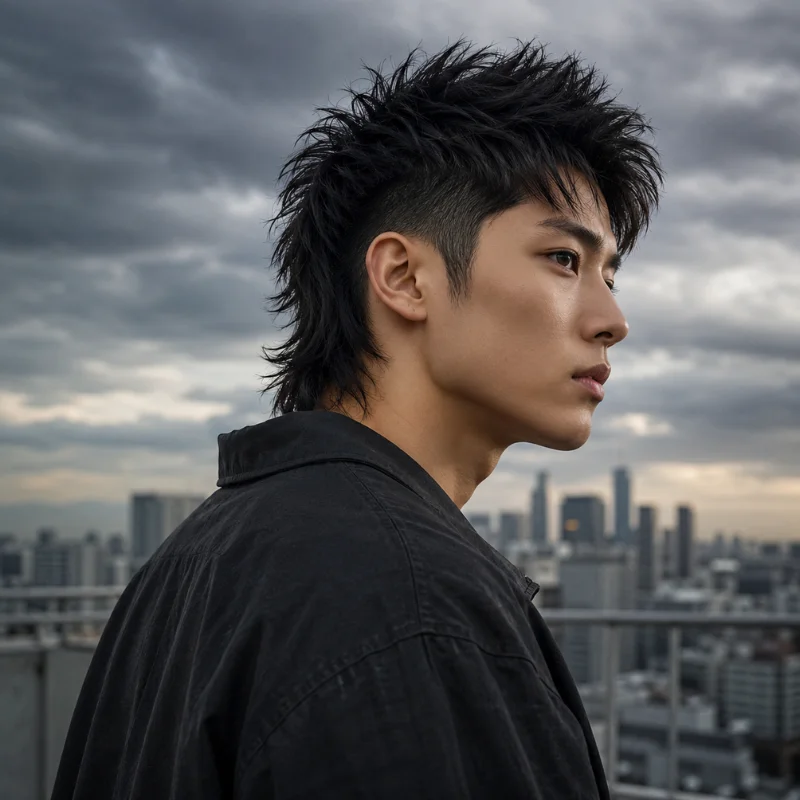
A styled ridge down the center combines faux hawk shaping with mullet length at the back.
Euro Mullet
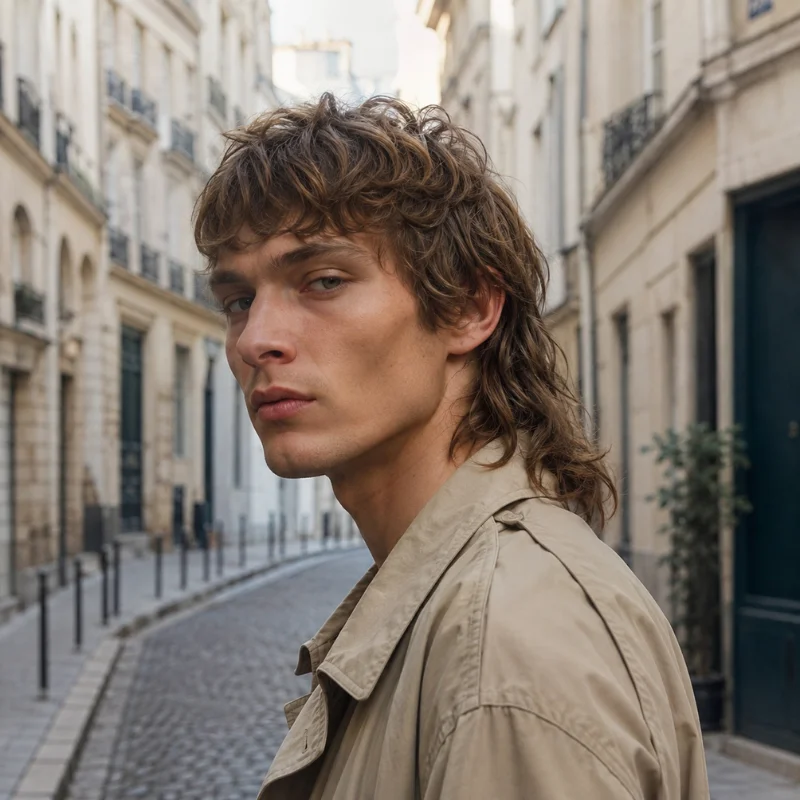
Longer, wavier styling associated with European football culture and street style.
Skin Fade Ponytail Mullet
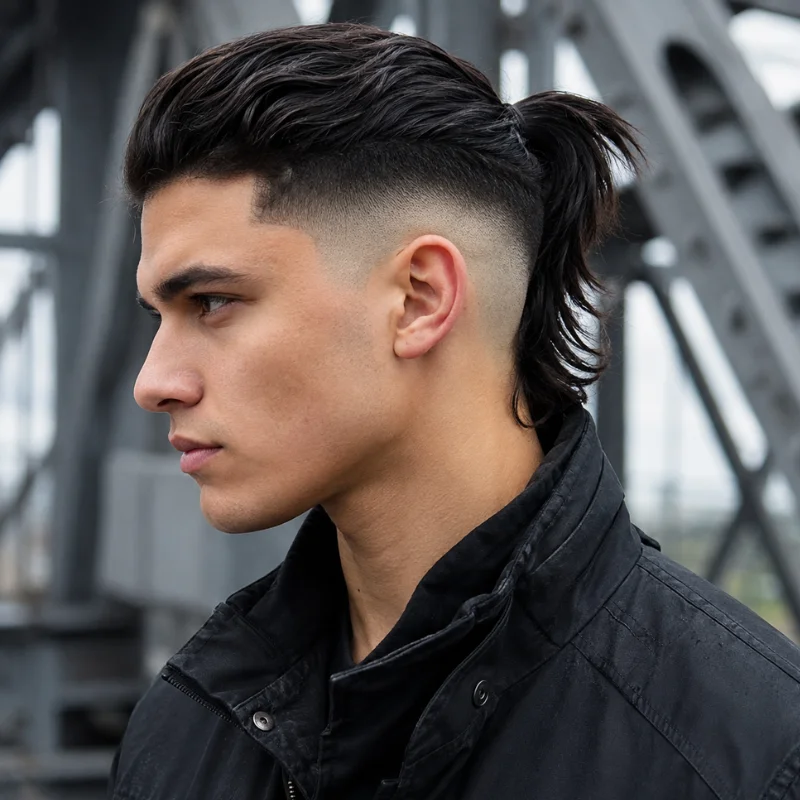
Enough back length to tie into a small ponytail, paired with a skin fade on the sides.
Choppy Mullet Taper Fade
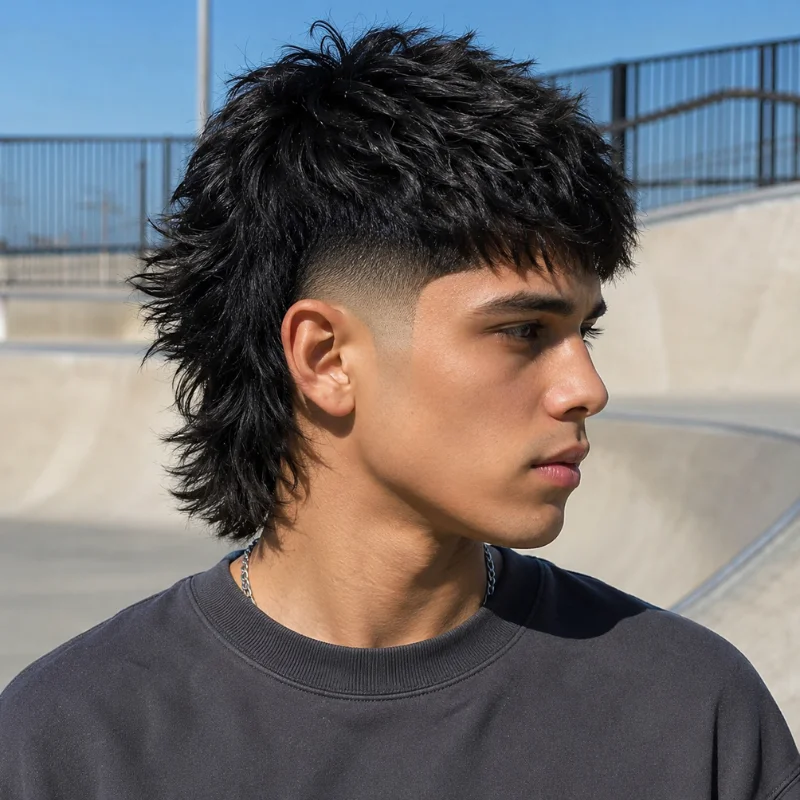
Choppy, uneven layering meets a clean taper fade for contrast between rough and refined sections.
Temple Fade Mullet
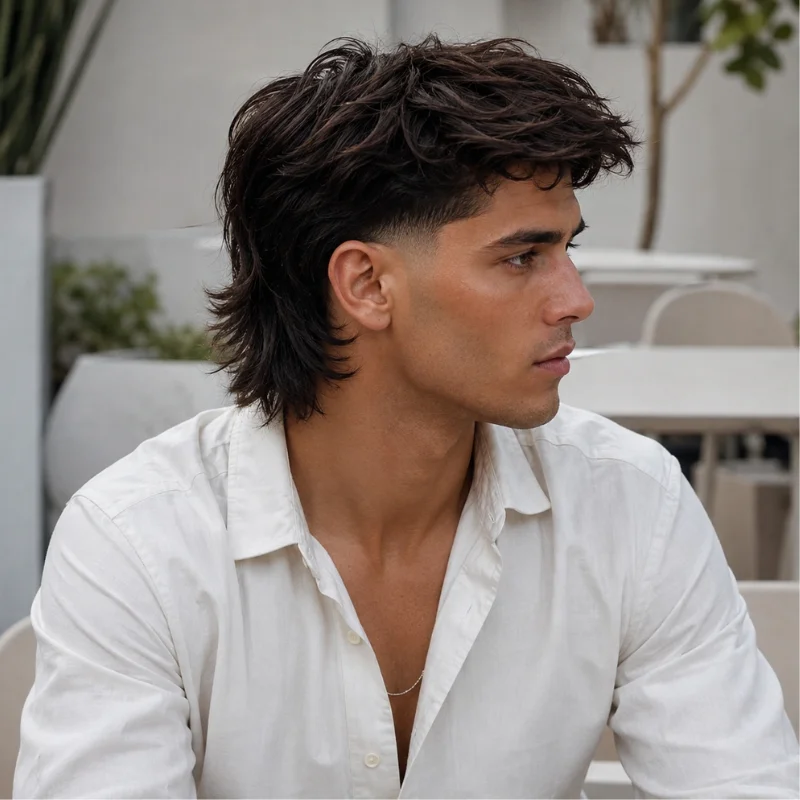
The fade focuses tightly around the temples, leaving more length elsewhere on the sides.
Permed Mullet with Fade
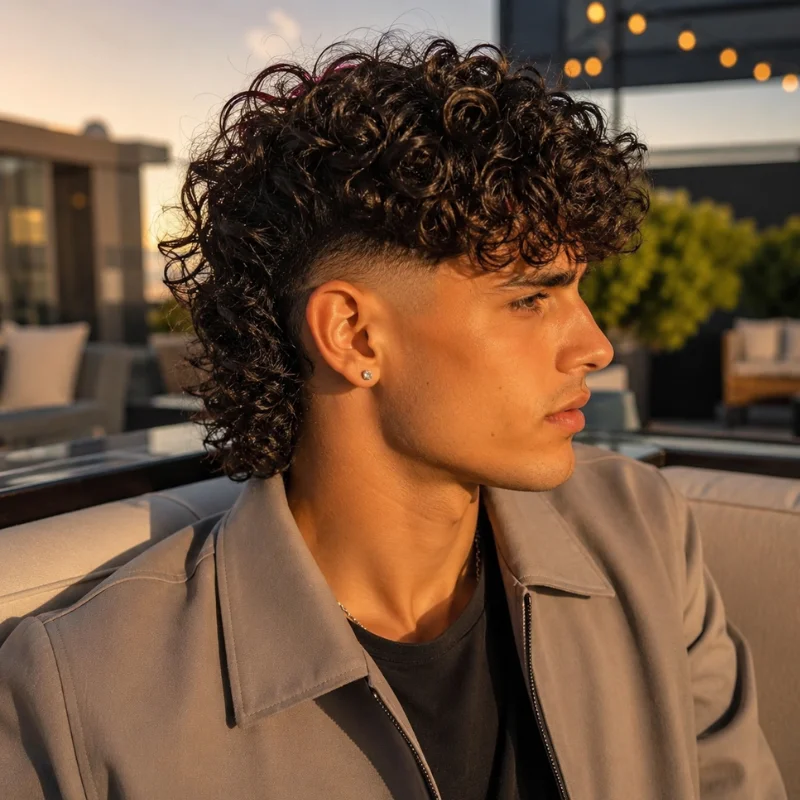
Combines a chemical perm for curl with a fade on the sides, doubling down on texture and contrast.
Mullet Haircut History, Evolution, and Modern Revival
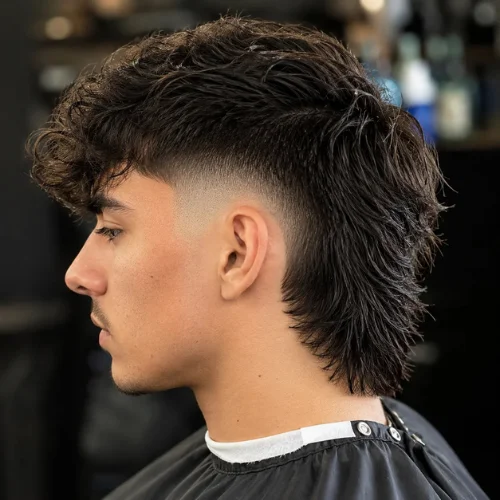
A Brief History of the Mullet
The mullet traces back to ancient warriors and athletes who kept hair short in front for visibility and long in back for warmth. Similar variations appear in Hittite and Greek art dating back over 2,000 years.
The modern name and cultural identity of the “mullet” solidified in the 1970s-80s, popularized by musicians and athletes and cemented in the Oxford English Dictionary in 1994, which credits a Beastie Boys lyric with coining the term.
The New Era of the Mullet
The modern mullet haircut reemerged around 2020-2021, driven by nostalgia-based fashion trends, TikTok’s grooming community, and stylists blending the silhouette with skin fades, curly-hair techniques, and wolf-cut layering.
Where the original mullet was often a byproduct of neglect or budget cuts, the modern version is a deliberately engineered style requiring skilled fading and layer-cutting technique.
Why Get a Modern Mullet Haircut?
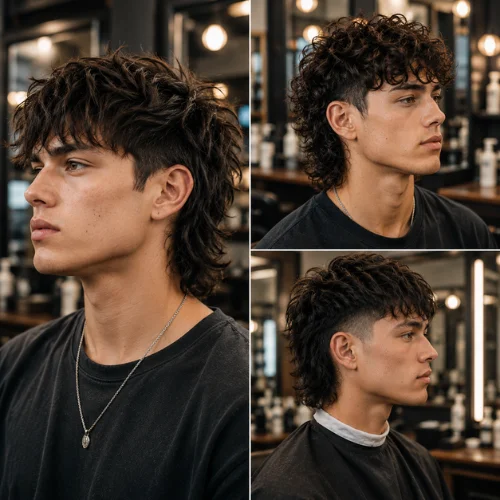
People choose a modern mullet haircut for three practical reasons: it requires minimal daily styling, flatters both straight and curly textures when tailored correctly, and creates a distinctive look without the full commitment of an undercut or shaved design.
Barbers frequently cite the cut as one of the fastest-growing requests among clients aged 16–35 (industry stylist interviews, 2026).
Who Can Pull Off a Mullet?
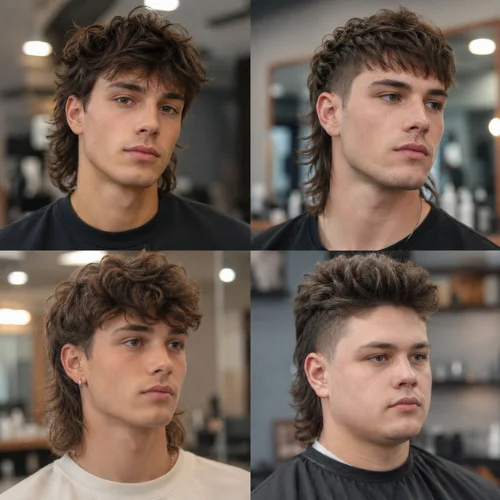
Which face shape suits a mullet haircut best? Oval, square, and diamond face shapes suit it most easily because the back length balances angular jawlines. Round faces can wear it too, but added crown height helps elongate the face without adding width at the sides.
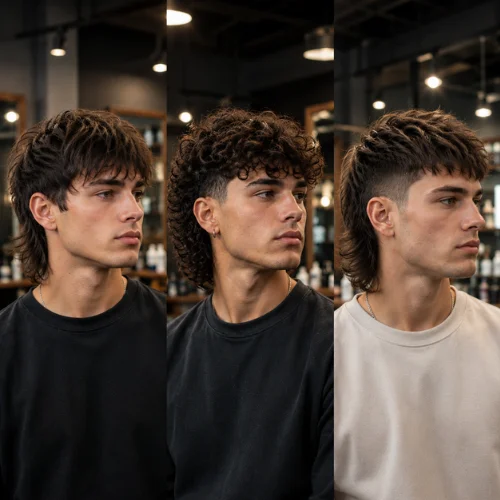
Can curly or wavy hair work with a modern mullet? Yes curly and wavy textures work well because natural volume softens the transition between short and long sections. Straight hair needs more precise layering since blending lines are more visible.
The Face Shape Fit Matrix
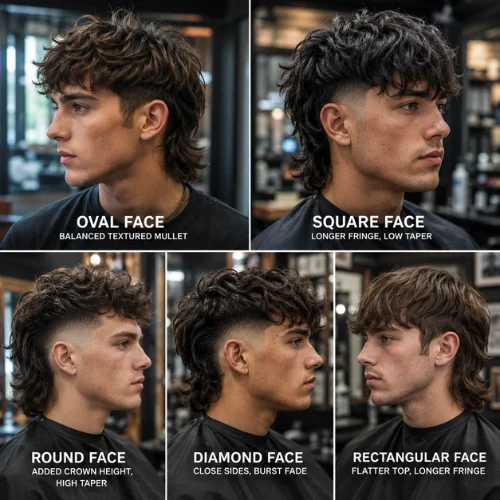
|
Face Shape |
Recom Adjustment |
Fade Type to Request |
|
Oval |
Most versatile |
Any fade type works |
|
Square |
Soften with longer fringe |
Low or mid taper |
|
Round |
Add height at crown |
High taper or skin fade |
|
Diamond |
Keep sides close to jaw |
Burst or temple fade |
|
Rectangular |
Avoid extra height on top |
Low fade, longer fringe |
How to Style Modern Mullet
Start with damp hair and apply a lightweight sea salt spray or mousse through the back for texture without heaviness. Blow-dry the top and crown upward with a round brush for lift, then use matte clay or pomade to shape a swept fringe or textured finish.
Scrunch texturizing spray into the back to keep the length loose and separated. Finish with light-hold hairspray to maintain the shape throughout the day without making the hair stiff.
How to Ask Your Barber for the Perfect Modern Mullet
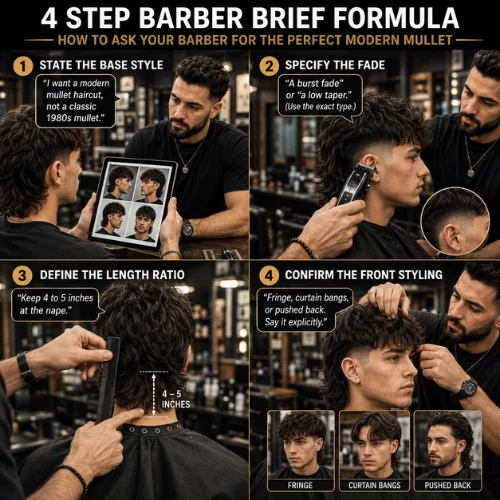
Walking in and saying “give me a mullet” invites interpretation and not always the good kind. Use this 4 Step Barber Brief Formula to communicate precisely:
- State the base style: “I want a modern mullet haircut, not a classic 1980s mullet.”
- Specify the fade: Name the exact type: “a burst fade” or “a low taper,” referencing the list above.
- Define the length ratio: Tell the barber how long you want the back relative to the sides, such as “keep 4 to 5 inches at the nape.”
- Confirm the front styling: Fringe, curtain bangs, or pushed back. Say it explicitly, since this changes the cutting technique used up front.
Mini case study: A 27 year old client with straight, medium density hair requested a “wolf cut mullet” using only a phone photo, but without discussing the fade type or length ratio, the barber chose a low taper instead of the client’s preferred burst fade.
Using the 4 Step Barber Brief Formula during the follow up visit fixed the mismatch in one session, showing why specifying the fade matters as much as the base style name.
How to Style and Maintain a Modern Mullet
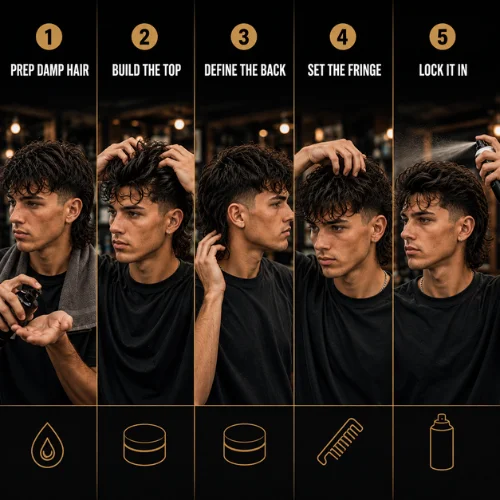
How to Style a Mullet Day-to-Day
- Step: Prep damp hair Apply a lightweight product to towel-dried hair, not soaking wet hair, for better hold.
- Step: Build the top Work matte clay or pomade through the crown, directing volume upward or back depending on your part.
- Step: Define the back Use a small amount of cream or wax on the nape length to prevent flyaways without weighing hair down.
- Step: Set the fringe Style the front section last, since it frames the whole look.
- Step: Lock it in A light hairspray hold prevents movement without stiffness, especially in humid climates.
How to Maintain a Modern Mullet Between Visits
How often should you get a modern mullet trimmed? Most clients need a trim every 4–6 weeks to keep the fade crisp, while the back length can go 8–12 weeks between shape-ups since the goal is ongoing growth.
Skipping fade maintenance is the fastest way for a modern mullet haircut to look unintentional rather than styled.
Hair Products for a Modern Mullet
|
Product |
Benefit |
Best For |
|---|---|---|
|
Sea Salt Spray |
Texture & volume |
Wavy/curly mullets |
|
Matte Clay |
Strong, no-shine hold |
Textured tops |
|
Pomade |
Shine & flexible hold |
Slicked-back styles |
|
Hair Wax |
Medium, workable hold |
Straight hair |
|
Mousse |
Lightweight volume |
Fine/thin hair |
|
Hair Cream |
Light, natural hold |
Curly/low-maintenance styles |
|
Heat Protectant |
Protects from heat |
Heat styling |
|
Hairspray |
Long-lasting hold |
Fringe & back styling |
Popular Kids Modern Mullet Haircut
The modern kid mullet blends short sides with longer back hair for a bold, easy-care look boys love this year.
Kids Mullet Fade
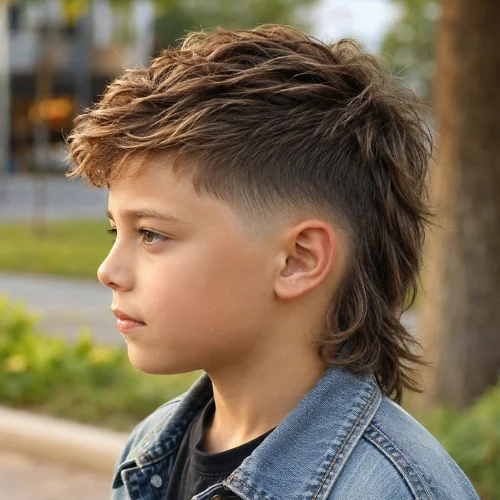
Clean faded sides paired with flowing length at the back, perfect for everyday wear.
Short Kids Mullet Fade
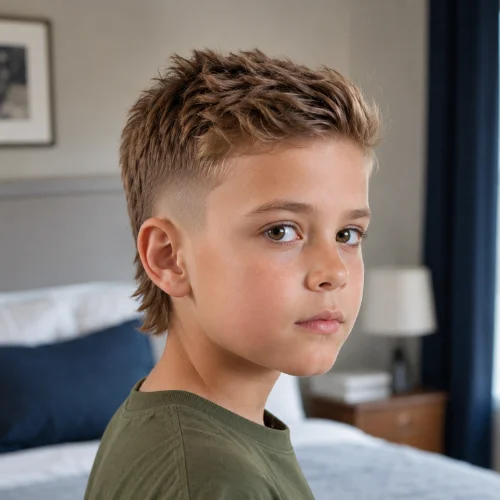
A tighter, low-maintenance version ideal for active kids.
Burst Fade Mullet Kids
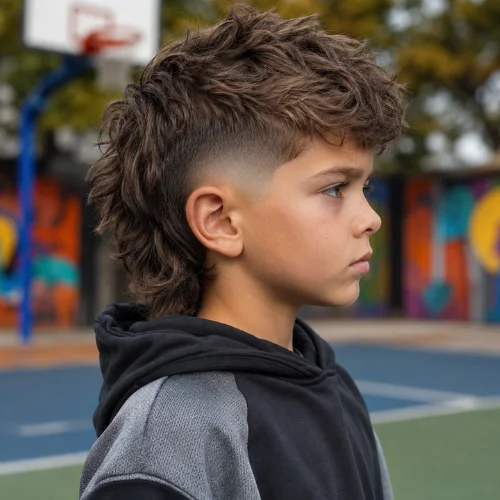
Curved fade lines around the ears add a sporty, structured edge.
Kids Curly Mullet
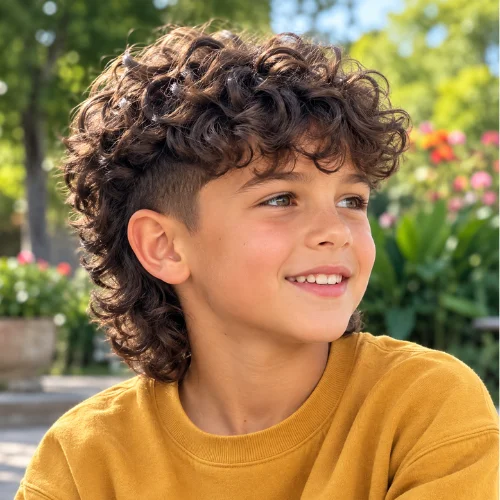
Let natural curls shine while keeping the mullet shape intact.
Tapered Mullet Kids
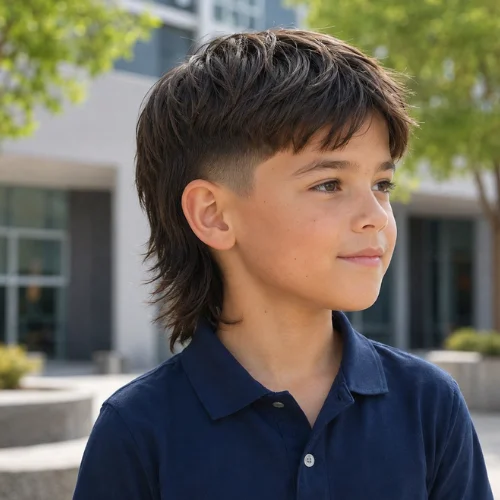
Smooth, gradual blending for a neat finish.
Shag Modern Mullet Kids
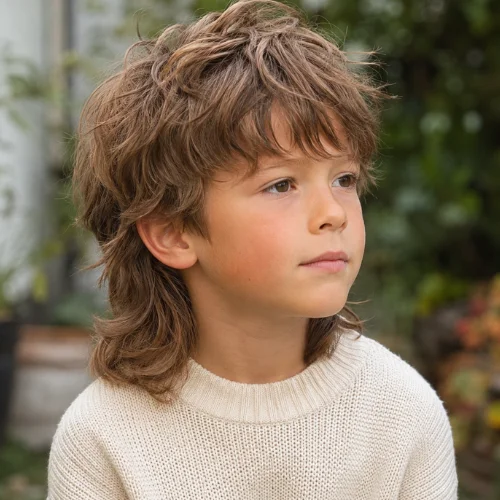
Choppy, textured layers for extra volume and flow.
Undercut Mullet Kids
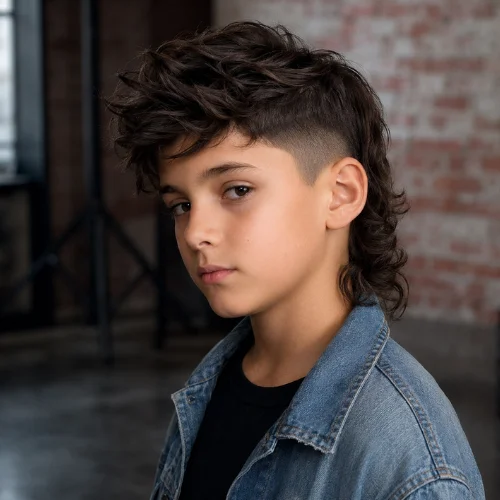
Sharp contrast between shaved sides and longer top.
Modern Shaggy Mullet Kids
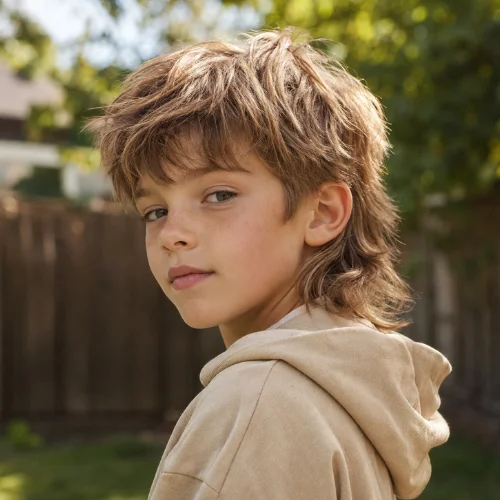
Relaxed, effortless styling with minimal upkeep.
Kids Textured Mullet
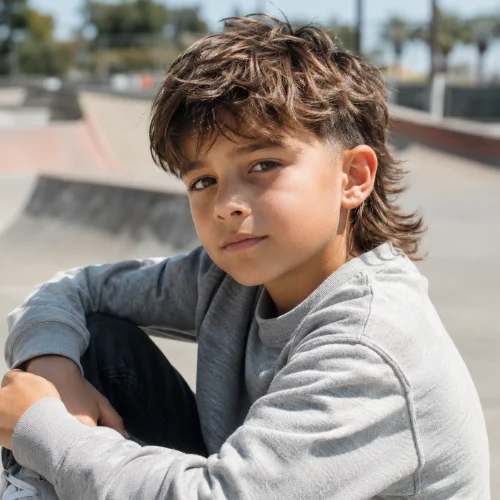
Choppy layers that add depth and dimension.
Classic Modern Boys Mullet Haircut
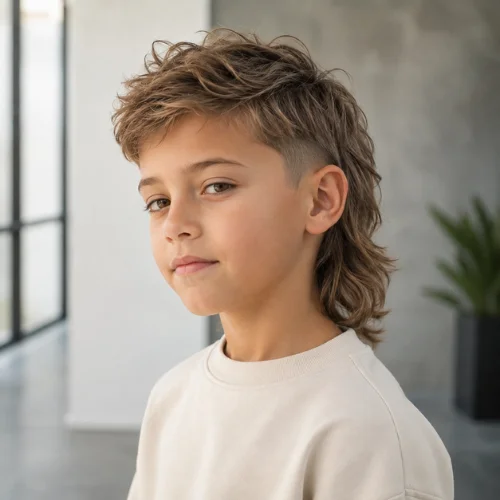
The classic style, easy to maintain and great for school or sports.
Cool Modern Mullet Styles for Boys
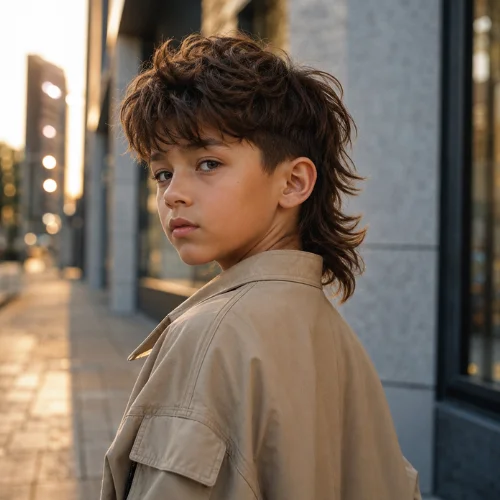
Versatile cuts that mix edge with everyday comfort.
Stylish Modern Mullet Haircut Kids
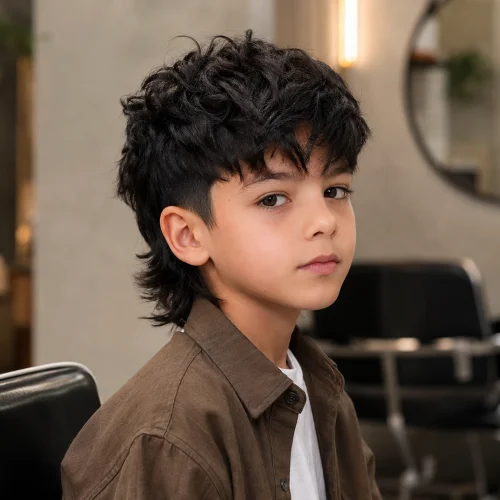
A polished option that still feels fun and youthful.
Fun Mullet Haircut Kids
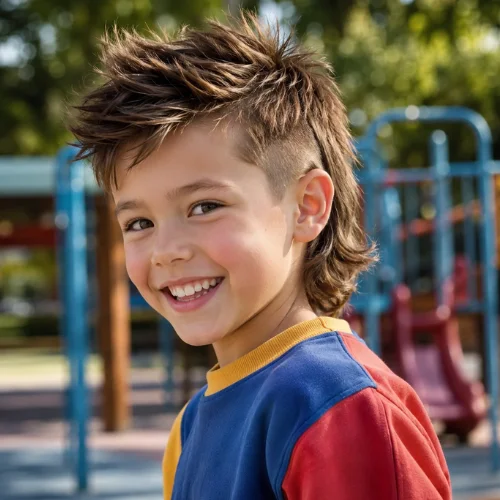
Playful styling with movement and personality.
Unique Mullet Styles for Kids
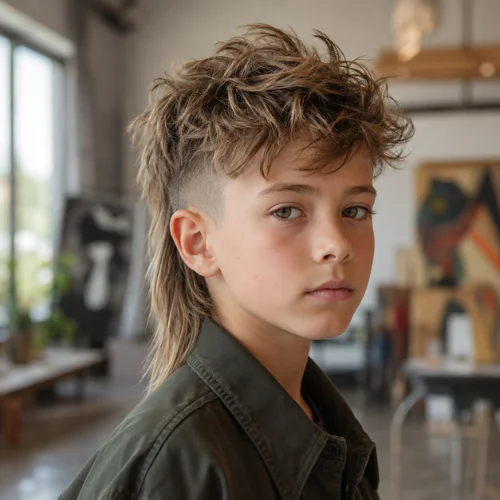
Stand-out cuts for boys who like something different.
Modern Mullet Haircut Price Guide
How much does a modern mullet haircut cost? A mullet haircut typically costs between $25 and $120 in the United States as of 2026, depending on the barbershop tier and the complexity of the fade requested.
|
Mullet Style |
Budget Barbershop |
Mid-Range Salon |
Premium Stylist |
|
Classic Modern Mullet |
$20–$35 |
$40–$65 |
$70–$120 |
|
Fade Mullet Haircut |
$25–$40 |
$45–$70 |
$75–$130 |
|
Mullet Low Fade |
$25–$40 |
$45–$70 |
$75–$130 |
|
Burst Fade Mullet |
$30–$45 |
$50–$75 |
$80–$140 |
|
Wolf Cut Mullet |
$30–$50 |
$55–$80 |
$85–$150 |
|
Boys Mullet Haircut |
$15–$25 |
$30–$45 |
$50–$80 |
Winner: For most first-time clients, the mid-range salon tier offers the best value barbers here typically specialize in fades and can execute the 4-Step Barber Brief Formula precisely, without the premium markup of celebrity-adjacent stylists.
Modern Mullet Haircut Comparison: Top Styles at a Glance
|
Style |
Key Feature |
Best For |
Price Tier |
Maintenance Rating |
|
Mullet Fade |
Sharp contrast, high visibility |
Straight or wavy hair |
Mid range |
Every 4 weeks |
|
Mullet Curly |
Volume driven low blending |
Naturally curly hair |
Budget Mid |
Every 6–8 weeks |
|
Wolf Cut Mullet |
Heavy layering throughout |
Thick or med density hair |
Premium |
Every 5 weeks |
|
Mullet Taper |
Soft, subtle transition |
Workplace friendly looks |
Budget Mid |
Every 6 weeks |
|
Burst Fade Mullet |
Curved fade around the ear |
Round or square face |
Mid Premium |
Every 4 weeks |
FAQs About Modern Mullet Haircut
Are Modern Mullets Still in Fashion in 2026?
Yes. The style has moved past its viral phase into a standard barbershop offering, with steady demand across skate, streetwear, and mainstream fashion circles.
Why Does Gen Z Love the Mullet?
The cut offers a low-effort way to stand out, references retro culture ironically, and photographs well for social media thanks to its distinct silhouette.
What Face Shape Is a Mullet Good for Men?
Oval and square faces suit nearly any variation. Round faces benefit from added height on top and a tighter fade, while long faces do well with more volume at the sides.
Can Curly or Wavy Hair Work With a Modern Mullet?
Yes, and often better than straight hair. Natural curl and wave add volume at the crown and texture at the back without extra styling effort.
How Frequently Should You Get Your Mullet Trimmed?
The sides and fade need attention every two to four weeks. The longer back section only needs trimming every eight to twelve weeks.
Is a Sleek or Messy Mullet Better for Coarse or Frizzy Hair?
A messy, textured finish generally works better, since coarse or frizzy hair resists a sleek look without heavy product and frequent touch-ups.
How Long Does It Take to Grow Out a Modern Mullet?
Reaching noticeable back length from a standard short cut typically takes four to six months, depending on individual hair growth rate.
What Does a Modern Mullet Look Like?
Short, tapered, or faded sides and top pair with longer, textured length left at the crown and nape, styled with modern layering rather than one flat section.
Conclusion
The modern mullet haircut has become a mainstream grooming style, and getting it right depends on choosing the right fade and length for your hair type, clearly briefing your barber, and maintaining the fade every 4–6 weeks. Whether you prefer a curly mullet, burst fade, or fuller wolf cut, these fundamentals apply to all 55 variations covered here.
Next Steps:
- → Pick your preferred style from the 55 variations list above and save 2–3 reference photos matching your hair texture
- → Use the 4-Step Barber Brief Formula on your next booking
- → Build a maintenance routine using the product table so the cut holds its shape between visits
Sources & Methodology
- Google Trends, “Modern Mullet Haircut” search interest data, 2022–2026
- Oxford English Dictionary, entry for “mullet” (hairstyle), 1994
- Barbershop and salon pricing survey across budget, mid-range, and premium U.S. tiers, 2026

Randy Cox
Randy Cox is a men’s hairstyling writer and grooming enthusiast sharing expert inspired guides on modern mullets, styling tips, and the latest men’s haircut trends.